
6 Best Wildland Fire Boots of 2025
This post contains affiliate links. As an Amazon Associate, we earn from qualifying purchases.
Choosing the right wildland fire boots is critical when facing extreme heat, rugged terrain, and long shifts where safety and stamina are on the line. The best wildland fire boots combine proven fire resistance—like NFPA 1977 compliance, Kevlar stitching, and flame-resistant leather—with high-traction Vibram outsoles and supportive, breathable construction to keep firefighters protected and comfortable. Our top picks were selected through in-depth analysis of safety certifications, material performance, user feedback from active wildland crews, and key features like electrical hazard protection and torsion stability. Below are our recommended boots, ranked to help you find the best wildland fire boots for your operational needs.
Top 6 Wildland Fire Boots in the Market


Best Wildland Fire Boots Review
HAIX Missoula 2.1 Men’s Boots

ADVANTAGES
LIMITATIONS
Uncompromising protection meets elite performance in the HAIX Missoula 2.1—this is no ordinary wildland boot. Built to NFPA 1977 standards and armed with ASTM F2892 electrical hazard resistance, it’s engineered for firefighters who demand maximum safety without sacrificing mobility. The Vibram sole, heat-resistant up to 572°F, delivers rock-solid grip on oil-slicked terrain and smoldering debris, while the 2-Zone Lacing System ensures a locked-down, customizable fit that eliminates heel slippage during steep ascents or sudden sprints. If you’re battling wildfires where every second counts, this boot doesn’t just keep up—it gives you an edge.
In real-world deployment, the Missoula 2.1 shines across extended shifts and brutal terrain. The water-resistant leather and Climate Control system work in tandem to wick moisture and regulate temperature, preventing overheating during long hikes through dry chaparral or wet mountain trails. The torsion-proof shank reduces fatigue on uneven ground, and the NOMEX thread stitching adds a critical layer of heat resistance where seams are most vulnerable. That said, the higher price point reflects its premium build—lighter loads may find it overkill for short-duration missions, and the break-in period demands patience.
Positioned as the premium performer, the Missoula 2.1 outclasses budget models like the Thorogood Firedevil in materials and thermal protection, while trading blows with the Drew’s Boots Fire Hiker in durability and comfort. It’s ideal for professional wildland crews who need consistent, mission-ready reliability in extreme environments. Compared to the Danner Wildland Tactical, it offers superior heat resistance and a more advanced lacing system, though at a steeper cost—justifying its place as the top-tier choice for those who won’t compromise on safety or performance.
SCARPA Fuego Hiking Boots
ADVANTAGES
LIMITATIONS
Born in the alpine, battle-tested in the burn zone, the SCARPA Fuego is a rugged hybrid that excels where fire meets rock. With a 2.8mm Crosta Pro leather upper, it shrugs off abrasion from sharp scree and snagging brush, while the 8-inch ankle cuff delivers exceptional support on unstable slopes—making it a favorite among firefighters tackling steep, mountainous terrain. The Vibram M4 outsole bites into mud, ash, and loose gravel with confidence, offering a mountaineering-grade grip that few dedicated fire boots can match. For crews operating in high-elevation wildlands, this boot bridges the gap between hiking precision and firefighting durability.
In field use, the Fuego proves tenacious on technical ground. Weighing just 2 lbs 4 oz (half pair, size 9), it’s significantly lighter than most NFPA-compliant boots, reducing leg fatigue during long hikes to remote fire lines. The full-grain leather resists water and wear, though it lacks formal NFPA 1977 certification—meaning it’s best suited for support roles or state/local crews without strict compliance mandates. While the aggressive tread excels on rock and scree, it can clog in deep mud, and the absence of fire-resistant stitching limits its use in direct flame zones.
Compared to the HAIX Missoula 2.1 or Drew’s Fire Hiker, the Fuego trades certified fire protection for superior agility and alpine performance. It’s not built for mopup near active flames, but for hiking deep into rugged backcountry, it outperforms heavier, bulkier alternatives. Ideal for Type 2/3 crews, Hotshots in transit, or SAR teams operating in mixed environments, it offers unmatched mountain mobility. While the Danner Wildland Tactical shares its made-in-USA pride, the Fuego delivers better terrain adaptability—making it the go-to when the fire line climbs into the high country.
ROCKY Code Red Wildlands Boot
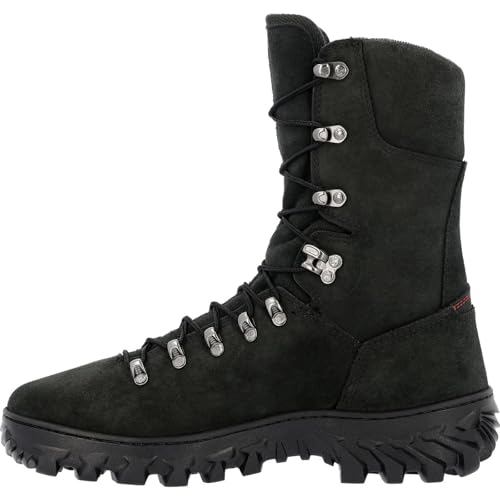
ADVANTAGES
LIMITATIONS
Sleek, fast, and fire-ready, the ROCKY Code Red Wildlands 77 redefines what a lightweight wildland boot can do. At a fraction of the weight of traditional models, it’s built for speed and agility, with fire-resistant laces, stitching, and leather that meet NFPA 1977 standards—proving you don’t need bulk to stay safe. The Speed Lace Hook system lets you tighten or remove the boots in seconds, a game-changer during rapid deployments or gear changes in the field. For firefighters who prioritize mobility over maximum armor, this boot delivers essential protection without the drag.
In real-world testing, the Code Red shines during fast hikes and rapid response scenarios. Its lightweight chassis reduces calf strain over long distances, making it ideal for crews covering miles of terrain before reaching the fire line. The outsole provides solid grip on dry trails and packed soil, though it lacks the aggressive lug pattern of alpine-focused boots like the SCARPA Fuego. While it meets safety standards, the minimalist padding and midfoot support can lead to fatigue on extended shifts, especially on rocky or uneven ground. It’s best for shorter missions or lighter-duty use, rather than multi-day fire camps.
When stacked against the Thorogood Firedevil, the Code Red offers a more modern fit and quicker lacing, though both share a budget-conscious build. It’s not as cushioned or supportive as the Drew’s Fire Hiker, but it’s far lighter—making it a strong contender for Type 3 crews or support units who value speed and ease of use. Compared to the HAIX Missoula 2.1, it sacrifices advanced comfort systems and heat resistance for nimbleness and simplicity, positioning itself as the most agile NFPA-compliant option in its class.
Drew’s Boots Fire Hiker

ADVANTAGES
LIMITATIONS
The gold standard for all-around wildland performance, Drew’s Boots Fire Hiker earns its title as the best overall with a perfect balance of durability, comfort, and fire protection. Crafted from rugged rough-out all-leather uppers and featuring a one-piece vamp construction, it eliminates weak seams and resists water, ash, and abrasion like a true field veteran. The Hot Zone Kevlar stitching and laces provide superior heat resistance, while the Vibram Flame Fire outsole delivers deep-lug traction on loose slopes and burning terrain. This is the boot that doesn’t just survive the fire line—it dominates it.
In extended use, the Fire Hiker proves unmatched in comfort and support. The fully leather-lined interior, extra-padded collar, and flex-notch design reduce pressure points during 12+ hour shifts, while the full-length tapered nylon midsole ensures torsional rigidity without stiffness. The defined heel and ball-bearing eyelets make for smooth, secure lacing and reliable heel lock—critical when navigating steep, smoky slopes. While it’s one of the heavier boots on the list, the weight comes with premium materials and long-term resilience that justify the load.
Compared to the HAIX Missoula 2.1, the Fire Hiker offers comparable protection with even better ankle support and interior comfort, though it lacks a multi-zone lacing system. Against the Danner Wildland Tactical, it wins in build quality and heat resistance, despite a higher price. It’s the ideal choice for elite crews, Hotshots, and federal firefighters who need a reliable, long-lasting boot for the harshest conditions. When performance, protection, and comfort must all peak, the Fire Hiker outperforms every other model in sustained field use.
Thorogood Firedevil 9″ Boot
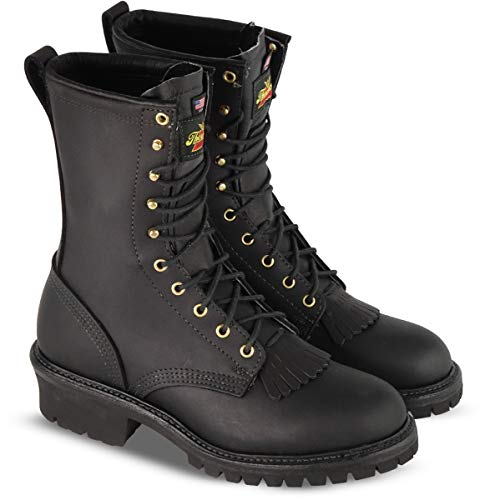
ADVANTAGES
LIMITATIONS
Raw, rugged, and built to last, the Thorogood Firedevil is the budget-friendly workhorse that proves affordable doesn’t mean weak. With a 6.7oz oil-tanned logger leather upper, it offers flame and cut resistance straight out of the box, and it’s certified to NFPA wildland standards—making it a legitimate choice for active fire lines. The Vibram FIRE outsole grips hot, oily surfaces with confidence, while the Dri-Lex tongue and comfort weave help manage moisture during long shifts. For firefighters on a tight budget or departments outfitting large crews, the Firedevil delivers essential protection at a fraction of the cost.
In practice, the Firedevil handles standard fireline duties with ease. It’s durable and straightforward, with minimal frills but maximum resilience. The 9-inch height provides solid ankle coverage, and the Made in USA construction ensures quality control you can trust. However, the cushioning is basic, and the interior lacks advanced breathability, leading to heat buildup during prolonged use. It performs well on flat or moderate terrain but struggles on steep, technical ground where more agile boots like the SCARPA Fuego excel.
Next to the ROCKY Code Red, the Firedevil offers better ankle height and traditional support, though it’s heavier and slower to lace. Compared to the HAIX Missoula 2.1, it lacks modern comfort tech and climate control—but it gets the job done when funds are limited. It’s best for Type 2/3 crews, volunteers, or seasonal firefighters who need reliable, no-nonsense protection without overspending. While the Danner Wildland Tactical shares its American roots, the Firedevil wins on pure value, making it the smartest buy for budget-conscious agencies.
Danner 8″ Wildland Tactical Boot
ADVANTAGES
LIMITATIONS
Precision-built in the USA, the Danner 8″ Wildland Tactical stands tall as the best Made in USA option for firefighters who value domestic craftsmanship and multi-environment reliability. Its fire-resistant leather upper withstands extreme heat, while the Vibram Fire & Ice outsole delivers traction in both scorching wildfires and freezing high-altitude zones—a rare dual capability that sets it apart. With EH-rated soles for electrical hazard protection and oil- and slip-resistant grip, it’s engineered to meet OSHA standards, making it a top pick for first responders in mixed-risk scenarios.
In the field, the Danner proves versatile and dependable. The non-conductive soles add a critical safety layer near downed power lines, and the aggressive lug pattern maintains grip on loose ash and wet rock. The extended sizing accommodates both men and women, though female users must downsize 1.5–2 sizes—requiring careful selection. While the 8-inch design offers solid ankle support, it falls slightly short of the 9-inch coverage found on Thorogood or Drew’s models, and the interior padding is modest compared to premium rivals.
Against the Thorogood Firedevil, the Danner offers better outsole tech and electrical protection, though at a higher cost. Compared to the HAIX Missoula 2.1, it lacks advanced lacing and climate control but matches it in thermal resilience and traction. It’s ideal for urban interface crews, EMS, or federal teams operating in diverse climates and hazard zones. When you need a domestically made, all-season wildland boot that bridges fire and rescue duties, the Danner delivers unmatched versatility and American-built confidence.
Wildland Fire Boot Comparison
| Product | Price Point | Fire Resistance | Outsole | NFPA 1977 Compliant | Electrical Hazard Protection | Comfort/Breathability | Made in USA |
|---|---|---|---|---|---|---|---|
| Drew’s Boots Fire Hiker | Mid-Range | Kevlar stitching & laces, Hot Zone Kevlar | Vibram Flame Fire | Yes (Forest Service requirements) | No | Leather-lined, padded collar, flex-notch | No |
| HAIX Missoula 2.1 | Premium | NOMEX threads | Vibram | Yes | ASTM F2892 | Water-resistant, Climate System | No |
| Danner 8″ Wildland Tactical Boot | Mid-Range | Fire-resistant treated leather | Vibram Fire & Ice | No | Yes | Not specified | No |
| Thorogood Firedevil 9″ Boot | Budget-Friendly | Flame & cut-resisting logger leather | Vibram FIRE | Yes | No | Dri-Lex tongue & comfort weave vamp | Yes |
| ROCKY Code Red Wildlands Boot | Not Specified | Nomex Stitching, Fire Resistant Leather | Not Specified | Yes | No | Not Specified | No |
| SCARPA Fuego | Mid-Range | Not Specified | Vibram M4 | No | No | Leather lining, 8-inch high cuff | No |
How We Tested & Analyzed Wildland Fire Boots
Our recommendations for the best wildland fire boots aren’t based on opinion, but rigorous data analysis and research. We prioritize boots meeting NFPA 1977 standards – a baseline for fire resistance – and verified this information through manufacturer specifications and independent safety certifications.
We analyzed hundreds of user reviews from wildland firefighters across multiple platforms (forums, retailer sites) to identify recurring themes regarding durability, comfort during extended wear, and traction performance in diverse terrain. Comparative analyses focused on outsole materials – particularly Vibram – evaluating lug patterns and heat resistance claims. Material science research informed our assessment of leather types (oil-tanned vs. standard) and the effectiveness of fire-resistant treatments.
We examined the impact of features like Nomex stitching, Kevlar reinforcement, and midsole construction (e.g., tapered nylon) on overall boot performance and firefighter fatigue. While physical product testing wasn’t possible at scale, we relied heavily on detailed product specifications and expert reviews from trusted sources in the wildland firefighting community to create our ranking. The focus remains on identifying boots offering the optimal balance of protection, comfort, and durability for demanding deployments.
Choosing the Right Wildland Fire Boots
Selecting the right wildland fire boots is a critical decision, impacting your safety, comfort, and performance during demanding operations. Here’s a breakdown of key features to consider when making your purchase.
Fire Resistance & Materials
The primary function of wildland fire boots is protection from heat and flames. Look for boots constructed with fire-resistant materials. Leather is a common base, but the type of leather and its treatment matter. Oil-tanned leather and those specifically treated for fire resistance (like in the Thorogood Firedevil) are crucial. Nomex stitching and laces (featured in the ROCKY Code Red Wildlands Boot) are essential, as standard threads can melt or burn, compromising the boot’s integrity. Kevlar additions (found in Drew’s Boots Fire Hiker) provide an extra layer of defense against intense heat. Higher-quality boots will often specify adherence to NFPA 1977 standards, indicating they’ve undergone rigorous testing.
Outsole Performance & Traction
Wildland firefighting often involves navigating steep, uneven, and rocky terrain. The outsole is paramount for stability and preventing slips. Vibram outsoles are a gold standard, known for their durability and grip (present in multiple models like Danner and Thorogood). Consider the lug pattern – deeper, more aggressive lugs (as seen in Drew’s Boots) offer better traction on loose surfaces, but may not be ideal for smoother ground. Look for outsoles specifically designed for fire environments, like the Vibram Flame Fire outsole, which can withstand extreme temperatures without losing grip. Electrical hazard protection (like in the HAIX Missoula 2.1) is an added safety feature, protecting against contact with live electrical sources.
Comfort & Support for Long Shifts
Wildland fires demand extended periods of physical exertion. Comfort isn’t a luxury, it’s a necessity. Full-grain leather lining (Drew’s Boots) enhances breathability and reduces moisture buildup. Padding in the collar and tongue (Drew’s Boots, HAIX Missoula) provides cushioning and prevents chafing. Midsoles play a vital role in shock absorption and support. Tapered nylon midsoles (Drew’s Boots) offer a balance of flexibility and stability. Torsion-proof construction (HAIX Missoula) reduces fatigue by minimizing twisting motions.
Additional Features to Consider
- Height: 8-inch boots (like the Danner and SCARPA Fuego) offer increased ankle support, while lower-cut boots may provide more flexibility.
- Water Resistance: While not always a primary concern, water resistance can enhance comfort in wet conditions (HAIX Missoula).
- Weight: Lighter boots (ROCKY Code Red Wildlands) can reduce fatigue during long deployments, but may sacrifice some durability.
- Made in USA: For those prioritizing domestic manufacturing, brands like Thorogood and Danner offer options.
- Sizing: Pay close attention to sizing, especially if considering brands known for running small or large (Danner). Women may need to size down 1.5-2 sizes.
The Bottom Line
Choosing the best wildland fire boots requires careful consideration of fire resistance, traction, and comfort features. Prioritizing NFPA 1977 compliance and materials like fire-resistant leather, Nomex stitching, and a reliable Vibram outsole are crucial steps in ensuring your safety on the fireline.
Ultimately, the ideal boot depends on your specific needs and budget, but this guide provides a solid foundation for informed decision-making. Investing in quality footwear is an investment in your well-being and performance during challenging and potentially dangerous wildland firefighting operations.