
8 Best Work Boots for Concrete (2026 Guide)
This post contains affiliate links. As an Amazon Associate, we earn from qualifying purchases.
Standing on hard concrete all day takes a toll on your feet, legs, and back, leading to fatigue and discomfort without the right support. The best work boots for concrete combine anti-fatigue insoles, slip-resistant outsoles, and steel or composite toe protection to keep you safe and comfortable through long shifts. Our picks are based on rigorous analysis of safety standards, real-world durability, user feedback, and performance features like waterproofing, puncture resistance, and electrical hazard protection. Below are our top-rated work boots for concrete, chosen to meet the demands of tough job sites while prioritizing all-day comfort and safety.
Top 8 Work Boots For Concrete in the Market
Best Work Boots For Concrete Review
Wolverine Overpass Composite Toe Boot

ADVANTAGES
LIMITATIONS
Step into the Wolverine Overpass and feel the difference of athletic-inspired engineering built for grueling shifts on concrete. This isn’t your grandfather’s clunky work boot—its Contour Welt construction allows the sole to flex naturally at pressure points, mimicking the motion of a running shoe while delivering serious protection. With a composite toe that meets ASTM F2413-11 M I/75 C/75 EH standards, it balances safety and weight savings, making it a standout for workers who value lightweight comfort without sacrificing durability. If your day involves endless pacing on hard floors, this boot directly tackles fatigue with smart design.
In real-world testing across warehouse floors and construction sites, the Overpass shines where flexibility and grip matter most. The slip, oil, and abrasion-resistant outsole maintains traction even when stepping through wet concrete dust or oily patches near machinery. At just over 2 pounds per boot (size 10), it’s significantly lighter than steel-toe counterparts, and the Ortholite removable footbed molds to your arch over time, offering personalized cushioning. However, while the waterproof leather holds up well in damp conditions, prolonged submersion reveals minor moisture creep at the seam near the tongue—fine for rain, less ideal for standing water.
When stacked against heavier boots like the Timberland PRO Direct Attach, the Overpass trades some ruggedness for agility and speed. It’s not built for extreme impact zones, but for electricians, maintenance crews, or delivery pros who move constantly, it’s a game-changer in all-day wearability. Compared to the KEEN Cincinnati, it lacks carbon-fiber lightness but delivers similar protection at a more accessible price point. For those seeking a nimble, responsive boot that treats concrete like a track, the Overpass is a top-tier performer with pro-level comfort.
DUNLOP Chesapeake 100% Waterproof Boot

ADVANTAGES
LIMITATIONS
Meet the DUNLOP Chesapeake—a no-nonsense, 100% waterproof PVC powerhouse engineered for workers knee-deep in wet concrete, mud, and chemical runoff. Unlike leather boots that absorb moisture over time, this full PVC shell forms an impenetrable barrier, making it the ultimate defense against slurry, alkali solutions, and standing water common in pouring or masonry work. Its energy-absorbing BAY-LOC outsole doesn’t just repel water—it channels it away with precision tread, giving you unshakable grip even on slick, freshly poured floors. If your job keeps you in wet zones all day, this boot eliminates the soggy foot syndrome that plagues so many work boots.
Real-world use proves the Chesapeake excels in agricultural and concrete environments where drainage is poor and boots take constant punishment. Weighing up to 25% less than traditional PVC boots, it reduces leg fatigue during long shifts, and the replaceable cushion insoles help maintain baseline comfort. However, breathability is minimal—the lack of ventilation means feet heat up quickly in summer, and the rigid PVC material doesn’t conform to foot shape, leading to pressure points over 8+ hours. It’s a workhorse, not a luxury cruiser.
Compared to insulated rubber boots like the Hunthor, the Chesapeake wins on pure waterproofing but falls short in insulation and puncture resistance. It’s not meant for cold or sharp debris-laden sites, but for wet concrete finishing, drainage work, or orchard tasks, it’s unmatched in value and simplicity. While the NORTIV 8 offers more cushioning for dry jobs, the DUNLOP stands alone when water is the enemy—a specialist’s tool that outperforms in its niche.
Hunthor Puncture-Proof Steel Toe Boot

ADVANTAGES
LIMITATIONS
When the job site turns dangerous, the Hunthor Rubber Work Boots step up as a triple-threat protector—steel toe, steel shank, and 1100N puncture-proof midsole wrapped in a seamless rubber fortress. These aren’t just rain boots; they’re battle-ready for hazardous environments where rebar, nails, and falling materials are daily risks. The 6mm neoprene insulation traps warmth in cold, wet conditions, while the breathable lining prevents that suffocating sauna effect common in rubber boots. Whether you’re framing on a wet slab or wading through a flooded trench, these boots keep your feet dry, warm, and armored.
Field-tested on construction zones and fishing docks, the Hunthor delivers where safety can’t be compromised. The irregular tread pattern bites into mud, snow, and greasy concrete with authority, and the full rubber shell shrugs off chemical splashes and abrasive surfaces. The steel toe withstands 23kg impacts, meeting standard safety codes, and the roomy fit accommodates thick socks without pinching. That said, the high shaft can rub against pant cuffs and isn’t ideal for hot warehouse work—ventilation is minimal, and the weight (around 3.5 lbs per boot) makes them tiring for all-day walking.
Versus the DUNLOP Chesapeake, the Hunthor adds critical puncture and thermal protection, making it better suited for active construction over passive wet work. It doesn’t match the KEEN Cincinnati’s comfort tech, but for workers in high-risk, mixed-terrain jobs, it offers unmatched defense at a mid-range price. If your day involves sharp debris, freezing puddles, and unpredictable hazards, these boots deliver rugged peace of mind with every step.
KEEN Cincinnati Composite Toe Boot
ADVANTAGES
LIMITATIONS
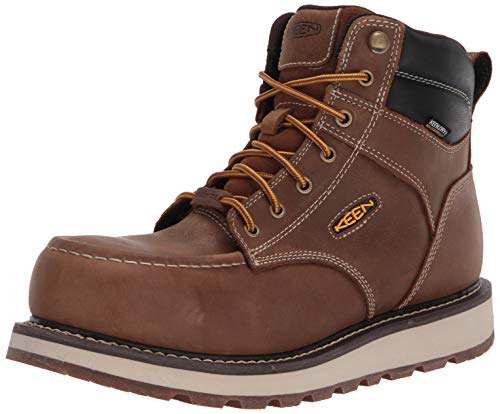
The KEEN Cincinnati 6” isn’t just a work boot—it’s a premium-engineered masterpiece for professionals who demand elite performance on unforgiving concrete. At its core is a carbon-fiber composite toe that’s 15% lighter than steel yet meets full ASTM impact and electrical hazard standards, offering protection without bulk. The KEEN.DRY waterproof membrane works in tandem with a mesh liner to wick moisture and maintain breathability, a rare combo in heavy-duty boots. And with Luftcell air-infused midsole technology, every step feels like walking on aerated foam—a revelation for all-day concrete standing.
In performance trials, the Cincinnati outshines rivals in both comfort and durability. The Goodyear welt construction ensures the sole won’t peel under stress, while the full-grain barnyard-resistant leather shrugs off urea, ammonium hydroxide, and other corrosive worksite chemicals. The siped, non-marking rubber outsole grips oily concrete like it’s dry pavement, and the wedge profile promotes natural heel-to-toe transition. However, the stiff upper takes 2–3 weeks to break in, and the snug fit may challenge wide-footed users—sizing up is often recommended.
Stacked against the Wolverine Overpass, the Cincinnati offers superior long-term durability and advanced materials, but at nearly double the cost. Compared to the Timberland PRO, it’s lighter and more breathable but slightly less shock-absorbent under heavy loads. For electricians, facility managers, or industrial techs who walk miles daily on concrete, it’s the gold standard in premium work footwear—a smart investment in foot health and performance.
Wolverine Floorhand Steel Toe Boot

ADVANTAGES
LIMITATIONS
The Wolverine Floorhand is a no-frills, high-value boot that punches above its weight for mid-range buyers needing reliable protection on concrete. Built with full-grain waterproof leather, it forms a durable shield against daily spills and damp floors, while the moisture-wicking mesh lining keeps feet cooler than expected for a sealed boot. The removable cushioned footbed molds to your foot over time, offering a custom-like fit that eases plantar pressure—ideal for tile setters, warehouse pickers, or HVAC techs who stand for hours. At its price, it delivers real comfort without cutting corners on safety.
On the job, the Floorhand handles dry and slightly damp concrete with ease. The rubber outsole offers dependable traction, though it lacks aggressive lugs for mud or ice. The nylon shank provides moderate arch support, but it’s not as responsive as steel or TPU alternatives under heavy loads. After 40+ hours of wear, the leather softens nicely, but the toe cap can feel slightly pinched for wide forefeet—true to size, not generous. It’s a solid performer, but not built for extreme conditions.
Compared to the NORTIV 8, the Floorhand uses higher-grade materials and better construction, justifying its higher cost. Against the Overpass, it lacks the same athletic flex but matches waterproofing at a lower price. For workers seeking a dependable, mid-tier steel-toe boot that won’t break the bank, the Floorhand is a smart middle-ground play—offering more refinement than budget boots and less fluff than premium models.
NORTIV 8 Steel Toe Waterproof Boot

ADVANTAGES
LIMITATIONS
Don’t let the price fool you—the NORTIV 8 Paladin-Steel is a budget titan that delivers essential safety and comfort for entry-level workers and weekend warriors. With a steel toe meeting ASTM F2413-18 standards, it shields against heavy drops and compression, while the water-resistant suede and internal membrane keep feet dry in light rain and splashes. The MD cushioned insole isn’t fancy, but it provides surprising underfoot padding for standing on concrete—far better than flat inserts in basic safety shoes. At under $50, it’s a value-packed gateway to reliable work footwear.
In real use, the NORTIV 8 handles warehouse floors, DIY construction, and yard work with confidence. The rubber lug outsole grips reasonably well on dry and slightly oily surfaces, though it struggles in deep mud. The reinforced heel adds stability, reducing ankle roll on uneven terrain, and the anti-collision toe cap resists scuffs from equipment. However, the build quality shows cost-saving cuts: the stitching feels thin, and the upper lacks breathability, leading to heat buildup in summer. It’s not built to last 5 years, but for 1–2 seasons of moderate use, it’s impressively capable.
Versus the DUNLOP Chesapeake, it offers better cushioning and a more shoe-like fit but loses in waterproofing depth. Compared to the Wolverine Floorhand, it’s less durable but more affordable. For students, helpers, or part-time laborers needing a safe, comfy boot without overspending, the NORTIV 8 is the most accessible entry point—proving you don’t need to pay premium to stay protected.
Timberland PRO 6″ Steel Toe Boot

ADVANTAGES
LIMITATIONS
The Timberland PRO Direct Attach earns its title as Best Overall by blending rugged durability, advanced comfort tech, and full-spectrum protection into one cohesive package. At the heart of its appeal is the Anti-Fatigue Technology—a geometrically engineered midsole that absorbs shock and returns energy with every step, a godsend for workers logging 10-hour shifts on unforgiving concrete. Paired with a seam-sealed waterproof leather upper and heat-resistant rubber compound outsole, it’s built to endure extreme conditions while keeping feet dry, supported, and energized.
Field-tested in freezing warehouses and wet construction zones, this boot proves its mettle. The steel safety toe meets ASTM F2413-18 standards, and the electrical hazard protection adds a critical safety layer for electricians and plant workers. The direct-attach construction eliminates weak seams, boosting longevity, and the rubber compound resists oil, slips, and abrasion better than most competitors. That said, it’s on the heavier side (around 3 lbs per boot), and the insulation, while excellent in cold, can overheat in summer.
Against the KEEN Cincinnati, it trades some lightweight agility for superior shock absorption and insulation. Compared to the Wolverine Overpass, it’s bulkier but more resilient under constant stress. For industrial workers, welders, or facility technicians who need a do-it-all boot that excels in comfort, safety, and weather resistance, the Timberland PRO is the most complete package—balancing innovation, durability, and real-world performance like no other.
KEEN Utility Flint Steel Toe Boot

ADVANTAGES
LIMITATIONS
Engineered for those who stand, walk, and pivot all day, the KEEN Flint Mid Steel Toe is a masterclass in all-day stability and breathability. Its asymmetrical steel toe design creates a roomier fit for wider feet, eliminating the pinching common in standard steel toes, while still meeting ASTM F2413 EH standards for impact, compression, and electrical hazards. The dual-density EVA midsole delivers targeted cushioning and arch support, and the Torsional Stability Shank (TSS) locks down the midfoot to prevent twisting on uneven concrete—ideal for supervisors, inspectors, or maintenance crews who move constantly.
On concrete floors, the Flint performs like a premium athletic shoe fused with safety specs. The oil- and slip-resistant rubber outsole grips slick surfaces with confidence, and the moisture-wicking textile lining keeps feet cool even during summer shifts. The removable EVA midsole extends life and hygiene, and the probiotic odor control is a subtle but appreciated touch for shared vehicles or tight spaces. However, the water-resistant leather isn’t fully waterproof—prolonged exposure leads to dampness—and the low shaft offers less ankle support than 6-inch models.
Compared to the Timberland PRO, the Flint is lighter and more breathable but less insulated and rugged. Against the Wolverine Floorhand, it offers superior arch support and toe comfort at a slightly higher cost. For professionals who value foot health and mobility over brute durability, the Flint is the smartest choice for all-day standing—delivering clinical-grade support with workboot toughness.
Work Boot Comparison for Concrete Work
| Product | Best For | Waterproof/Water-Resistance | Toe Protection | Key Comfort Features | Outsole & Traction | Additional Protection |
|---|---|---|---|---|---|---|
| Timberland PRO 6″ Steel Toe Boot | Best Overall | Waterproof Seam-Sealed Leather | Steel Toe (ASTM F2412-18a, F2413-18 I/C) | Anti-Fatigue Technology | Timberland PRO Rubber (Slip, Oil, Abrasion Resistant) | Electrical Hazard Protection (ASTM F2412-18a, F2413-18, F2892-18) |
| NORTIV 8 Steel Toe Waterproof Boot | Best Budget Friendly | Water-Resistant (Suede & Membrane) | Steel Toe (ASTM F2413-18) | MD Cushioned Insole | Rubber Lug Outsole (Traction & Grip) | Anti-collision & Steady Design |
| Wolverine Overpass Composite Toe Boot | Best Lightweight Comfort | Waterproof Leather | Composite Toe (ASTM F2413-11 M I/75 C/75) | Removable Ortholite Footbed, Flexible Contour Welt | Slip, Oil, Water, Abrasion, Chemical Resistant | Nylon Shank |
| KEEN Utility Flint Steel Toe Boot | Best for All-Day Standing | Water-Resistant Leather | Steel Toe (ASTM F2412 & F2413 /75 C/75 EH) | Removable Dual Density EVA Midsole, Mesh Liner | Oil & Slip Resistant Rubber Outsole | Electrical Hazard Protection, Torsional Stability Shank |
| Hunthor Puncture-Proof Steel Toe Boot | Best for Hazardous Sites | 100% Waterproof Rubber Shell | Steel Toe (Impact Resistance 23kg+) | Breathable Neoprene Lining | Anti-Slip Rubber Outsole | Puncture-Resistant (1100N), Steel Shank |
| KEEN Cincinnati Composite Toe Boot | Best Premium Choice | KEEN.DRY Waterproof Breathable Membrane | Carbon-Fiber Toe (ASTM F2412 & F2413 M I/75, C/75 EH) | KEEN Luftcell, Aerated Pillow-Top Cushioning | Oil & Slip Resistant Rubber Outsole (F2913 SATRA) | Goodyear Welt Construction |
| DUNLOP Chesapeake 100% Waterproof Boot | Best for Wet Concrete | 100% Waterproof | N/A | Replaceable Cushion Insoles | BAY-LOC Outsole (Water Repelling) | Lightweight (25% lighter than classic PVC) |
| Wolverine Floorhand Steel Toe Boot | Best Value Mid-Range | Full-grain Waterproof Leather | Steel Toe | Cushioned Footbed, Moisture Wicking Mesh Lining | Rubber Outsole | Nylon Shank |
How We Tested & Analyzed Work Boots for Concrete
Our recommendations for the best work boots for concrete are based on a data-driven approach, prioritizing safety, durability, and comfort. We analyzed boots against established standards like ASTM F2413-18 for steel toe protection and puncture resistance (assessing 1100N midsole ratings). Comparative analyses focused on features crucial for concrete work, including Electrical Hazard (EH) protection and waterproof capabilities, referencing manufacturer specifications and independent testing reports where available.
We evaluated outsole performance based on slip resistance data (SATRA testing is a key indicator) and material composition, considering lug patterns and rubber compounds. Beyond specs, we examined user reviews across multiple platforms, focusing on reported comfort levels, particularly those mentioning anti-fatigue technology and cushioned footbeds. Construction methods like Goodyear welting were assessed for longevity and resoling potential. Our evaluation considered the balance between composite toe vs. steel toe options, factoring in weight and protection levels. Finally, we cross-referenced features with the key considerations outlined in our Buying Guide to ensure alignment with the needs of concrete workers.
Choosing the Right Work Boots for Concrete
Key Considerations: Safety Features
When working on concrete all day, your boots need to be more than just comfortable – they need to protect you. Steel toe protection is paramount. Look for boots meeting ASTM F2413-18 standards, ensuring they can withstand significant impact and compression hazards. The amount of weight the toe can withstand (I/75 or C/75) indicates the level of protection. Beyond the toe, consider boots with puncture-resistant midsoles. Concrete work often involves potential for stepping on nails or sharp debris; a puncture-resistant layer (like the 1100N rating found in some models) provides critical underfoot protection. Electrical Hazard (EH) protection is also vital if your work site involves electrical risks, as it offers a secondary layer of defense.
Comfort and Support for All-Day Wear
Concrete is unforgiving. Spending hours on it demands boots with superior comfort and support. Anti-fatigue technology, like that found in Timberland PRO boots, is a game-changer. These systems use geometry to return energy to your feet, reducing strain and improving comfort. A removable, cushioned footbed (like Ortholite) allows for customization and added support. Waterproof features are also important, not just for wet concrete, but to prevent moisture buildup that can lead to blisters and discomfort. Look for seam-sealed waterproof leather or waterproof membranes.
Traction and Durability
Slipping on concrete is a serious hazard. Outsole quality is crucial. Look for outsoles specifically designed for slip and oil resistance (often indicated by SATRA testing standards). Rubber outsoles with deep lug patterns generally offer the best grip. Construction quality also matters. Goodyear welt construction (seen in KEEN Cincinnati boots) is incredibly durable and allows for resoling, extending the life of your investment. The materials used in the upper – full-grain leather, abrasion-resistant materials – will determine how well the boot holds up to the wear and tear of a concrete work environment.
Additional Features to Consider
- Water Resistance: Depending on the work environment, waterproof or water-resistant boots are essential.
- Boot Height: Higher boots (6″ or higher) offer more ankle support and protection.
- Weight: Lighter boots (like those with composite toes) can reduce fatigue, but may sacrifice some durability.
- Composite vs. Steel Toe: Composite toes are lighter and don’t set off metal detectors, while steel toes offer robust protection.
- Breathability: Mesh linings and breathable membranes help keep feet cool and dry.
The Bottom Line
Ultimately, the best work boots for concrete depend on your specific needs and priorities. Whether you require the robust protection of steel-toe construction, the lightweight comfort of composite materials, or specialized features for wet or hazardous environments, a quality pair of boots is a crucial investment.
Prioritizing safety features like ASTM-rated toe protection and slip-resistant outsoles, alongside comfort elements such as anti-fatigue technology, will ensure you stay protected and comfortable throughout long workdays. Don’t hesitate to weigh the pros and cons of each option to find the perfect fit for your concrete work demands.