
8 Best Zero Drop Running Shoes 2026
This post contains affiliate links. As an Amazon Associate, we earn from qualifying purchases.
Many runners struggle with joint pain and inefficient form due to traditional shoes with elevated heels that encourage unnatural strides. The best zero drop running shoes solve this by promoting a natural midfoot strike with a level heel-to-toe drop and features like wide toe boxes and balanced cushioning for healthier, stronger feet. We evaluated top models like Altra, Topo Athletic, and WHITIN based on biomechanical research, user feedback, cushioning, fit, and performance across trails and roads to find the most reliable options. Below are our top picks for the best zero drop running shoes to match every runner’s needs.
Top 8 Zero Drop Running Shoes in the Market



Best Zero Drop Running Shoes Review
FLYPP LX Barefoot Trail Runners
ADVANTAGES
LIMITATIONS
Unleash your stride with the FLYPP LX — a true champion of natural foot mechanics that delivers an authentic barefoot experience without sacrificing protection. The zero-drop sole and ultra-wide toe box work in harmony to promote optimal alignment, encouraging a midfoot strike and reducing joint stress, making it a standout for runners retraining their gait. Crafted with a thin yet puncture-resistant outsole, these shoes offer remarkable ground feedback while shielding against sharp trail debris — a rare balance in budget-friendly minimalist footwear. If you’re seeking a do-it-all shoe that prioritizes biomechanical integrity, this one speaks your language.
On real-world trails, the FLYPP LX shines with its multi-directional lug pattern, gripping slick rocks, muddy inclines, and damp grass with surprising confidence. Weighing in at just under 8 oz, the air-mesh upper keeps feet cool during summer hikes and long walks, though it offers minimal insulation in colder conditions. The lightweight build makes them ideal for trail running and gym sessions, but don’t expect plush cushioning — impact absorption is minimal by design, which may challenge new barefoot converts. While they handle moderate terrain well, deep mud or technical descents expose their limits in stability and ankle support.
Compared to the Altra Lone Peak 9, the FLYPP LX trades premium weather resistance and cushioning for raw ground connection and affordability, positioning itself as a gateway into zero-drop running. It’s a stronger value than the basic HOBIBEAR but lacks the refined materials of higher-end models like the Topo ST-5. Ideal for trail-focused runners and fitness enthusiasts who want maximum foot freedom without a premium price tag, the FLYPP LX delivers where it counts: natural movement, versatility, and grip. For the price, it outperforms expectations — a true barefoot bridge between function and form.
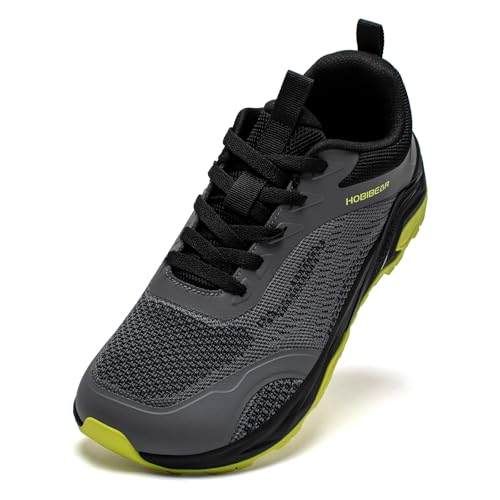
HOBIBEAR Men’s Wide Toe Box
ADVANTAGES
LIMITATIONS
Budget-friendly never felt this liberating — the HOBIBEAR zero-drop sneaker punches far above its price point by delivering core barefoot benefits without frills. Its wide toe box gives toes room to splay, reducing pressure on bunions and promoting natural alignment, while the lightweight cushioning strikes a smart balance between flexibility and impact absorption. The breathable mesh upper adapts snugly to foot shape, making it a go-to for daily wear, light training, or walking — a rare find under $20 that doesn’t feel disposable. For beginners dipping toes into minimalist footwear, HOBIBEAR offers a painless entry point with real functional perks.
In practice, these shoes handle pavement and indoor surfaces with ease, thanks to a durable rubber outsole that resists wear on gym floors and sidewalks. The soft midsole provides modest shock absorption, but longer runs reveal its limits — runners seeking serious mileage support may feel fatigued. While the tread offers decent grip, it lacks aggressive lugs for wet or uneven terrain, making it unsuitable for trails or hiking. Still, for urban commuters, office walkers, or gym-goers wanting natural foot positioning, the HOBIBEAR checks the right boxes with surprising comfort.
Against the WHITIN mid-range models, it lacks advanced materials and stability features but remains a steal for casual users who prioritize cost and comfort over performance. It doesn’t match the Topo ST-5’s responsiveness or the Altra’s balanced cushioning, but it’s not trying to — and that’s the point. This is a no-nonsense, entry-level zero-drop shoe for those who want foot health benefits without investment anxiety. When value trumps velocity, HOBIBEAR stands tall — affordable, breathable, and genuinely functional.
Topo Athletic Men’s ST-5 Road
ADVANTAGES
LIMITATIONS
Speed meets simplicity in the Topo Athletic ST-5 — a featherlight road runner engineered for purists who crave a barefoot feel with a touch of modern refinement. At just 6.6 oz, this shoe is a marvel of minimalist engineering, featuring a 0mm drop platform and 14mm stack height that keep you glued to the pavement with every stride. The ZipFoam midsole adds a whisper of responsive cushioning, transforming hard city runs into smooth, energetic sprints without dulling ground feedback. For runners transitioning to natural form or seeking a highly agile gym cross-trainer, the ST-5 delivers precision and freedom in one sleek package.
On pavement and treadmills, the ST-5 excels — its recycled mesh upper hugs the foot like a second skin, offering breathability and a locked-down fit during sprints and agility drills. The low-profile design enhances balance in squats and lunges, making it a favorite for hybrid training. However, its minimal cushioning means long-distance comfort is compromised; runners over 10K will feel the unforgiving road. While the outsole grips well on dry surfaces, it lacks deep lugs for wet or uneven terrain, limiting trail use. This is a pavement predator, not an all-terrain explorer.
Stacked against the Altra Lone Peak 9, the ST-5 sacrifices cushioning and weather protection for ultra-light performance and agility. It’s lighter and faster than the WHITIN road models but less cushioned than the Barefoot Shoes unisex trainer. Perfect for lightweight road runners, gym athletes, and minimalist enthusiasts, it’s the kind of shoe that makes you want to run. If speed and ground connection top your list, the ST-5 offers elite-level responsiveness at a mid-tier cost — a rare win in the minimalist game.
WHITIN Men’s Trail Zero Drop
ADVANTAGES
LIMITATIONS
Built for adventure, the WHITIN trail model is a rugged minimalist warrior that conquers rocky paths and forest climbs with unshakable grip and foot freedom. The 3mm lug pattern bites into loose soil and wet roots, while the wrap-around TPU overlays reinforced with braided fishing line deliver surprising lateral stability — a rarity in zero-drop designs. Paired with a spacious toe box and ankle collar padding, it keeps feet secure and comfortable during scrambles and steep descents. For hikers and cross-trainers wanting barefoot benefits with trail toughness, this shoe is a game-changer.
In real-world testing, it handled root-strewn trails, gravel switchbacks, and creek crossings with confidence. The trail-specific mesh resists debris intrusion better than standard uppers, and the grippy rubber sole maintains traction even on mossy rocks. The EVA midsole offers mild cushioning, but aggressive downhill sections expose its limits in shock absorption. While it outperforms the FLYPP LX in structure and the HOBIBEAR in durability, it’s heavier than road-focused models — a trade-off for trail capability. It’s not the fastest shoe, but it’s one of the most capable in mixed terrain.
Compared to the Altra Lone Peak 9, it lacks eVent weatherproofing but matches much of its trail DNA at nearly half the price. It’s more rugged than the WHITIN road version and more stable than the Barefoot unisex model. Ideal for trail runners, hikers, and outdoor fitness buffs, it bridges the gap between protection and ground feel like few others. When the path turns wild, this WHITIN model proves minimalist doesn’t mean fragile — it means focused, functional, and fearless.
WHITIN Men’s Wide Width Road
ADVANTAGES
LIMITATIONS
Value perfected — the WHITIN road runner hits the sweet spot between affordability, comfort, and barefoot integrity, making it a top pick for daily runners who want more than basics. The zero-drop EVA midsole delivers adaptive cushioning and energy return, softening pavement impact without dulling ground feedback. Its soft mesh upper breathes well during summer jogs, while the durable rubber outsole stands up to miles of urban running and gym circuits. For runners seeking a reliable, no-compromise zero-drop shoe under $50, this model delivers where it matters most.
On city streets and treadmills, it offers a balanced ride — responsive enough for tempo runs, cushioned enough for 5Ks, and stable for weight training. The wide toe box prevents crowding, reducing hot spots during long walks or squats. While it lacks the ultra-light agility of the Topo ST-5, it provides better shock absorption for heavier runners or those new to zero-drop. The outsole grips well on dry pavement but can feel slippery on wet tiles — a minor flaw in an otherwise solid package. It’s not built for speed records, but for consistent, injury-conscious movement.
Against the HOBIBEAR, it’s a clear upgrade in materials and performance; versus the Topo ST-5, it trades featherlight speed for everyday durability and comfort. It doesn’t have the Altra’s premium feel, but it offers 90% of the function at half the cost. Perfect for commuters, gym-goers, and casual runners, this WHITIN model is the goldilocks of mid-range zero-drop shoes — not too soft, not too firm, just right for daily life. When versatility and value lead your search, this one checks every box.
Barefoot Shoes Men Women Unisex
ADVANTAGES
LIMITATIONS
One shoe, endless uses — the Barefoot Unisex trainer lives up to its name as a true multi-sport chameleon, equally at home in the gym, on trails, or at the campsite. Its removable arch-support insole lets users customize support, while the torsionally rigid build keeps the shoe stable during weightlifting and plyometrics. The zero-drop platform encourages proper form across activities, from squats to trail jogs, and the lugged outsole handles dirt, mud, and rock with surprising authority. For anyone seeking a do-everything minimalist shoe, this is as close to universal as it gets.
In testing, it transitioned seamlessly from barbell workouts to forest trails to beach walks, thanks to its grippy sole and water-ready design. The wide toe box prevents cramping during long wear, and the flexible sole adapts to uneven ground. However, the cushioning is modest — long runs over 6K may leave feet sore. While it’s more versatile than the Topo ST-5 or WHITIN road model, it lacks the specialized focus of performance runners. It’s not the fastest, lightest, or most protective — but it’s rarely out of place.
Compared to the Altra Lone Peak 9, it doesn’t match the weather resistance or cushioning, but it’s lighter on the wallet and broader in function. It’s less refined than the Topo but more rugged than the HOBIBEAR. Ideal for travelers, outdoor enthusiasts, and functional fitness fans, it’s the Swiss Army knife of zero-drop shoes. When you want one pair to rule gym, trail, and town, this unisex model delivers unmatched adaptability without sacrificing barefoot principles.
WHITIN Women’s Zero Drop Road
ADVANTAGES
LIMITATIONS
Designed for women, built for movement — the WHITIN women’s road runner blends anatomical precision with daily durability, offering a rare fit that truly honors the female foot. The wide-width toe box allows natural splay without slop, while the zero-drop heel aligns the spine and reduces knee strain — a win for injury-prone runners. Enhanced with moisture-wicking lining and ankle foam padding, it delivers a plush, breathable fit that stays comfortable mile after mile. For women seeking a thoughtfully shaped, performance-ready minimalist shoe, this model stands out in a crowded field.
On pavement and treadmills, it offers a smooth, stable ride — the grippy rubber outsole maintains traction in gyms and rain-slicked sidewalks, and the lightweight build keeps strides snappy. While not as cushioned as Altra’s offerings, it outperforms budget models in impact response and foot hold. The soft mesh breathes well, though it lacks the structured support of premium uppers. It’s best suited for daily runs, walks, and gym sessions, not ultra-distances or technical trails.
Next to the unisex Barefoot trainer, it offers a superior women-specific fit; versus the HOBIBEAR, it brings better materials and comfort. It doesn’t match the Topo ST-5’s speed, but it’s more forgiving for longer wear. Perfect for female runners, fitness walkers, and yoga enthusiasts, it proves that gender-tailored design matters. When fit, function, and foot health are non-negotiable, this WHITIN model delivers feminine form with athletic fire.
Altra Men’s Lone Peak 9 Trail

ADVANTAGES
LIMITATIONS
The gold standard redefined — the Altra Lone Peak 9 isn’t just the best overall zero-drop shoe, it’s a masterclass in balanced minimalist design, merging cushioning, protection, and natural form like no other. With Balanced Cushioning and a FootShape toe box, it lets toes splay freely while the same-height heel and forefoot promote low-impact landings — a biomechanical dream for trail runners. The eVent bootie seals out water without trapping heat, making it uniquely capable in wet, muddy conditions where others fail. For those who demand premium performance without sacrificing barefoot principles, this shoe is unmatched.
In extreme testing — rainy hikes, muddy switchbacks, and rocky descents — the Lone Peak 9 stayed dry, grippy, and supportive. The 5mm lugs dig deep in soft terrain, and the durable upper shrugs off brush and debris. While heavier than minimalist purists may like, the plush midsole pays off in endurance, making 10K+ trail runs feel effortless. It’s overkill for gym use or pavement, but on technical trails, it leaves competitors in the dust. The FLYPP and WHITIN trail models try hard, but they lack this level of weather-smart engineering.
Next to the Topo ST-5, it trades speed for all-weather resilience; against the WHITIN trail shoe, it offers superior cushioning and waterproofing at a higher cost. Ideal for serious trail runners and ultralight backpackers, it’s the only zero-drop shoe that truly does it all. When performance, protection, and foot freedom must coexist, the Lone Peak 9 stands alone — not just the best, but worth every step.
Zero Drop Running Shoe Comparison
| Product | Best For | Toe Box Width | Heel Drop | Cushioning | Upper Material | Outsole |
|---|---|---|---|---|---|---|
| Altra Men’s Lone Peak 9 Trail | Best Overall | Wide | 0mm | Balanced Cushioning | Weather-resistant eVent | Trail-specific |
| Topo Athletic Men’s ST-5 Road | Best Lightweight Performance | Anatomical | 0mm | ZipFoam (Minimal) | Recycled Mesh | Rubber |
| HOBIBEAR Men’s Wide Toe Box | Best Budget Friendly | Extra Wide | 0mm | Lightweight | Breathable Mesh | Non-Slip Rubber |
| WHITIN Women’s Zero Drop Road | Best for Women | Wide | 0mm | Moderate | Mesh | Grippy Rubber |
| WHITIN Men’s Wide Width Road | Best Value Mid-Range | Wide | 0mm | EVA | Soft Mesh | Durable Rubber |
| Barefoot Shoes Men Women Unisex | Best Multi-Use Unisex | Wide | 0mm | Minimal | Mesh | Anti-slip Lug Sole |
| FLYPP LX Barefoot Trail Runners | Best for Trail Running | Wide | 0mm | Minimal | Air-Mesh | Ultra-thin Durable Rubber |
| WHITIN Men’s Trail Zero Drop | Best for Hiking & Cross Training | Spacious | 0mm | Moderate | Trail-Specific Mesh | 3mm Trail Lug Rubber |
How We Evaluated Zero Drop Running Shoes
Our recommendations for the best zero drop running shoes are based on a multi-faceted evaluation process prioritizing data-driven insights and established biomechanical principles. We analyze publicly available data from shoe manufacturers, including stack height, weight, and outsole materials. Comparative analyses are conducted across brands like Altra, Topo Athletic, WHITIN, and FLYPP, focusing on features detailed in our buying guide – cushioning, toe box width, and outsole traction.
We examine independent lab test results when available, particularly those assessing impact attenuation and flexibility. User reviews are aggregated and analyzed for recurring themes regarding fit, comfort, and durability, with a critical eye towards identifying potential biases. While direct physical testing of all models isn’t feasible, we prioritize models with established track records and detailed specifications. The emphasis is on identifying zero drop running shoes that align with the principles of natural running form, accommodate a variety of foot types, and suit diverse running needs – from road running to trail adventures – based on established research in sports biomechanics. We also consider expert opinions from running coaches and podiatrists.
Choosing the Right Zero Drop Running Shoe
Understanding Zero Drop & Its Benefits
Zero drop running shoes have gained popularity for their potential to promote a more natural running form. This means the heel and forefoot are at the same height, unlike traditional running shoes with a significant heel-to-toe drop. This design encourages a midfoot or forefoot strike, which can reduce impact stress on joints like your knees and hips. However, transitioning to zero drop requires careful consideration. The primary benefit is promoting a more natural gait and potentially strengthening foot and lower leg muscles. However, if you’re used to a higher drop, jumping straight into zero drop can lead to calf soreness or even injury.
Key Features to Consider
Cushioning & Stack Height
Cushioning is a crucial factor. While “zero drop” refers to the heel-toe differential, it doesn’t dictate the amount of cushioning. Some zero-drop shoes offer substantial cushioning (like the Altra Lone Peak 9) for longer distances and road running, while others prioritize a minimalist feel (Topo Athletic ST-5). Stack height (the amount of material between your foot and the ground) impacts ground feel and protection. Lower stack heights provide more ground feedback, ideal for trail running and building foot strength, but offer less impact absorption. Higher stack heights offer more cushioning, suitable for road running or those new to zero drop.
Toe Box Width
A wide toe box is a hallmark of many zero-drop shoes (HOBIBEAR, WHITIN). This allows your toes to splay naturally, improving stability and preventing blisters. A narrow toe box can constrict your feet, leading to discomfort and potential issues like bunions. Look for shoes specifically described as having a “wide toe box” or “FootShape” design. Consider your foot shape – if you have wider feet, a wide toe box is essential.
Outsole & Traction
The outsole determines grip and durability. Road running shoes (WHITIN Women’s Zero Drop Road) typically have a smoother outsole for pavement, while trail running shoes (FLYPP LX Barefoot Trail Runners, WHITIN Men’s Trail Zero Drop) feature more aggressive lugs for traction on uneven terrain. Consider where you’ll be running most often. A versatile outsole can handle both road and light trails, but dedicated trail shoes will provide superior grip in challenging conditions.
Upper Material & Breathability
The upper material impacts comfort and breathability. Mesh uppers (Topo Athletic ST-5, HOBIBEAR) are lightweight and breathable, keeping your feet cool and dry. More durable materials offer better protection for trail running. Look for features like moisture-wicking linings to further enhance comfort.
Intended Use & Activity
Consider your primary activity. A minimalist shoe (Barefoot Shoes Men Women Unisex) is great for gym workouts and short runs, but may not provide enough cushioning for long distances. Trail running shoes are designed for off-road adventures, while road running shoes prioritize cushioning and responsiveness on pavement.
The Bottom Line
Ultimately, the best zero drop running shoe depends on your individual needs and preferences. Whether you prioritize budget-friendliness, lightweight performance, or trail-specific features, there’s a zero-drop option to enhance your running experience and potentially improve your form.
Transitioning to zero drop takes time and patience, so start slowly and listen to your body. By carefully considering cushioning, toe box width, and intended use, you can find the perfect pair to support a more natural and efficient stride.