
Diabetic Socks Purpose
This post contains affiliate links. As an Amazon Associate, we earn from qualifying purchases.
Diabetic socks are specifically designed to ensure the safety and comfort of your feet, preventing blisters and infections while managing moisture and minimizing skin irritation. Their seamless construction protects sensitive skin, and the non-elastic tops provide a secure fit without compromising circulation. Additionally, these socks feature moisture-wicking properties to keep feet dry and padded soles for enhanced comfort. Regular wear can significantly contribute to your overall foot health. For those interested, further details on their unique care and maintenance will be provided later in the article.
Essential Facts in 30 Seconds
- Diabetic socks protect against blisters and pressure for those with diabetes.
- They have moisture-wicking properties to keep feet dry and reduce infection risk.
- Seamless design minimizes skin irritation for individuals with reduced foot sensation.
- Non-elastic tops ensure snug fit without restricting circulation.
- Light colors improve visibility of wounds, aiding in foot health monitoring.
Understanding Diabetic Socks
Diabetic socks protect your feet from blisters and pressure. They’re especially important for people with diabetes. High blood sugar can cause poor circulation and nerve damage. This makes foot care very important.
Diabetic socks keep your feet dry by removing moisture. This helps prevent fungal infections. Many diabetic socks have a seamless design. This means less skin irritation. It’s good for people who can’t feel their feet well.
These socks also have non-elastic tops. This allows a snug fit without cutting off circulation. This is important for those with circulation problems. Diabetic socks are helpful for anyone with foot injuries, sweaty feet, or color changes in the skin.
Wearing the right diabetic socks helps you take care of your foot health. Good foot care can prevent serious problems. Remember, healthy feet are key to overall well-being.
Key Features of Diabetic Socks
Diabetic socks are designed to keep your feet healthy. They’ve special features that help protect against issues that can arise from diabetes.
Here are four important qualities to consider:
- Moisture-wicking: These socks draw moisture away from your skin. Keeping your feet dry helps prevent fungal infections.
- Non-elastic binding: This design fits snugly without squeezing your feet. Good circulation is essential for people with nerve damage or poor blood flow.
- Padded soles: Extra cushioning in the soles protects your feet. It helps reduce calluses and gives you more comfort.
- Light colors: Light-colored socks make it easy to see any wounds or bleeding. This helps you monitor your foot health closely.
Choosing the right diabetic socks can make a big difference.
Keep your feet safe and comfortable.
Importance of Moisture Management
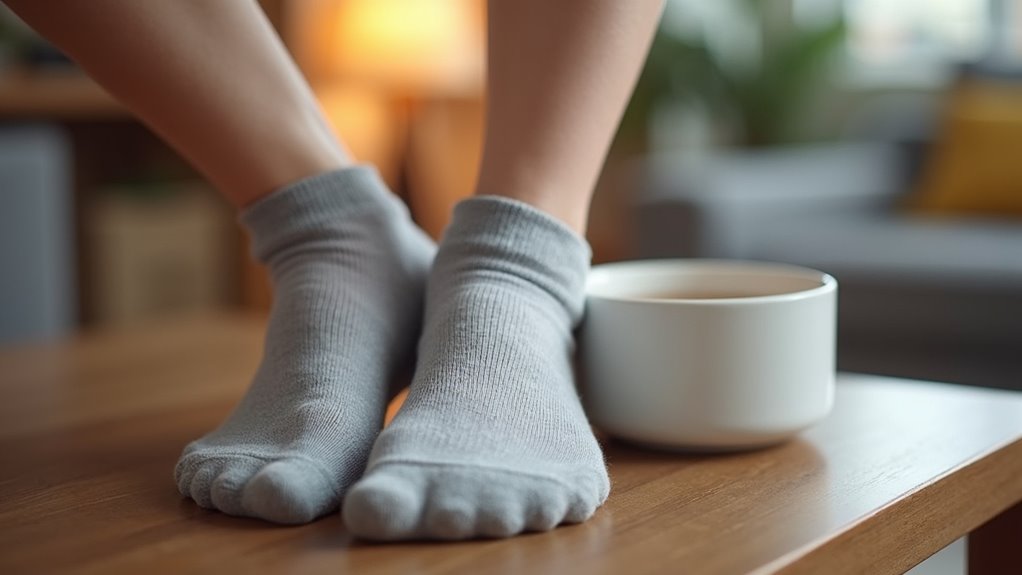
Managing humidity is very important for healthy feet, especially for those with diabetes.
Diabetic socks made from moisture-wicking materials help keep your feet dry. They pull sweat away from your skin. This reduces the risk of infections and blisters. Keeping feet dry lowers serious risks, like foot ulcers. Additionally, using foot powders or antiperspirants can enhance moisture control throughout the day.
Healthy feet lead to a better quality of life. Always choose the right socks for protection. Your feet deserve the best care.
Moisture-Wicking Materials Advantage
Keeping feet dry is crucial for good foot health, especially for those with diabetes. Diabetic socks made from moisture-wicking materials help a lot. These materials pull sweat away from the skin. This keeps feet dry and comfortable.
Here are some benefits:
- Lowers the chance of fungal infections and blisters.
- Helps sweat evaporate, keeping you comfortable all day.
- Supports better blood flow, important for foot health.
- Reduces irritation and friction, especially for those with nerve damage.
Choosing the right socks can make a big difference for your feet.
Reducing Infection Risks
To reduce infection risks, managing dampness is crucial. Diabetic socks made from moisture-wicking materials pull sweat away from your feet.
Keeping your feet dry helps prevent fungal infections and other diabetes-related issues. The seamless design of these socks reduces friction, lowering the chance of blisters that can get infected.
Regularly wearing diabetic socks creates a drier environment, which can help speed up healing. Light-colored socks make it easy to see any bleeding or wounds. This allows for quick action to prevent infections.
Keeping your feet dry is a simple way to stay healthy and safe.
Importance of Dry Feet
Here are some reasons why diabetic socks are a good choice:
- Moisture-wicking materials: Diabetic socks use special fibers that pull moisture away from your skin.
- Better than cotton: These socks often have acrylic fibers, which manage moisture better than cotton.
- Less friction: Dry feet mean fewer blisters and injuries from rubbing.
- Good foot care: Wearing diabetic socks regularly helps keep your feet healthy and lowers the risk of complications.
Incorporating specialized socks into your foot care routine can further enhance comfort and prevent issues related to moisture.
Taking care of your feet is essential.
Dry feet lead to healthier feet.
Care and Maintenance of Diabetic Socks

Caring for diabetic socks is key to keeping your feet healthy and comfortable. Wash them every 3-5 wears. This helps with hygiene and prevents infections. Use a mesh laundry bag to protect your socks in the wash. Air drying is best, or use low heat. High temperatures can ruin their moisture-wicking ability.
Check your socks often for signs of wear. Look for pilling, holes, or rips. Replace them right away if you find any damage. This keeps your feet safe. With good care, diabetic socks last about six months. Regular maintenance is important.
Avoid bleach and fabric softeners. These can damage the materials and affect moisture control. Follow these care tips to make your diabetic socks last longer. They’ll continue to support your foot health.
Diabetic Socks vs. Compression Socks
Diabetic socks and compression socks serve different purposes.
Diabetic socks help protect your feet. They keep them dry and safe from injuries. These socks often have extra padding. They also have seamless designs to reduce friction.
Compression socks focus on improving blood flow. They apply gentle pressure to the legs and feet. This helps reduce swelling and discomfort. People with circulation issues often benefit from them.
Think about your needs. Do you want protection or better circulation?
Both socks offer comfort and health benefits. Choose the one that fits your lifestyle best.
Key Differences Explained
Understanding the differences between diabetic socks and compression socks helps in making the right choice. Here are the main points to consider:
- Purpose: Diabetic socks keep feet comfortable and prevent injuries.
- Compression socks help improve blood circulation.
- Design: Diabetic socks have a seamless design to reduce irritation.
- Compression socks may not have this feature and can feel uncomfortable if they don’t fit well.
- Humidity Management: Diabetic socks guard against moisture and friction.
- Compression socks have a tight weave to help reduce swelling.
- Usage: Diabetic socks are perfect for people with diabetes.
- Compression socks usually need a doctor’s prescription for circulation problems.
Choosing the right sock can make a big difference for your feet.
Purpose and Functionality
Diabetic socks and compression socks have different purposes.
Diabetic socks protect your feet from dampness and blisters. They’ve non-binding tops and are made from soft, moisture-wicking materials. This keeps your feet dry and reduces the risk of foot problems. These socks also provide cushioning and protect against pressure points.
Compression socks improve circulation and reduce swelling in your legs and feet. They’re made from firmer materials that apply graduated pressure. This isn’t the main goal of diabetic socks.
Understanding these differences helps you choose the right type for your needs.
Recommended Uses and Considerations
Choosing the right sock matters for comfort and foot health. For people with diabetes, it’s important to know the differences between diabetic socks and compression socks.
Diabetic socks offer comfort. They use materials that absorb moisture and have no seams. This design helps prevent blisters.
Compression socks help blood flow and circulation. They can reduce swelling. These are good for people with circulation problems.
Fit is another key point. Diabetic socks have a non-binding top. Compression socks fit tightly and may need a doctor’s prescription.
Always talk to your healthcare provider. They can help you decide which sock is best for your foot care needs.
This choice is important for managing diabetes effectively.
When to Consult a Healthcare Provider
Foot health is very important. It’s crucial to know when to see a healthcare provider. Notice any cuts, blisters, or wounds on your feet? If they don’t heal in a few days, seek help. These signs may mean serious problems, especially if you have diabetes.
Feel constant foot pain, numbness, or tingling? Get checked for nerve damage or circulation issues. Changes in color, temperature, or swelling also require attention. These can mean poor circulation or infection.
Taking care of your feet is vital. Use diabetic socks and keep your feet clean. If these steps don’t help, consult a professional. Regular foot washing can also help prevent infections and maintain fresh skin.
Experts recommend having a foot exam at least once a year. This helps catch any problems early. Remember, healthy feet support your overall health and well-being.
Frequently Asked Questions
Can I Wear Diabetic Socks With Regular Shoes?
Wearing diabetic socks with regular shoes is totally fine. Just make sure your shoes fit well. They should have enough space for your feet. Always check your feet for any irritation or sores. This helps prevent problems. Diabetic socks are designed to keep your feet safe and comfortable. They reduce pressure and improve blood flow. So, wear them with confidence. Just pay attention to how your feet feel.
How Often Should Diabetic Socks Be Replaced?
Replace diabetic socks at the first sign of damage. Look for holes or rips. On average, these socks last around six months. Regular checks help ensure your feet stay protected. Keeping your feet safe is important for your health. Always prioritize comfort and support in your socks.
Are Diabetic Socks Suitable for All Foot Sizes?
Diabetic socks fit all foot sizes. They come in different sizes, including larger options. This variety ensures a good fit for everyone. Always check the sizing charts for the best comfort. These socks help with blood circulation and reduce swelling. They also have soft seams and moisture-wicking materials. This keeps your feet dry and comfortable. Wearing diabetic socks can prevent foot problems. They are a smart choice for anyone with diabetes.
Can I Use Diabetic Socks for Other Foot Conditions?
About 80% of people with peripheral artery disease face foot issues. Diabetic socks can help with other foot problems too. Their special design does not bind the feet. They also wick away moisture and provide cushioning. This makes them great for various foot conditions. People with diabetes, neuropathy, or swelling can benefit from them. Wearing diabetic socks helps keep feet comfortable and healthy.
Do Diabetic Socks Come in Different Styles and Colors?
Diabetic socks are available in many styles and colors. Choose from crew, ankle, or knee-high lengths. Bright colors and fun patterns let you express your personal style. They provide comfort and protection for your feet. Many brands offer options that fit well and keep your feet safe. Enjoy both style and health benefits with diabetic socks!
Conclusion
Diabetic socks play an important role in foot care. They protect your feet from complications. These socks have special features like cushioning and moisture-wicking fabric. They also have seamless designs to prevent irritation.
Taking care of your diabetic socks is essential. Proper care helps them last longer. If you notice any foot problems, see your healthcare provider right away.
Investing in good diabetic socks today leads to healthier feet tomorrow. Healthy feet keep you active and pain-free.