
Hiking Boots Fitting Guide
This post contains affiliate links. As an Amazon Associate, we earn from qualifying purchases.
Finding the right fit for your hiking boots is crucial for comfort and to prevent blisters. Measure your foot size in the afternoon or evening when your feet are likely to swell, ensuring you have about a finger’s width of space in front of your longest toe. Try on boots with the socks you plan to wear while hiking, and walk around in them to check for a snug heel and adequate toe space. More tips for achieving the perfect fit will be provided later in the article for those interested in a deeper understanding.
Essential Facts in 30 Seconds
- Measure foot size in the afternoon for accuracy.
- Allow a finger’s width of space in front of the longest toe.
- Try on boots with the socks you plan to wear for hiking.
- Test comfort on slopes and stairs for a secure heel fit.
- Gradually break in new boots by wearing them for short periods.
Importance of Proper Fit
Choosing the right hiking boots is key for a great outdoor adventure. A good fit keeps your feet comfortable. Boots that don’t fit well can lead to blisters and pressure points. That can ruin a hike fast. Aim for a snug feel, but not too tight. Make sure your toes have space to wiggle. This helps prevent hitting the toe cap, especially when going downhill.
Different boot models fit various foot shapes. Finding the right one is crucial. A secure fit around your heel is also important. Your heel should stay in place while you walk. This helps avoid blisters and keeps you stable.
Take time to try on different pairs. Walk around in them to see how they feel. A proper fit makes hiking more enjoyable. It reduces the chance of injuries and discomfort. Remember to prioritize excellent arch support in your selection, especially if you have flat feet.
Investing in good hiking footwear pays off. Your feet will thank you on the trail.
Understanding Boot Construction and Material Influence
Finding the right hiking boots is crucial. It’s not just about size. The way boots are made and the materials used can change how they feel and perform.
The “last” of a boot is a mold that shapes the fit. Different brands use different lasts, catering to both wide and narrow feet.
Here’s a simple look at how materials and construction affect hiking boots:
| Material | Durability | Comfort Level |
|---|---|---|
| Full-Grain Leather | High | Excellent |
| Synthetic | Moderate | Good |
| Textile | Low | Fair |
Leather-lined boots fit better over time but need a break-in period. Boot stiffness also matters. Stiffer boots offer more support, while softer boots might feel more comfortable.
Picking the right materials helps your boots fit well. A good fit reduces the chance of blisters and discomfort on the trail. Enjoy your hikes with the right boots!
Measuring Foot Size and Ensuring Proper Toe Space
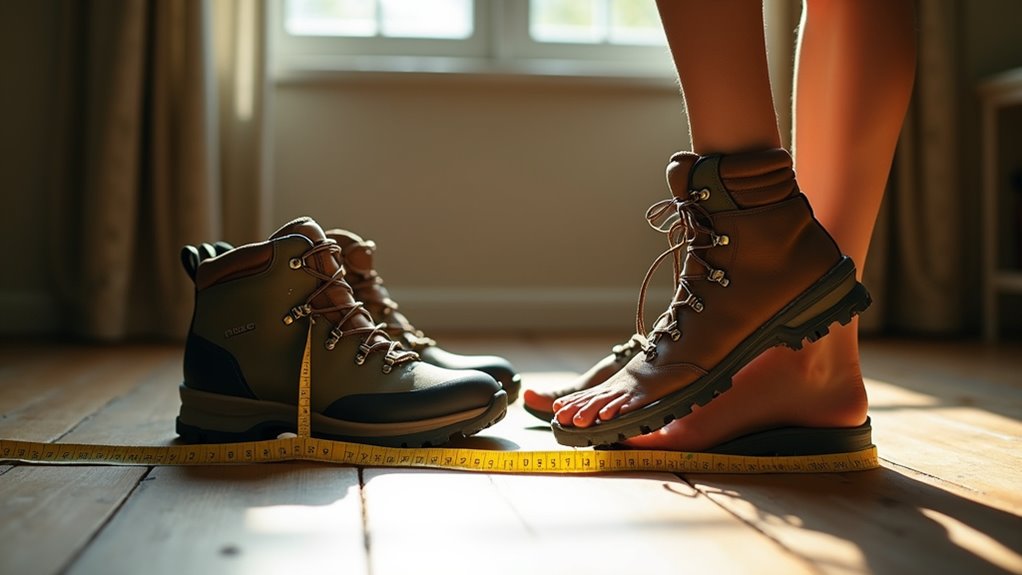
To find the right fit for hiking boots, measure your foot size carefully. Trace your foot on a piece of paper. Make sure there’s a finger’s width of space in front of your longest toe. This space is important for comfort.
Also, check your foot width. This helps you pick boots that fit well. A good fit means better support while hiking.
Accurate Measurement Techniques
To measure your foot size for hiking boots accurately, follow these steps:
- Stand on a piece of paper. Align your heel with the edge.
- Trace your foot using a pencil. Measure from your heel to the longest toe with a ruler.
- Measure your feet at the end of the day. Feet can swell after walking.
- Take out the insoles from the boots. Place your foot on the insoles. Your heel should touch the back.
This method ensures a proper fit. It gives your toes enough space for comfort during hikes.
Finding the right size helps prevent blisters and foot pain.
Ensuring Adequate Toe Space
Getting the right toe space in your hiking boots is very important. Measure your foot length carefully. Always leave about a finger’s width in front of your longest toe. This extra space helps prevent your toes from hitting the front of the boot during downhill hikes.
Try on the boots without insoles. Place your heel at the back of the boot to check the fit. Remember, your foot can change size during the day. Measure your feet in the afternoon or evening for the best results.
Wear your thicker hiking socks when trying on boots. This ensures a proper fit with your usual gear. Proper toe space lets your toes wiggle freely. This reduces the chance of blisters and makes hiking more comfortable. Additionally, ensuring a roomy toe box can contribute to better balance and comfort while hiking.
| Measurement Step | Description |
|---|---|
| Measure Foot Length | Use a ruler to find your foot size. |
| Allow Toe Space | Leave a finger’s width in front of toes. |
| Try Boots Without Insoles | Check fit by placing heel at the back. |
| Consider Sock Thickness | Test boots with your usual hiking socks. |
| Assess Toe Movement | Confirm toes can move freely for comfort. |
Importance of Foot Width
Choosing hiking boots means paying attention to foot width. This is vital for comfort and support. A boot that doesn’t fit well can cause blisters and other injuries.
Here are some tips to help you find the right fit:
- Measure your foot width. Stand on a piece of paper and trace your foot. Then, measure the widest part.
- Try on boots. Ensure they fit snugly. Your toes shouldn’t feel crunched, and your heel shouldn’t move too much.
- Consider stretching. Leather boots might stretch over time. Leave a little room for adjustment.
- Explore different models. Brands make boots for different foot shapes. Try various options to find the best fit.
Proper width helps align the boot’s flex point with your foot. This alignment boosts comfort and performance on the trail.
Comfort means more enjoyable hikes!
Trying on Hiking Shoes and Fit Considerations
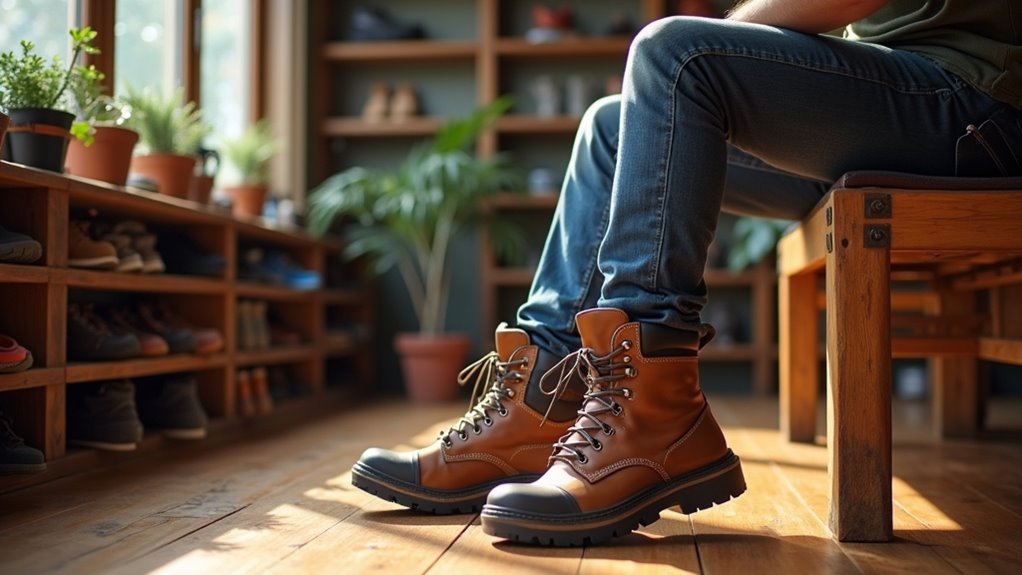
Try on hiking shoes in the afternoon or evening. Your feet swell during the day.
Wear the same socks you plan to use on the trail. This affects how the shoes feel.
Make sure there’s enough space for your toes. A secure fit around the heel is also important. This helps prevent discomfort on your hikes.
A good fit makes hiking more enjoyable. Remember these tips for the best hiking shoe experience!
Optimal Timing for Fitting
To find the best fit for your hiking boots, try them on in the afternoon or evening. Your feet swell during these times, making it easier to choose the right size.
Follow these tips for a great fit:
- Wear the same type of hiking socks you plan to use.
- Spend about 30 minutes in the store. This helps you find any pressure points.
- Walk on slopes and stairs. This checks the toe space and heel fit.
- Make sure your heel fits snugly. Check for any side movement. Stand on a step to see if your heel slips.
These steps will help you get the perfect hiking boots. Happy trails!
Sock Selection Importance
The right socks make a big difference for hiking comfort.
Wear the same type of socks when you try on hiking boots. Choose synthetic socks. They wick away moisture and keep your feet dry. This reduces the chance of blisters. Additionally, ensure that your socks have extra cushioning in high-friction areas to further protect against blisters.
Sock thickness matters too. Thicker socks may require a bigger boot size. Thinner socks fit snugly. Always check for enough space in the toe box. This helps prevent cramping, especially on downhill trails.
Test your boots with your chosen socks. This gives you a true feel of fit and comfort.
Pay attention to sock selection. It can greatly improve your hiking experience.
Assessing Heel and Toe
Finding the right fit for hiking shoes is crucial for comfort and safety. Here’s how to check your heel and toe fit:
- Check Toe Space: Take out the insoles. Align your heel with the back. There should be about a finger’s width of space in front of your longest toe.
- Secure Heel Fit: Lace your shoes tightly. Walk around a bit. Your heel should feel snug with little to no movement.
- Test for Heel Lift: Stand on a step with just your toes. Your heel shouldn’t lift more than a quarter-inch.
- Try in the Evening: Fit your shoes later in the day. Your feet swell a little. This gives a better fit.
These steps help ensure a comfortable hike. Happy trails!
Fit Adjustments and Customization
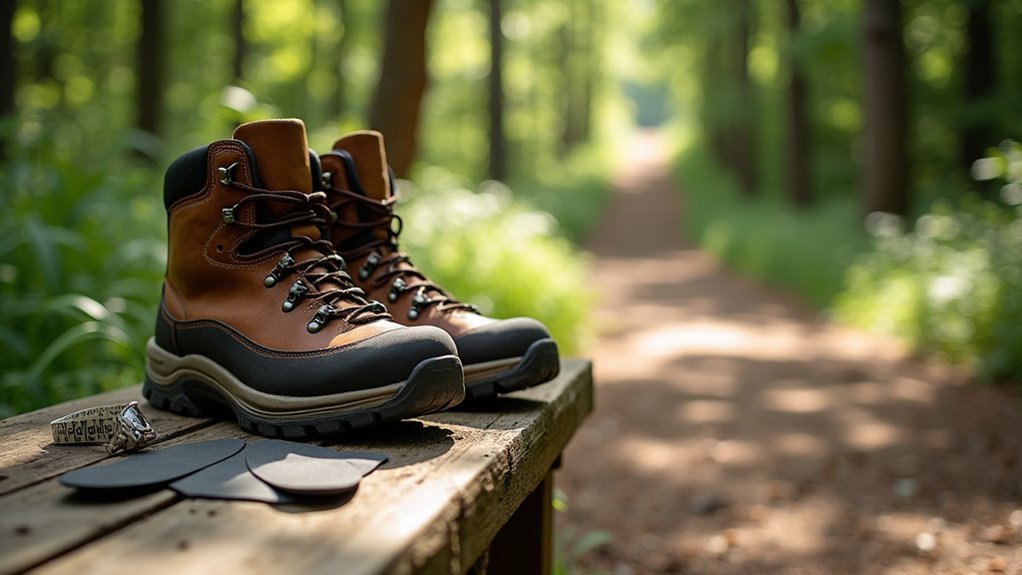
To get your hiking boots to fit perfectly, make some key adjustments.
Start with your lacing strategy. Different lacing techniques can reduce pressure points and improve heel lock. For loose boots, try aftermarket insoles. They fill extra space and add comfort.
Heel slippage is another issue. If that happens, wear thicker socks or adjust the ankle lacing for a better fit.
Leather boots usually stretch more than synthetic ones. Break them in slowly for a customized fit.
If your boots are too long, you need a different size. Length can’t be fixed with lacing or insoles.
Tips for Breaking In Hiking Boots
Breaking in new hiking boots is key for comfort on the trail. Here are some helpful tips to make the process easier:
- Start slow. Wear your boots for short times during your daily activities. Gradually increase wear time to 2-3 hours.
- Use thick hiking socks. This helps mimic real hiking conditions and ensures a better fit.
- Vary terrain. Walk on different surfaces and slopes. This tests your boots’ comfort and performance.
- Adjust as needed. If you feel discomfort, try different lacing styles. Adding new insoles can also improve the fit.
Following these tips will help you break in your boots. Comfortable boots make a big difference on longer hikes.
Enjoy your adventures!
Frequently Asked Questions
How Do I Choose Boots for Different Hiking Terrains?
Choosing the right boots for hiking is important. Different terrains need different features.
For rocky paths, look for boots with stiffer midsoles. They provide better support and stability.
Muddy trails require deep lugs on the soles. These help with grip and prevent slipping.
In wet conditions, waterproof materials are a must. They keep your feet dry and comfortable.
For well-maintained hikes, lightweight boots are ideal. They make walking easier and less tiring.
If you carry heavy loads, prioritize ankle support. Strong ankle support helps prevent injuries.
What Are the Signs That Boots Are Too Tight?
Tight boots can cause discomfort. Signs include crunched toes and pinching sides. Heel slipping is another clear sign. Lacing that feels too tight? That’s another reason to find a new size. Comfort is key for happy feet. Don’t ignore these signs. Proper fit makes a big difference. Your feet will thank you!
Can I Wear Thick Socks for a Better Fit?
Many hikers wear boots that do not fit well. In fact, 70% of them do. Thick socks can help your boots fit better. They add cushion and warmth. But be careful. Thick socks should not squish your toes. You still need enough space for your feet to move. Comfort matters most when hiking. Always check for tight spots. Stay aware of how your feet feel. A good fit makes hiking more enjoyable!
How Often Should I Replace My Hiking Boots?
Replace your hiking boots every 500 to 1000 miles. This usually means every 3 to 5 years. Don’t just look at how they look. Check for wear and tear. Feel for discomfort or reduced performance. These signs mean it’s time for new boots. Hiking is tough on your gear. Good boots keep your feet safe and comfortable. Don’t wait too long to replace them. Your feet deserve the best support.
Are There Specific Brands Known for Wider Fit Options?
For comfortable footwear, brands like Keen, Merrell, and Salomon offer wider fit options. New Balance, Lowa, and Oboz also have generous designs. These brands make sure your outdoor adventures are enjoyable and pain-free. Choose shoes that fit well. A good fit means more fun on your trips. Don’t let tight shoes ruin your day. Pick the right brand for your needs. Enjoy every step you take!
Conclusion
Finding the right fit for hiking boots is important. Comfort and support are key. Your toes need space to move. Measure your feet often. Sizes can change over time. Try on boots with the socks you plan to wear while hiking. Don’t be afraid to adjust the fit. Custom insoles can help too. Once you find the right boots, break them in before hitting the trail. Happy hiking!