
How Often to Replace Socks
This post contains affiliate links. As an Amazon Associate, we earn from qualifying purchases.
Replace your everyday socks every 6 to 12 months to maintain ideal hygiene and comfort. For athletic socks, aim for replacement every 3 to 6 months, while dress socks can last between 1 to 2 years. Look out for signs like holes, odor, or thinning fabric, as these indicate it’s time for a new pair. Keeping socks fresh helps prevent infections and other foot issues. Further details and tips on how to care for your socks effectively will follow.
Essential Facts in 30 Seconds
- Everyday socks should be replaced every 6 to 12 months for hygiene and comfort.
- Athletic and compression socks require replacement every 3 to 6 months due to higher wear.
- Dress socks can be replaced every 1 to 2 years based on usage.
- Replace socks immediately if there are signs of wear, such as holes or odors.
- Regularly check socks for deterioration to prevent foot health issues.
The Importance of Sock Health
The health of your socks is important for your feet. Regularly replacing socks helps keep your feet clean and comfortable. Worn-out socks can cause blisters and skin infections. Old socks may also hold bacteria and fungi, increasing the risk of athlete’s foot. Fresh socks do a better job of absorbing sweat and reducing friction.
Aim to change your socks every 3 to 6 months. This schedule helps prevent wear and tear that affects cushioning and support. Additionally, wearing diabetic socks can provide specific benefits for those at risk of foot-related issues.
Well-fitting and clean socks provide vital comfort. They allow you to stay active without foot problems. By replacing your socks regularly, you support better foot health and overall well-being.
Check your sock drawer often and invest in new pairs!
Signs of Sock Wear and Tear
Holes or tears in your socks mean it’s time for new ones. Thinning fabric can cause discomfort and lead to blisters. Lost elasticity makes socks fit poorly.
If socks still smell after washing, that’s a hygiene issue. Replace them to stay fresh and comfortable. Clean socks help keep your feet healthy. Regularly checking for signs of wear can enhance your overall sock performance and comfort level.
Don’t wait until they’re too worn out. Regularly check your socks for signs of wear. Keep your feet happy with good quality socks!
Visible Holes and Tears
Visible holes and tears in socks mean it’s time to get new ones. Holes show excessive wear. They can cause blisters and discomfort. Tears at the seams weaken the sock. This makes them less effective. Even tiny holes can grow bigger with use.
Check your socks often, especially if you’re active. Regular checks help keep your feet clean. Worn-out socks can lead to foot problems.
Replace socks as soon as you see holes or tears. A tidy sock drawer keeps your feet comfy and safe. This helps your overall foot health for daily activities.
Thinning Fabric and Elasticity
Socks wear out over time. You’ll see thinning fabric and less elasticity. These changes affect how comfortable your socks feel.
Here are some key signs to watch for:
- Look for thin spots around the heel and ball of the foot. These can turn into holes.
- When elasticity fades, socks sag. This can lead to blisters.
- Check your socks every six months to a year. This helps you know when to replace them.
- Rough or pilled fabric means it’s time for new socks to keep comfort high.
Feeling irritation while wearing socks? It’s a clear sign they need replacement. Additionally, no-show socks can often wear out faster due to their lightweight design and silicone grips, making regular inspections essential.
Persistent Odors and Stains
Socks can pick up strong odors and stains over time. This usually means it’s time to get new ones. A bad smell after washing means bacteria are growing. This can hurt your foot hygiene. Stains often come from sweating. Sweating too much can cause skin problems. Check your socks often for these signs. This helps keep your feet comfortable every day.
| Indicator | Action | Reason |
|---|---|---|
| Persistent Odors | Replace your socks | Stops fungal infections |
| Visible Stains | Replace your socks | Prevents skin irritation |
| Discoloration | Replace your socks | Ensures comfort and hygiene |
| Material Degradation | Replace your socks | Keeps socks working well |
| Frequent Use | Replace your socks | Supports better foot health |
How Often Should You Replace Your Socks?
Replace your socks based on how often you wear them and their condition. Everyday cotton or wool socks should be replaced every 6 to 12 months.
Athletic socks wear out faster. Change them every 3 to 6 months.
Look for holes or bad smells. These are signs you need new socks. Keeping your socks fresh helps keep your feet healthy and comfortable.
Frequency Based on Activity
Replacing socks is important for comfort and foot health. Here’s a simple guide on how often to change them:
- Everyday Socks: Change these every 6 to 12 months if worn daily.
- Athletic Socks: Replace them every 3 to 6 months, especially if active. This helps prevent foot problems.
- Compression Socks: These need replacement every 3 to 6 months to ensure they work well.
- Dress Socks: Since these are worn less often, replace them every 1 to 2 years.
Investing in good-quality socks is key.
Regularly changing socks keeps your feet fresh and comfortable.
Don’t ignore this simple step for better foot health.
Signs for Immediate Replacement
Maintaining your sock collection is important. Watch for signs that mean you need to replace them.
Visible holes or thinning areas? Time to toss those socks. They can cause blisters or discomfort.
Smelly socks even after washing? This shows bacteria. Discard them for your health.
Socks that sag instead of staying snug? They’ve lost their elasticity. Replace them for better support.
Discoloration or fading? This means wear and can hurt performance.
Check for fraying or loose threads. These signs can lead to more damage.
Don’t wait too long. Replace socks to keep your feet happy!
Variables Affecting Sock Longevity
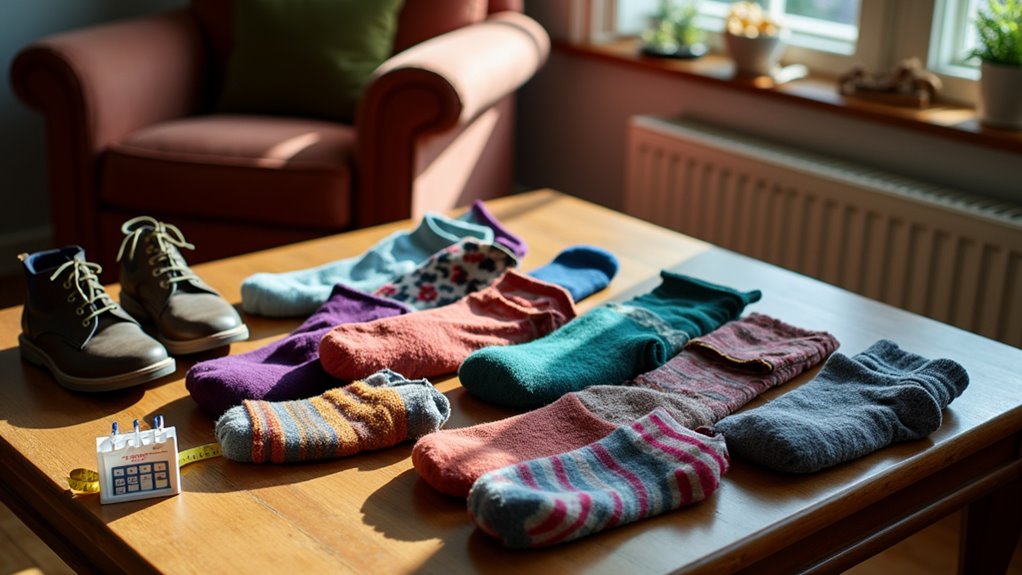
Several factors affect how long socks last. To get the most from your socks, pay attention to these key points:
- Material: Synthetic fibers like polyester last longer than natural fibers like cotton.
- Fit: A proper fit is important. Socks that are too loose or too tight wear out faster.
- Usage: Activities like running wear socks out quickly. Replace them every three to six months.
- Care: Wash socks in cold water and air dry. This keeps them in good shape. Additionally, consider the moisture management capabilities of the sock material, as this can impact both comfort and longevity.
Your personal hygiene also matters. Wash your feet regularly and change socks daily. This helps reduce foot odor and bacteria. It’s an easy way to make your socks last longer.
Keep your sock drawer neat. Replace worn socks right away. This helps keep your collection fresh and lasting.
Tips for Extending the Life of Your Socks
To make your socks last longer, follow some easy care tips.
Wash them in cold water. Skip fabric softeners. This keeps them stretchy and helps them wick away moisture.
Rotate your sock pairs. This reduces wear and lets each pair breathe. It also helps to prevent bad smells and bacteria.
Store your socks in a cool, dry place. This stops dampness from building up.
Keep toenails trimmed. This prevents snags and holes.
Check your socks often for signs of wear, like thin spots. Knowing when to replace your socks is important.
Refreshing Your Sock Drawer: A Step-by-Step Guide
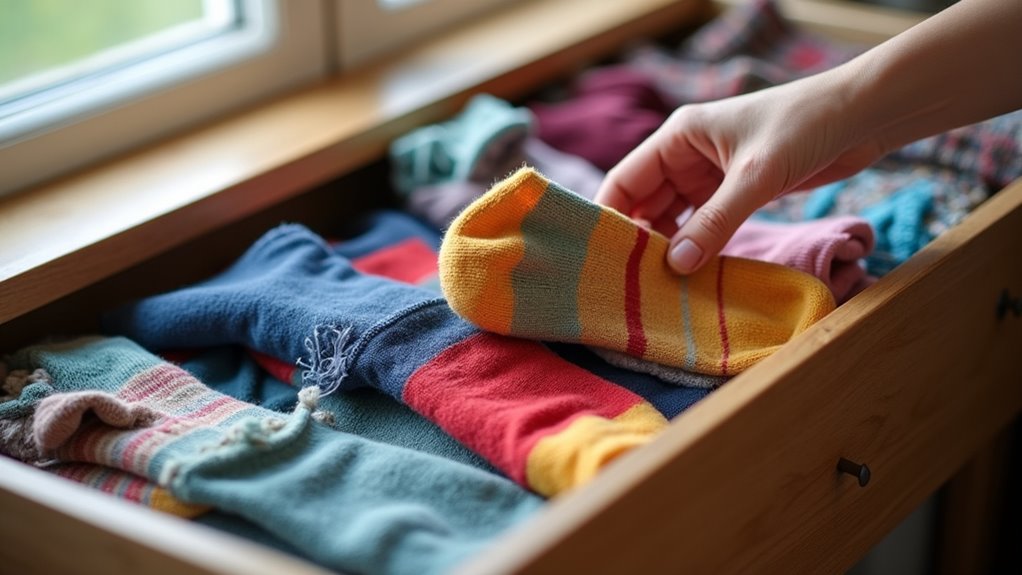
Refreshing your sock drawer can greatly improve your comfort and hygiene. Follow these steps for a quick and easy update:
- Check your socks for damage. Look for holes, thin spots, or loose elastic. Toss any that are worn out.
- Sort your socks into two piles. Keep the good ones and set aside the ones you need to replace. This makes future checks easier.
- Set a replacement timeline. Everyday cotton or wool socks last 6-12 months. Athletic socks wear out faster and should be replaced every 3-6 months.
- Mix up your pairs. Wearing the same socks too often can cause dampness and odors. This can lead to infections too.
Frequently Asked Questions
Can Wearing the Same Socks Multiple Days Affect Foot Health?
Wearing the same socks for multiple days can harm your foot health. Bacteria thrive in damp socks, which can cause infections and bad smells. This moisture also creates friction. Friction can lead to irritation and blisters. These issues can make your feet uncomfortable and unhygienic. Keeping your feet dry and clean is essential for good health. Change socks daily to avoid these problems. Fresh socks help keep your feet feeling fresh and healthy. Take care of your feet by wearing clean socks every day.
Are There Eco-Friendly Options for Replacing Socks?
Eco-friendly options for replacing socks are available. Brands like Bombas and Conscious Step use sustainable materials. These socks feel good and help the planet. You can find socks made from organic cotton, bamboo, and recycled materials. These materials are better for the environment. By choosing these socks, you support a cleaner planet. It’s a simple way to make a positive impact. Keep your feet cozy and the Earth happy!
How Do Different Materials Impact Sock Lifespan?
Different materials affect how long socks last. Cotton tends to wear out quickly. Wool and synthetic socks are much stronger. They can handle more wear and tear. For those who want socks that last longer, choose synthetic or high-quality wool. These options give you more value for your money. Remember, a good pair of socks can make a big difference!
Should I Wash New Socks Before Wearing Them?
Washing new socks before wearing them is a smart choice. It removes chemicals and allergens that may irritate your skin. Freshly made socks often contain residue from the manufacturing process. Giving them a wash helps improve their softness, making them more comfortable to wear. Clean socks also lower the chance of skin irritation or allergic reactions. Enjoy wearing your socks without worry by washing them first. It only takes a few minutes, but it makes a big difference!
What Happens if I Don’t Replace My Socks Regularly?
Not replacing socks regularly can lead to serious foot problems. Blisters may form from friction. Old socks trap moisture, which can cause infections. Bad odors can develop, making your feet smell unpleasant.
Worn-out socks also cause discomfort. They can irritate your skin, leading to rashes. Poor foot health affects your performance in sports and daily activities.
Keep your feet happy and healthy. Change your socks often. Your feet deserve the best care.
Conclusion
Regularly changing your socks is important for foot health. Aim to replace them every six months. Swap them out sooner if you see signs of wear. Your sock’s lifespan can depend on how often you wear them and the type of fabric. Keep an eye on their condition. To keep your sock drawer fresh, follow these tips. There’s nothing quite like the feeling of new socks. It’s like walking on clouds! Enjoy that comfort and keep your feet happy.