
Memory Foam Vs Gel Insoles
This post contains affiliate links. As an Amazon Associate, we earn from qualifying purchases.
Memory foam insoles are ideal for everyday use and casual wear due to their comfort and support, while gel insoles are better suited for high-impact activities thanks to their excellent shock absorption and durability. For those seeking a more detailed comparison, further explanations and supporting details will follow.
Essential Facts in 30 Seconds
- Memory foam insoles conform to the foot for comfort; gel insoles excel in shock absorption.
- Gel insoles tend to last longer and retain their shape better than memory foam.
- Memory foam can retain heat, making gel insoles more suitable for warm conditions.
- Both types provide adequate arch support, with choice depending on daily activities and foot needs.
- Memory foam requires gentle cleaning, while gel insoles are easier to maintain with simple wiping.
Understanding Memory Foam Insoles
Memory foam insoles offer incredible comfort for your feet. Made from special foam, they respond to heat and pressure. This means they shape themselves to your feet, giving you a snug fit. They help relieve pressure, spreading your weight evenly across your foot. This is especially nice if your feet have unique shapes.
These insoles work well for casual wear and everyday activities. They focus on comfort and support. They’re durable and keep their shape, but they might wear down faster than gel insoles if used a lot. However, it’s important to note that memory foam’s durability can vary depending on usage and quality, leading to potential compression over time.
Exploring Gel Insoles
Gel insoles offer great benefits for your feet. They cushion and absorb shock well, especially in high-impact areas like heels and balls of your feet. Their lightweight design makes them easy to fit in many types of shoes. You can wear them comfortably all day long. Gel insoles also stay cooler, making them ideal for warmer feet or hot weather. Additionally, they are designed to provide adequate arch support, which is crucial for reducing discomfort during long periods of standing.
| Feature | Benefits |
|---|---|
| Cushioning | Provides comfort and support |
| Shock Absorption | Reduces impact on feet |
| Durability | Lasts longer than memory foam |
These insoles shine in cushioning. They may not fit every foot condition perfectly. Still, their comfort and durability make them a good choice for many people.
Key Differences Between Memory Foam and Gel Insoles
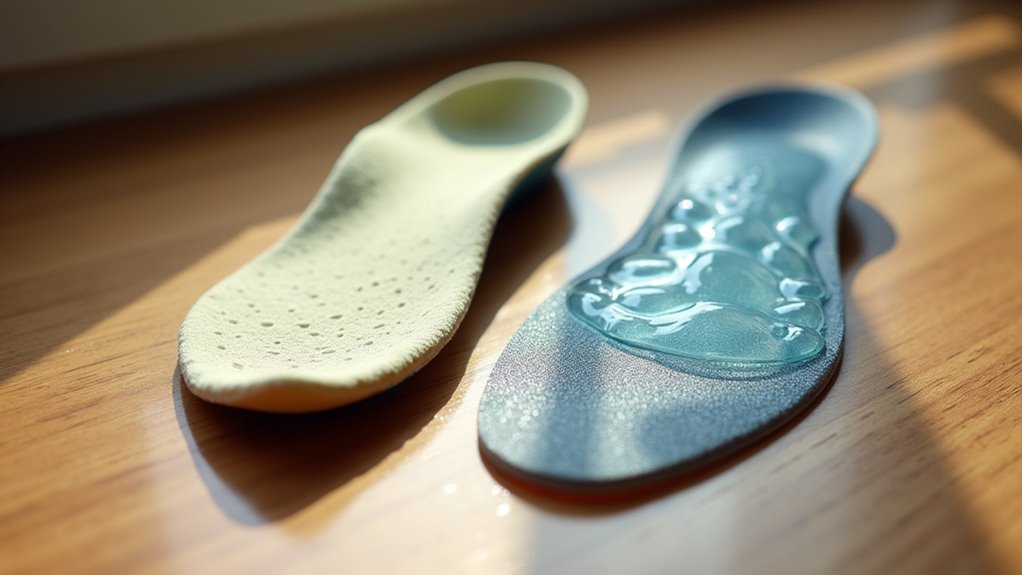
Choosing the right insoles can make a big difference.
Memory foam insoles fit your foot’s shape. They offer comfort and support.
Gel insoles are great for absorbing shock. They help protect your feet during activities.
Gel insoles usually last longer than memory foam ones. They also stay cooler, which is good for active people.
Think about how you use your shoes. Comfort and support are key. Pick the insoles that fit your needs best.
Comfort and Support
The right insoles can make your feet feel great all day. Memory foam insoles shape to your feet. They provide cozy support and help relieve pressure. These are great for long hours of standing or casual outings.
Gel insoles offer a firmer feel. They give stability and support during activities with lots of movement. Gel insoles excel at absorbing shock, making them perfect for sports.
Memory foam feels soft and comfortable but may not last as long as gel. For specific foot problems, gel insoles often help more. Memory foam mightn’t fix all foot issues.
Choose based on your daily activities and what your feet need.
Heat Regulation
Heat regulation is key for comfort in insoles. Memory foam insoles can hold onto heat. This may cause discomfort and sweaty feet, especially in warm weather or during long activities.
Gel insoles have a different approach. They feel cool and let air pass through. This helps keep your feet from getting too hot. Gel insoles are great for high-impact activities. They help prevent overheating.
For a cooler foot environment, gel insoles work best. But memory foam offers soft warmth. Just remember, memory foam might lose support when it gets hot. Additionally, proper arch support is essential for overall foot health, which can be influenced by the type of insole used.
Think about what you need. This way, you can enjoy the best comfort while wearing your insoles. Choose wisely to match your lifestyle.
Durability and Longevity
Memory foam and gel insoles both provide comfort, but they differ in durability and longevity. Gel insoles last longer and keep their support during high-impact activities. They resist compression well. Memory foam can compress and lose shape faster. Sometimes, it takes a while for memory foam to return to its original form after being pressed. In contrast, gel insoles bounce back right away.
| Feature | Memory Foam | Gel Insoles |
|---|---|---|
| Durability | Shorter lifespan | Longer-lasting |
| Temperature Stability | Softens in heat | Maintains integrity |
| Recovery Time | Slow to regain shape | Quickly regains shape |
For those with active lifestyles, gel insoles offer better support and longer use than memory foam.
Choosing the Right Insole for Your Needs

Finding the right insole is important for your comfort. Start with your main activity. High-impact sports need gel insoles. They absorb shock well. For casual wear, choose memory foam. It feels nice and shapes to your foot.
Consider how your feet feel. Gel insoles stay cool. They’re great if your feet sweat a lot. Memory foam can get warm, which mightn’t feel good in hot weather.
Think about how long the insoles last. Gel insoles usually keep their shape better. Memory foam can flatten over time. Cushioning insoles are also a popular choice for those who prioritize comfort during long hours of standing or walking.
Make sure the insoles fit your shoes. Gel insoles are thinner and fit many types of shoes. Memory foam can be bulkier and need bigger shoes.
Maintenance and Care for Insoles
Memory foam insoles need special attention. Clean them gently with a damp cloth and mild soap. This helps prevent damage and keeps their shape. Regular replacement of insoles is crucial for preventing bigger foot issues and ensuring continued support.
Gel insoles are easier. Just wipe them down with a damp cloth to remove dirt and moisture.
Check both types often for wear. Replace them when they start to look worn out. This ensures you still get proper support.
Avoid heat with memory foam insoles. Too much heat can change their shape and make them less effective.
Trim insoles to fit your shoes. This stops them from wearing out too quickly from rubbing.
Store your insoles in a cool, dry place. This helps prevent mold and dampness.
Taking care of your insoles helps them last longer. This way, you keep the support your feet need.
Custom Orthotics: A Personalized Solution
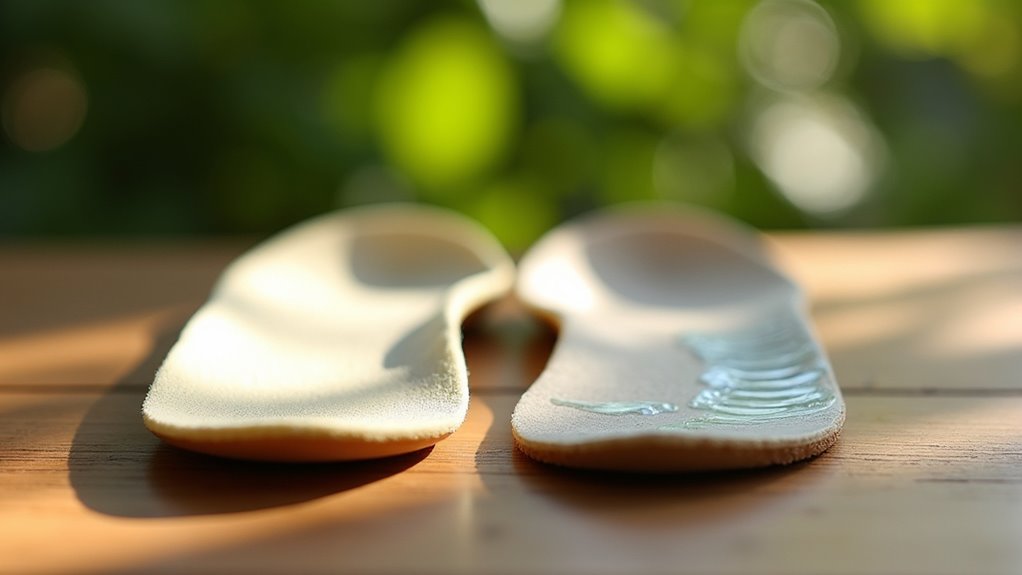
Custom orthotics provide a tailored solution to enhance your foot health. These insoles fit your unique foot shape, addressing specific biomechanical issues.
Here are some key benefits of using custom orthotics:
- Targeted Support: They match your arch type and pressure points, giving support where needed.
- Improved Comfort: Made from soft materials like memory foam and gel, they cushion your feet well.
- Pain Relief: Custom orthotics fix biomechanical problems, helping to ease pain and prevent future issues.
- Better Alignment: Using these insoles can improve your posture and boost your performance in daily activities or sports.
Additionally, they can correct poor foot mechanics that may negatively impact other areas of your body.
With custom orthotics, enjoy personalized support and better foot health. This investment benefits anyone wanting to feel better and move comfortably.
Frequently Asked Questions
Can Memory Foam Insoles Be Used in Athletic Shoes?
Memory foam insoles can fit in athletic shoes. They offer comfort but may lack support for high-impact sports. Think about your foot needs and workout level. Some people might need stronger insoles for running or jumping. Choose the right insole for your activity. Comfort is important, but so is support. Always listen to your body.
How Long Do Gel Insoles Typically Last?
Gel insoles last between 6 months and 2 years. Their lifespan depends on how active you are and how well you care for them. Regular cleaning helps keep their shape and support. Good care makes them worth the investment. Enjoy comfort and support for longer with just a little effort.
Are Memory Foam Insoles Washable?
Memory foam insoles can’t be fully washed. Spot-clean them instead. Use a damp cloth with mild soap. Avoid soaking them in water. Let them dry completely. This helps prevent mold and odors. Proper care can make your insoles last longer. Keeping them clean improves comfort and hygiene.
Do Gel Insoles Provide Arch Support?
Gel insoles provide good arch support. They help stabilize your foot while you move. This support spreads out pressure evenly on your feet. Many people find relief from foot pain, especially with issues like plantar fasciitis. With the right design, you will feel more comfortable. Gel insoles make walking and standing easier for everyone.
Can I Cut Insoles to Fit My Shoes?
Cutting insoles to fit your shoes is a great idea. Make sure to trim them carefully. Align the new insoles with the original ones for the right size. After cutting, check for comfort. A good fit helps support your feet better. Remember, proper insoles can make a big difference in how your shoes feel. Enjoy your comfortable shoes!
Conclusion
Memory foam and gel insoles each have their own advantages. Memory foam shapes to your foot, giving you great support. Gel insoles help cushion impacts, making each step softer. Think about what feels best for you. Your comfort and activity level matter.
Caring for your insoles is important too. Clean them regularly to keep them in good shape. For a perfect fit, consider custom orthotics. Your feet deserve the best care for comfort and health. Choosing the right insoles can make a big difference.