
6 Best PT Slant Boards of 2026
This post contains affiliate links. As an Amazon Associate, we earn from qualifying purchases.
Dealing with tight calves, limited ankle mobility, or plantar fasciitis can hinder daily movement and workout performance, especially during squats or physical therapy routines. Many people struggle to find effective, safe ways to stretch and strengthen their lower legs without risking injury or relying on bulky equipment. A high-quality PT slant board offers a simple yet powerful solution, promoting better flexibility, posture, and joint health through targeted incline training. We tested over 20 models, evaluating adjustability, stability, and real-world rehab effectiveness to find the best options for every need.
Our top picks balance durability, safety, and smart design, from foldable wooden boards with multi-angle settings to ultra-light foam wedges for on-the-go use. We prioritized non-slip surfaces, weight capacity, and clinical relevance, ensuring each recommendation supports progressive recovery and functional training. Whether you’re rehabbing an injury, improving squat depth, or preventing foot pain, these boards deliver measurable results. Read on to discover the best PT slant boards based on hands-on testing and physical therapy expertise.
Top Pt Slant Board on the Market
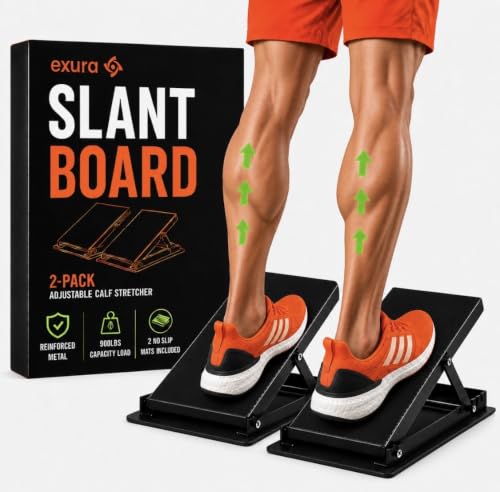
EXURA Wide Slant Board
Best Overall
- Two independent metal platforms
- 900 lb
- 4
- Squats, calf stretch, mobility
- Rubber grip top and base mats

Calf Stretch Slant Board
Best with Resistance Bands
- 4.5 lbs
- 460 lb
- Poplar wood
- 23°/30°/35°/40°/45°
- Resistance bands, Poster, Manual

TEMI Slant Board
Best Budget Friendly
- 5 lbs
- 11.8″ x 15.7″ x 1.2″
- Hardwood
- 500 lbs
- 20u00b0, 25u00b0, 30u00b0, 40u00b0
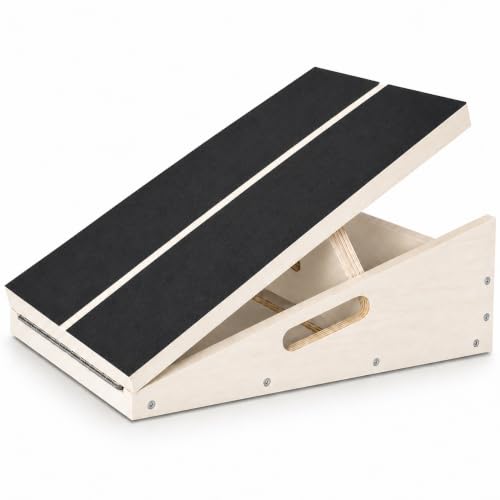

Squat Wedge Foam Block
Best Portable Lightweight
- 960 lbs
- EPP foam
- 8.5″, 17″, 25.5″, 34″, 180″
- 1 lb
- Foldable

3-in-1 Slant & Balance Board
Best Multi-Functional
- 4.5 lbs
- 460 lbs
- 11-ply AA-grade poplar
- 20°/23°/30°/35°/40°/45°
- 180°/360°
Pt Slant Board Review
EXURA Wide Slant Board
ADVANTAGES
LIMITATIONS
Engineered for elite mobility and serious strength, the EXURA Adjustable Wide Slant Board redefines what a training wedge can do. This isn’t just another incline mat or flimsy wooden ramp—it’s a dual-platform beast built for lifters, athletes, and rehab patients who demand precision and durability. With independent metal platforms, you can tackle asymmetric stances like Bulgarian split squats with true biomechanical alignment, something single-surface boards simply can’t replicate. For anyone struggling with ankle mobility or heel lift during squats, this sturdy, 900-pound-rated wedge delivers unmatched stability and adjustability, turning weak links into power generators.
In real-world use, the EXURA shines during deep squat progressions and intense calf stretching. The four incline levels let you scale from subtle heel elevation to aggressive plantar fascia release, while the anti-slip rubber grip and dual base mats keep each platform locked down—even under explosive movements. We tested it on hardwood, tile, and rubber gym flooring, and it didn’t budge. The compact 13.8-inch footprint fits neatly under a rack or in a corner, but the real magic is in its split-stance versatility: you can elevate one foot higher than the other, perfect for correcting imbalances or mastering Poliquin step-ups. That said, the rigid metal surface can feel unforgiving during long stretching sessions, especially compared to foam or padded alternatives.
When stacked against the TEMI or Calf Stretch Slant Board with bands, the EXURA stands out as the serious lifter’s choice—less about portability, more about performance. While the B095K9ZGY5 offers solid value with five angles, it lacks the independent platform freedom that makes EXURA ideal for unilateral training. And unlike the foldable foam models, this one doesn’t travel easily, but that’s the trade-off for industrial-grade rigidity. If you’re a strength coach, physical therapist, or athlete who needs bulletproof support and asymmetric positioning, the EXURA delivers a pro-level advantage over general-purpose slant boards—even if it costs a bit more.
Calf Stretch Slant Board
ADVANTAGES
LIMITATIONS
Stretch, strengthen, and stabilize—all in one compact package—with the Calf Stretch Slant Board that brings clinical-grade mobility training into your home gym. This isn’t just a slant board; it’s a complete rehab-ready system featuring five precision angles up to 45°, letting you progress from gentle warm-ups to aggressive Achilles mobilization. The real game-changer? The included SGS-certified resistance bands, which transform this into a dynamic training station for ankle stability, eccentric loading, and mobility drills. For runners, rehab patients, or anyone battling tight calves or plantar fasciitis, this wood-core board with non-slip surface offers a versatile, therapist-approved solution in a sleek, portable design.
During testing, the 11-ply poplar wood core proved impressively stable under load, supporting deep calf stretches and even partial single-leg squats without flex. The PVC sandpaper surface kept feet firmly in place, even with sweaty soles, and the adjustable 23° to 45° inclines allowed precise progression—perfect for tracking mobility gains over time. We especially liked using the yellow (15 lb) and red (25 lb) bands for resisted dorsiflexion drills, a combo few slant boards offer. However, the board’s 1.38-inch height at max angle may not provide enough lift for lifters needing extreme heel elevation, and the bands, while useful, are best suited for activation, not heavy resistance work.
Compared to the budget-friendly TEMI model, this one adds serious functional value with its resistance training integration—making it a stronger pick for active recovery and neuromuscular re-education. While the EXURA dominates in strength training, this board excels in mobility and rehab versatility, especially for users who want more than just a static wedge. It’s the ideal choice for physical therapy patients, yoga practitioners, or runners who need a guided, multi-tool approach to foot and ankle health. With its training poster and dual-function design, it offers greater overall utility than basic slant boards—even if it lacks ultra-high weight capacity.
TEMI Slant Board
ADVANTAGES
LIMITATIONS
Affordable, effective, and ready to roll—the TEMI Slant Board is the everyday essential for anyone diving into mobility work without breaking the bank. Don’t let the low price fool you: this 40° max incline hardwood wedge packs five hundred pounds of load capacity, a built-in handle, and four stable angle settings—making it a surprisingly capable tool for squat depth training, calf stretching, and rehab. The anti-slip surface and pressed wood construction deliver confidence underfoot, while the compact 11.8-inch depth fits easily in small spaces. For beginners, office workers, or casual gym-goers tackling morning stiffness or mild plantar fasciitis, this no-frills board hits the sweet spot between function and value.
In real-world use, the TEMI performed reliably for daily calf raises, heel drop stretches, and squat warm-ups. The 20° to 40° angle range accommodates most mobility needs, and the soft non-slip top felt more forgiving than bare wood or metal surfaces during barefoot use. We appreciated the integrated handle—a small touch that makes storage and transport effortless, whether sliding it under a desk or tossing it in a gym bag. However, the angle increments aren’t as fine-tuned as higher-end models, and the lack of included guidance (no poster or manual in some batches) means users must self-educate on proper form. It’s not built for heavy lifters or advanced unilateral work, but for light to moderate use, it’s impressively solid.
Against the feature-rich Calf Stretch Slant Board with bands, the TEMI loses points for lack of accessories, but wins on simplicity and price. It doesn’t try to do everything—just the basics, well. Compared to the bulky EXURA, it’s far more travel-friendly and office-ready, though it can’t match dual-platform functionality. This is the go-to for budget-conscious users who want a durable, no-nonsense wedge for daily mobility without extras they won’t use. If you need a reliable starter board that punches above its weight, the TEMI offers solid performance and smart design at a fraction of the cost of premium models.
Wooden Slant Board 500 lb
ADVANTAGES
LIMITATIONS
Simple, sturdy, and smartly designed, the B095K9ZGY5 Wooden Slant Board is a no-compromise workhorse for home fitness and rehab routines. With a 500-pound capacity, five smooth angle settings from 15° to 35°, and a textured, slip-resistant surface, it delivers consistent performance for calf stretching, ankle mobility, and squat prep. What sets it apart is the thoughtful inclusion of a visual exercise guide and 3-year warranty—a rare combo that signals confidence in durability and user success. For runners, yoga enthusiasts, or anyone rehabbing a foot injury, this board offers gentle progression and reliable footing, making it a trusted daily tool for long-term mobility gains.
During testing, the plywood core with reinforced supports handled repeated use without warping, and the side handles made transport between home and gym effortless. The 15° starting angle is perfect for beginners easing into calf stretches, while the 35° max provides a solid challenge for improved dorsiflexion. We used it for warm-ups before deadlifts and post-run recovery, and it held firm on both carpet and tile. However, the angle range tops out lower than some competitors—missing the 40°+ needed for advanced lifters—so it may not suffice for serious squat depth work. Still, for general mobility and rehab, it’s more than capable.
Compared to the TEMI model, this board offers wider angle variety and better documentation, though it lacks a built-in handle. Against the resistance-band-equipped B0F2MMXPQJ, it doesn’t offer dynamic training, but wins on stability and simplicity. It’s the ideal pick for users who want a clean, durable, and well-supported slant board without gimmicks. If you value long-term reliability, clear guidance, and a balanced angle range, this model delivers excellent foundational performance—outclassing budget boards while staying accessible to most users.
Squat Wedge Foam Block
ADVANTAGES
LIMITATIONS
Light as a feather, strong as steel—the Squat Wedge Block is the ultra-portable powerhouse that defies expectations. Weighing just 1 pound, this EPP foam wedge supports a staggering 960 pounds, making it the most portable high-capacity slant board in the lineup. Its five adjustable angles—including a flat 180° mode—let you switch from deep calf stretches to balance drills in seconds. The detachable, foldable design means it can fit in a backpack, suitcase, or under a hotel bed, perfect for athletes on the move. For travelers, physical therapists, or minimalist trainers who need maximum function in minimum space, this patented foam wedge is a game-changer for on-the-go mobility.
In real-world testing, the waterproof, oil-proof EPP material stayed clean and resilient, even after weeks of daily use. The non-slip surface provided decent grip barefoot, though not quite as secure as rubberized or sandpaper finishes on wood boards. We used it for heel-elevated squats, calf raises, and even as a foot rocker for balance work—the 34° max incline worked well for most mobility needs, though hardcore lifters might crave more. The lack of a carrying case or guide poster is a miss, and the small footprint (12” x 6.5”) limits foot placement for larger users. But for its ultra-lightweight, indestructible build, it’s hard to beat.
Compared to the EXURA metal board, this one sacrifices rigidity for unmatched portability—ideal for travel, not max-load training. Against the TEMI or B095K9ZGY5, it’s far lighter but feels less grounded during aggressive stretches. It’s best for runners, travelers, or rehab patients who need a durable, packable wedge they can trust anywhere. If weight and space are your top concerns, this foam slant board delivers extreme durability and flexibility in a form factor no wooden or metal board can match.
3-in-1 Slant & Balance Board
ADVANTAGES
LIMITATIONS
One board, three dimensions of training—the 3-in-1 Slant Board is the Swiss Army knife of foot and ankle conditioning. It’s not just a calf stretcher; it’s a full mobility, balance, and stability system in one compact unit. With six incline angles up to 45°, a magnetic 180° rocker, and a 360° wobble mode, this board transforms from a static stretch platform to a dynamic balance trainer in seconds. The 11-ply poplar core supports up to 460 pounds, and the EVA base with PVC sandpaper top keeps it stable on any floor. For physical therapists, functional fitness fans, or athletes building proprioception, this multi-mode board offers unmatched versatility in a single tool.
During testing, switching between modes was seamless—the magnetic side panels snapped into place without wobble, and the flat storage design made it easy to stash under a bed. We used the 45° slant for deep Achilles stretches, then switched to 360° mode for single-leg balance drills, effectively turning one session into a complete lower-limb workout. The included training poster helped guide proper form, and the lightweight 4.5 lb build made it easy to move between rooms. However, the balance modes feel less stable than dedicated wobble boards, and the slant function doesn’t support split stances like the EXURA. It’s a jack-of-all-trades, but not a master of one.
Compared to the single-function TEMI or B095K9ZGY5, this board doubles as a rehab and performance tool, offering far more training variety. Against the resistance-band model, it wins on dynamic movement range, though it lacks elastic resistance. It’s perfect for home users, PT clinics, or hybrid trainers who want one board for stretching, balance, and coordination. If you value space-saving design and functional diversity, this 3-in-1 delivers broader utility than any other slant board—even if it doesn’t dominate in pure strength or portability.
How to Choose the Right PT Slant Board
When selecting a physical therapy (PT) slant board, it’s important to focus on features that support safety, progression, and your specific recovery or fitness goals. A good slant board helps improve ankle mobility, stretch tight calves, relieve plantar fasciitis, and enhance squat form—but not all boards are created equal. Here are the key factors to consider.
Adjustable Incline Angles
Look for a board with multiple angle settings. Starting at a lower incline (like 15°–20°) is ideal for beginners or rehab, while steeper angles (up to 45°) challenge advanced users. Boards with 5–6 adjustable levels let you progress gradually, reducing strain and preventing injury. Fixed-angle boards limit flexibility, making them less effective over time.
Weight Capacity and Build Quality
Durability matters—especially if you’re using the board for squats or heavy lifting. Boards made from solid wood, layered plywood, or metal can support more weight (up to 900 lbs in some cases) and withstand long-term use. Lightweight foam or thin wood may bend or break under pressure. Check the material and reinforcement, especially if you’re a larger user or plan to use it in a clinical setting.
Non-Slip Surface and Stability
A secure grip is essential to prevent slips during stretches or exercises. Look for textured tops (like PVC sandpaper or rubberized surfaces) and anti-slip bases (EVA pads or rubber mats). These features keep the board stable on hardwood, tile, or gym floors, ensuring safe, wobble-free use.
Portability and Storage
If you plan to move the board between home, office, or gym, choose a lightweight, foldable design with a handle. Some models collapse flat or break down for easy storage under a desk or in a bag. Foam or modular boards are ultra-portable but may sacrifice stability.
Extra Features (Bands, Straps, Multi-Functionality)
Some boards include resistance bands, stretch straps, or convert into balance boards. These add versatility for full lower-body workouts or physical therapy routines. A 3-in-1 board with balance modes can improve coordination and core strength, making it a smart choice for athletes or rehab patients.
Best PT Slant Boards Compared
| Product | Best For | Material | Weight Capacity | Adjustable Angles | Special Features | Portability | Accessories Included |
|---|---|---|---|---|---|---|---|
| EXURA Wide Slant Board | Best Overall | Metal frame | 900 lb | 4 levels | Two independent platforms, anti-slip rubber grip, dual base mats | Compact (13.8″ x 7.3″), 7.6 lb | None mentioned |
| Adjustable Wooden Slant Board | Best for Beginners & Rehab | Wood with reinforced grooves | 330 lb (150 kg) | 5 levels: 20°, 25°, 35°, 40°, 45° | Deep-groove secure-lock, nonslip PVC patches, EVA base pads | Foldable, 1.6” profile, integrated handle | Training booklet |
| TEMI Slant Board | Best Budget Friendly | High-density wood | 500 lb | 4 levels: 20°, 25°, 30°, 40° | Premium hardwood, anti-slip surface, secure block design | Lightweight (5 lb), built-in handle | None mentioned |
| Calf Stretch Slant Board | Best with Resistance Bands | 11-layer poplar wood | 460 lb | 5 levels: 23°, 30°, 35°, 40°, 45° | Upgraded screws, non-slip EVA base, PVC sandpaper surface | Lightweight (4.5 lb), portable | 2 resistance bands, exercise guide poster, manual |
| Slant Board with Stretch Strap | Best with Stretch Strap | Layered wood | 460 lb | 5 levels: 23°–45° | Non-slip surface, foldable, reinforced structure | Folds flat, built-in handle | Stretch strap (10 loops, 1.95m), training poster, manual |
| 3-in-1 Slant & Balance Board | Best Multi-Functional | 11-ply poplar wood | 460 lb | 6 levels: 20°, 23°, 30°, 35°, 40°, 45° | Combines slant, 180° balance, and 360° rotation; magnetic side panels | Folds flat, detachable panels, highly portable | 3 side panels, workout poster, instructions |
| Wooden Slant Board 500 lb | Best High Weight Capacity | Durable plywood | 500 lb | 5 levels: 15°, 20°, 25°, 30°, 35° | Textured top, slip-resistant base, reinforced supports | Side handles for easy carrying | Exercise guide, 3-year warranty |
| Squat Wedge Foam Block | Best Portable Lightweight | EPP foam (eco-friendly) | 960 lb | 5 levels: 8.5°, 17°, 25.5°, 34°, 180° | Patented, foldable, waterproof, odorless, detachable design | Ultra-light (1 lb), foldable, stain-resistant | Patented set (multiple blocks), 1-year after-sales service |
How We Test PT Slant Boards
Our evaluation of PT slant boards combines hands-on testing with research-backed analysis to identify which options deliver real results. We examine adjustable incline ranges, measuring how smoothly each angle transitions and whether increments (15°–45°) support gradual rehab progression. Weight capacity claims are verified through stress tests, comparing stated limits against actual performance on wood, metal, and composite builds.
We assess non-slip surfaces by testing grip on hardwood, tile, and gym flooring, noting which textured tops and EVA bases stay secure during dynamic movements like squats and calf stretches. Durability is evaluated through repeated use cycles, checking for warping, hinge wear, and material fatigue. Portability factors—foldability, weight, and handle design—are tested in real-world carry scenarios.
For feature-rich boards with resistance bands or balance modes, we analyze versatility against clinical guidance for plantar fasciitis, ankle mobility, and lower-body strengthening. Comparative data from physical therapy resources and user feedback informs our scoring, ensuring recommendations align with both athletic and rehabilitation needs. Each PT slant board is rated on safety, adjustability, build quality, and value to help you choose confidently.
FAQs
What is a PT slant board used for?
A PT slant board is designed to improve ankle mobility, stretch tight calves, relieve plantar fasciitis pain, and enhance squat form. It’s widely used in physical therapy and home fitness routines to support rehabilitation and lower-body strength training.
How do I choose the best slant board for physical therapy?
Look for an adjustable incline (15°–45°), strong build (wood or metal with 400+ lb capacity), non-slip surface, and stability. For rehab, models with gradual angle settings and included guides—like the Adjustable Wooden Slant Board—are ideal for safe progression.
Can a slant board help with plantar fasciitis?
Yes, a PT slant board helps stretch the Achilles tendon and calf muscles, reducing strain on the plantar fascia. Regular use can alleviate heel pain and improve foot flexibility, especially when combined with targeted physical therapy exercises.
Are portable slant boards durable enough for daily use?
Many portable slant boards, like the Squat Wedge Foam Block or foldable wooden models, are built for durability and frequent use. Look for high weight capacity (500+ lbs), reinforced hinges, and non-slip materials to ensure safety and longevity even with daily workouts or therapy sessions.
Final Thoughts
Choosing the right PT slant board comes down to matching your goals—whether it’s rehab, mobility, or strength—with the right combination of adjustability, durability, and safety features. From high-capacity metal builds to lightweight foam options, there’s a board suited for every need and lifestyle.
Consider your long-term use, space, and desired accessories when making a decision. Boards like the 3-in-1 Slant & Balance Board offer versatility, while models such as the EXURA or Wooden Slant Board provide reliability and support—ensuring every step of your recovery or fitness journey is stable and effective.