
Tips for Sweaty Feet Control
This post contains affiliate links. As an Amazon Associate, we earn from qualifying purchases.
To effectively control sweaty feet, maintain good hygiene by washing your feet daily with antifungal soap and ensuring they are thoroughly dried, particularly between the toes. Incorporate home remedies like baking soda or black tea soaks to help absorb moisture. Opt for breathable footwear and moisture-wicking socks to keep your feet dry, and consider using foot powder for added absorption. If excessive wetness or odor persists, it’s important to seek medical advice for tailored treatments. Further tips and detailed explanations will follow for those interested in managing sweat more effectively.
Essential Facts in 30 Seconds
- Maintain foot hygiene by washing daily with antifungal soap and drying thoroughly, especially between toes.
- Use baking soda or cornstarch to absorb moisture and keep feet dry.
- Soak feet in black tea to utilize tannic acid, reducing perspiration.
- Opt for breathable, moisture-wicking socks and well-ventilated shoes to improve airflow.
- Consult a medical professional if excessive sweating continues for specialized treatments or foot antiperspirants.
Understanding the Causes of Sweaty Feet
Sweaty feet, known as plantar hyperhidrosis, is a common issue. About 5% of people worldwide experience it. This condition causes excessive sweating without exercise or anxiety. Your feet have over 250,000 sweat glands. When these glands work too hard, they can make your shoes soggy. This increases the risk of fungal infections.
Heat and humidity are big factors. Wearing closed-toe shoes makes it worse. Stress and hormonal changes, like during puberty or pregnancy, can also cause extra sweating. This can lead to discomfort and social embarrassment.
Understanding the causes of sweaty feet helps you know what makes them sweat more. Knowing these factors allows you to manage the problem better. You can take steps to reduce sweating and feel more confident.
The Importance of Proper Foot Hygiene
Keeping your feet clean prevents sweat and odor.
Wash your feet every day with antifungal soap.
Don’t forget to dry them well, especially between the toes.
This easy routine stops infections and keeps your feet fresh. Daily foot washing is essential for maintaining foot hygiene.
Healthy feet feel good.
Happy feet make you feel better!
Daily Foot Washing
Washing your feet every day is important for good foot hygiene. This daily routine removes sweat and bacteria. It helps to prevent foot odor and infections. Use soap that fights germs or fungus when washing your feet. This keeps your feet cleaner and healthier.
Wash thoroughly, especially between your toes. This area can trap moisture. If it stays damp, it can cause infections like athlete’s foot. Regular foot washing also helps avoid skin irritation and blisters. Excess moisture can lead to these problems.
You can try foot soaks too. Soaking your feet in baking soda or black tea can help. These can reduce sweating by shrinking your skin pores.
Keeping your feet clean and dry is the key to good foot health.
Thorough Drying Techniques
After washing your feet each day, drying them well is key for good foot health. Use a clean, absorbent towel. Focus on drying between your toes. This prevents dampness that can cause fungal infections and bad odors.
Try air drying or using a fan if it’s humid. Make sure your feet are fully dry before wearing socks or shoes. A humid environment helps bacteria grow, leading to foot problems.
Change your socks regularly. Let your shoes air out too. These simple steps help reduce sweat and keep your feet fresh and healthy.
Effective Home Remedies to Reduce Sweating

Foot sweating can be uncomfortable. Luckily, some home remedies can help. Here are three simple ways to reduce foot sweat:
- Baking Soda: After washing your feet, apply baking soda. It absorbs moisture and keeps your feet dry and fresh.
- Black Tea: Soak your feet in warm water with two black tea bags for 20 minutes. The tannic acid in the tea helps to close pores and reduce sweat.
- Vinegar: Use apple cider vinegar as a foot soak or spray. It balances your skin’s pH and can stop sweat.
For extra help, sprinkle cornstarch on your feet. Cornstarch absorbs moisture well.
Also, try Epsom salt foot baths. They relax your feet and improve circulation.
These remedies can effectively manage sweaty feet and help with Hyperhidrosis. Keep your feet dry and comfortable all day long.
Choosing the Right Footwear and Accessories
Sweaty feet need the right footwear and accessories. Pick shoes made from breathable materials like leather or mesh. These materials allow air to flow and keep feet dry.
Moisture-wicking socks are a must too. Choose socks made from natural fibers. They help absorb sweat and keep your feet comfortable all day. Breathable fabrics enhance comfort and performance by reducing moisture buildup.
Remember, proper footwear can make a big difference. It can help reduce odors and prevent blisters.
Always go for comfort and breathability. Your feet will thank you!
Breathable Shoe Materials
Finding the right shoes keeps your feet comfy and dry. Select shoes made from breathable materials. They help control dampness and cut down on sweating.
Here are three important points to consider:
- Material: Pick canvas or leather. These materials let air flow and reduce discomfort.
- Ventilation: Search for shoes with mesh inserts. These allow air to move freely during activities.
- Fit: Make sure your shoes fit well. Your toes should have some space. Tight shoes can cause more sweating.
Think about adding moisture-absorbing insoles. They help manage sweat and odors.
These choices keep your feet fresh, even on hot days. Additionally, investing in breathable shoe materials enhances overall foot health by promoting moisture management and reducing odor.
Moisture-Wicking Socks
Moisture-wicking socks are essential for keeping feet dry and comfortable. They absorb sweat and pull it away from your skin. This helps reduce foot odor and prevents fungal infections.
Look for socks made from synthetic materials like polyester or blends of merino wool. These materials manage moisture better than cotton.
Socks with ventilation panels allow for better airflow and breathability. Some socks have antimicrobial properties. This helps fight bacteria and odors. Additionally, wearing specialized socks for plantar fasciitis can provide added support and comfort for those experiencing foot pain.
Change your socks at least once a day. Do this more often in hot weather or during physical activities. This keeps your feet dry and comfortable all day long.
Lifestyle Changes to Manage Sweat Production
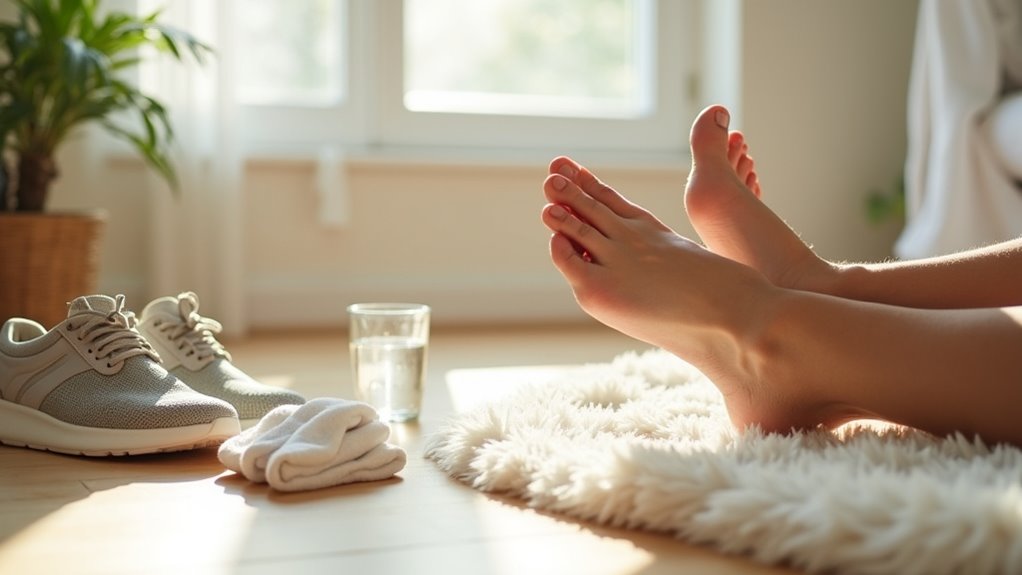
Managing sweat production is important for comfort. Simple lifestyle changes can make a big difference. Here are three effective tips:
- Stay Hydrated: Drink enough water every day. Proper hydration helps control your body temperature. This can lower excessive sweating.
- Choose Breathable Footwear: Select shoes made from natural materials like leather or canvas. These materials allow air to flow. This helps keep your feet dry and comfortable.
- Switch Up Your Socks: Wear moisture-wicking socks. Look for those made from merino wool or synthetic fibers. These keep your feet dry by absorbing sweat, and the natural odor-resistant properties of merino wool also enhance freshness.
Avoid spicy foods and caffeine. They can make you sweat more.
Change your shoes daily and let them dry completely. This prevents dampness.
With these easy changes, you can manage sweat and enjoy comfort every day.
When to Seek Professional Medical Help
Managing foot sweat and odor can be tough. Sometimes, despite your best efforts, problems persist. Here are clear signs that show it’s time to get professional help:
| Signs to Seek Help | Actions to Take |
|---|---|
| Constant wetness | Schedule a check-up |
| Bad foot odor | Talk to a healthcare provider |
| Cracked or peeling skin | Get checked for fungal infection |
| Ongoing discomfort | Discuss treatment options |
Excessive sweating needs attention, especially if it comes with other health issues. Persistent problems may indicate an underlying infection or condition. Early intervention can lead to effective treatment and a better quality of life. Don’t wait to seek help.
Frequently Asked Questions
Can Diet Influence the Amount of Foot Sweat Produced?
Your diet plays a big role in how much you sweat from your feet. Spicy foods, caffeine, and sugary snacks can make you sweat more. Staying hydrated helps too. Drinking enough water keeps your body cool. Eating a balanced diet can help control sweat production. Fresh fruits, vegetables, and whole grains are great choices. They support overall health and may reduce foot sweat. Keep an eye on what you eat. Small changes can make a big difference in how much you sweat.
Are There Specific Exercises to Help Reduce Foot Sweating?
Foot-strengthening exercises can help reduce foot sweating. Simple activities like toe curls and ankle circles are effective. These exercises improve blood flow and keep feet healthy. Calf stretches also work well. Stronger feet can manage sweat better. Regular practice can make a difference. Try to add these exercises to your routine. Enjoy healthier, drier feet!
How Does Stress Affect Foot Sweating Levels?
Stress can make your feet sweat more than usual. This happens because your body reacts to stress by producing sweat. When you feel anxious, your sweat glands become more active. As a result, your feet may feel clammy and uncomfortable. This can make social situations even harder.
Many people experience sweaty feet when stressed. Research shows that anxiety can increase sweat production. For some, this can be a major concern. It can lead to embarrassment in public places.
Managing stress can help reduce foot sweating. Simple techniques like deep breathing or taking breaks can be effective. Staying calm during stressful times helps keep your feet dry. Understanding this connection can make a big difference in your comfort.
Can Certain Medications Increase Foot Sweating?
Certain medications can lead to increased foot sweating. Antidepressants, antipsychotics, and some blood pressure drugs are known for this side effect. Excessive sweating, known as hyperhidrosis, can be uncomfortable and embarrassing. It’s important to talk to your healthcare provider if you notice this issue. They can suggest other medications or adjust your current treatment. Finding the right solution can help you manage this problem. Don’t hesitate to seek help for your comfort and well-being.
Is Sweaty Feet a Symptom of a Medical Condition?
Sweaty feet can signal a medical issue. Conditions like hyperthyroidism, diabetes, and anxiety can cause excessive sweating. This is known as hyperhidrosis. Sweaty feet can lead to discomfort and bad odors. It may affect daily life and self-confidence.
If you notice constant sweating, talk to a doctor. They can help find the cause. Treatments are available. Don’t ignore the signs. Taking action early can make a difference. Your health matters, so get the care you need.
Conclusion
Sweaty feet can be a hassle, but you can manage it. Know the causes. Good hygiene is key. Wash your feet daily and dry them well. Use foot powder to absorb moisture. Choose breathable shoes made from materials like leather or canvas. Cotton socks can help too. Change your socks regularly, especially after exercise.
Try home remedies like soaking your feet in vinegar or tea. Both can help reduce sweating. Staying cool and avoiding spicy foods also makes a difference.
Remember, small changes in your daily routine can help keep feet dry. If you still struggle, it’s smart to see a doctor. Fresh, comfortable feet are possible!