
Winter Boots Vs Snow Boots Differences
This post contains affiliate links. As an Amazon Associate, we earn from qualifying purchases.
Winter boots are designed for casual outdoor use in cold weather, while snow boots are bulkier and specifically built for harsher conditions like deep snow. Winter boots typically offer moderate insulation, whereas snow boots provide greater warmth and feature higher shafts to prevent snow entry. Additionally, snow boots deliver superior traction on icy surfaces. For those interested in a deeper understanding of these differences, further explanations and supporting details will follow.
Essential Facts in 30 Seconds
- Winter boots are lighter and more flexible for daily use; snow boots are bulkier for extreme weather and deep snow.
- Snow boots have high shafts to keep snow out; winter boots have shorter shafts for comfort.
- Winter boots offer moderate insulation (200-400 grams); snow boots provide higher insulation for extreme cold.
- Both types are waterproof, but snow boots often have superior waterproof features for wet conditions.
- Snow boots have deep lugs for better traction on ice; winter boots may slip in deep snow or on ice.
Understanding Winter Boots
Winter boots are essential for cold weather. They’re made for city life and casual outdoor fun. These boots keep your feet warm and dry. Most use waterproof materials, protecting against light snow and rain.
Insulation is important for comfort. Many winter boots have wool or synthetic fibers. These materials help keep your feet warm, even when the temperature is above freezing.
Winter boots are lighter and more flexible than snow boots. They work well for daily activities and commuting.
Winter boots offer good traction, but not as much as snow boots. They might slip on icy or deep snow. Overall, winter boots are stylish and comfortable. They’re a great choice for everyday weather.
Understanding Snow Boots
Snow boots are designed for tough winter weather.
They’re great for activities like snowshoeing and skiing. With high shafts, they keep your legs warm. Waterproof materials keep your feet dry. Their special soles grip icy surfaces well. You can walk safely in deep snow.
Snow boots are a smart choice for winter adventures. Stay warm and dry with the right pair. Enjoy your time in the snow!
Design and Construction Features
Snow boots are essential for winter weather. They keep your feet warm and dry. Here are important features to consider:
- Waterproof materials like rubber or leather keep moisture out.
- High shaft design prevents snow from getting inside the boot.
- Deep treads on the soles give strong grip on icy surfaces.
- Removable liners add warmth and make drying easy.
These features ensure snow boots protect you in cold conditions. They include strong insulation, like Thinsulate, to keep your feet cozy.
Good design and quality make snow boots perfect for winter fun. Enjoy comfort and safety as you walk through the snow!
Insulation and Warmth Levels
Stay warm in extreme cold by choosing the right snow boots. Snow boots offer more insulation than regular winter boots. They often use materials like Thinsulate or PrimaLoft. These materials trap heat well, keeping your feet warm in freezing temperatures.
Here’s a quick look at snow boot insulation features:
| Feature | Snow Boots |
|---|---|
| Insulation Type | Thinsulate/PrimaLoft |
| Temperature Ratings | -20°F to -40°F |
| Waterproof | Yes |
| Humidity Resistance | Prevents heat loss |
| Removable Liners | Often included |
With these features, snow boots are designed for serious cold. Make sure to pick a pair that fits well. A good fit helps keep warmth in and cold out. Stay warm and enjoy the winter!
Ideal Usage Scenarios
Extreme winter conditions call for snow boots. These boots are made to keep your feet warm and dry. They shine in these situations:
- Snowshoeing in deep snow
- Skiing on icy slopes
- Trekking through slush
- Walking on slippery sidewalks
Snow boots use waterproof materials. They protect your feet from dampness. Higher shafts stop snow from entering.
Thick soles with deep treads give you grip on slippery surfaces. These features are important during severe weather. Staying warm and protected is key.
For outdoor winter activities, snow boots are the best choice. They prepare you for whatever nature brings.
Key Features of Winter Boots
Choosing winter boots requires attention to insulation and warmth. Look for boots that keep your feet cozy in chilly weather. Many use materials like wool for added warmth.
Waterproofing is essential too. Winter boots are usually water-resistant. They can handle some moisture but aren’t as waterproof as snow boots.
Consider the fit. Make sure they’re comfortable and allow for thick socks. Check the sole for good traction. This helps prevent slips on ice or snow.
Lastly, think about style. Winter boots come in many designs. Find a pair that matches your look while keeping you warm and dry. Enjoy your winter adventures!
Insulation and Warmth Levels
Insulation and warmth levels are crucial for winter boots. Comfort in cold weather matters greatly. Here are key points to consider:
- Aim for insulation ratings between 200 and 400 grams.
- Thinsulate and PrimaLoft are great materials for warmth.
- Ensure your boots have moisture-wicking linings for added comfort.
- The fit should allow for thicker socks without losing insulation.
These features keep your feet warm and dry. Good insulation offers warmth and breathability. This balance helps prevent overheating.
A proper fit is essential for comfort. With the right winter boots, you can enjoy all your winter activities. Stay warm and comfortable!
Waterproofing and Breathability Differences
Choosing winter boots means knowing about their waterproofing and breathability. Winter boots are often water-resistant. They work well in light snow and city settings. Snow boots, on the other hand, are fully waterproof. They protect against harsh winter weather.
| Feature | Winter Boots | Snow Boots |
|---|---|---|
| Waterproofing | Water-resistant | Fully waterproof |
| Breathability | Moderate | Limited |
| Moisture Management | Better perspiration control | Less moisture control |
| Comfort | Comfortable for mild conditions | Built for extreme weather |
Some winter boots have breathable membranes. These help sweat escape, making your feet feel good. Proper moisture management keeps your feet dry during long wear. Pick the right pair to enjoy warmth and comfort all winter!
Key Features of Snow Boots
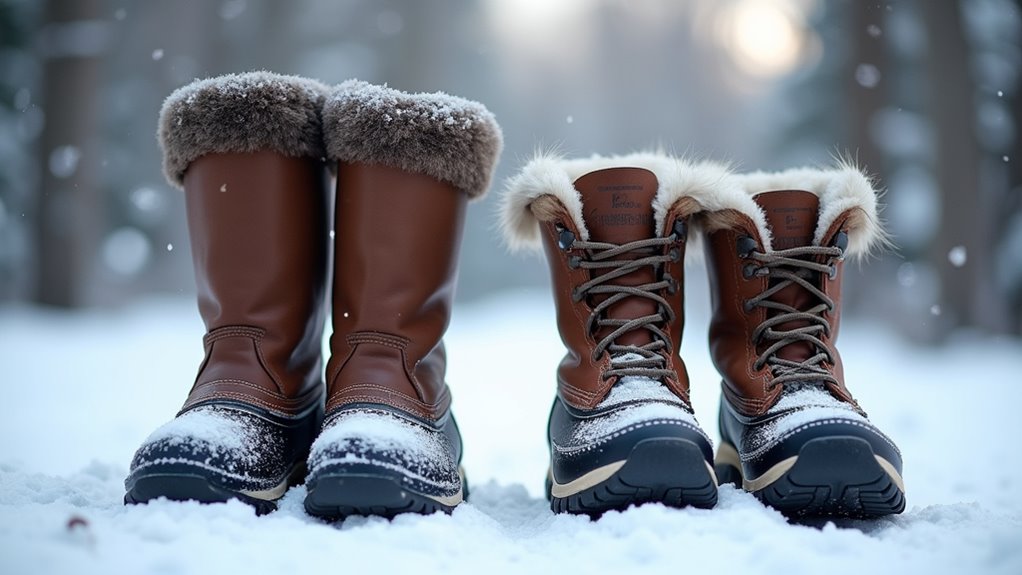
Snow boots are a must-have for winter. They keep your feet warm and dry in cold conditions. Here are some important features to check for:
- Waterproof uppers stop water from getting in.
- High shaft gives extra warmth and stops snow from entering.
- Deep treads provide great grip on ice.
- Removable liners add warmth and make cleaning easy.
Many snow boots use materials like Thinsulate. This helps you stay warm even in freezing temperatures.
The high shaft design protects your ankles and keeps snow out. Thick soles with deep treads help you stay stable while walking outdoors.
With the right snow boots, winter becomes much easier. Enjoy the snow with confidence and comfort!
Comparing Functionality and Comfort
Understanding winter footwear helps you make the right choice.
Winter boots are lighter and more comfortable. They work well for daily activities like commuting and shopping. These boots usually have shorter shafts and moderate insulation. They’re great for milder winter conditions.
Snow boots are bulkier and built for deep snow. They’ve taller shafts and thicker insulation to keep your feet warm. The soles of snow boots have deep lugs for better grip on ice. Winter boots have less aggressive tread patterns.
Winter boots offer cushioned midsoles and ergonomic designs. This makes them comfortable for long wear.
Both types can be waterproof, but snow boots are better in heavy snow. Your choice depends on your needs and activities.
Choosing the Right Boot for Your Needs
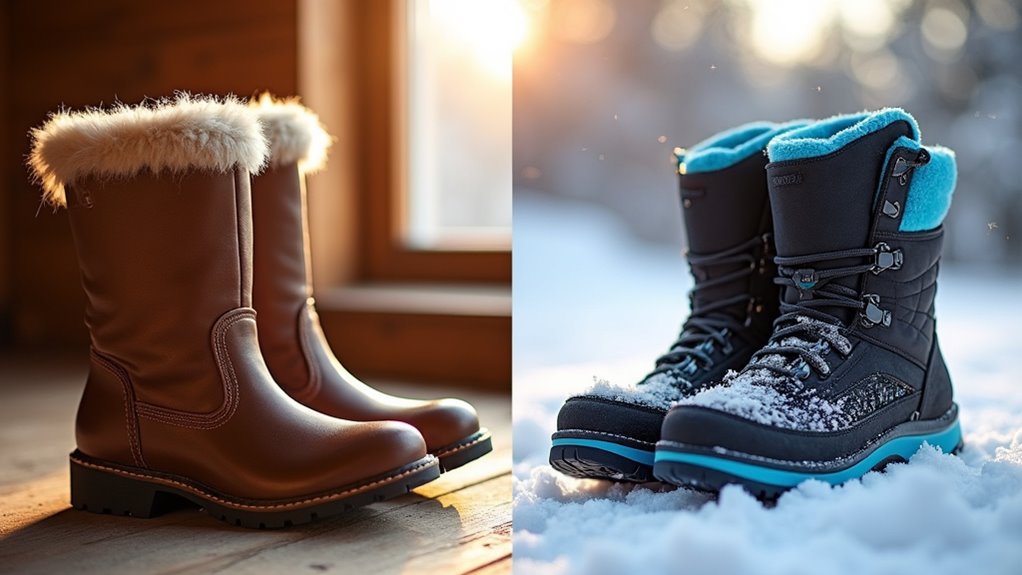
Picking the right winter boots is key for comfort and safety. Here are some important points to think about:
- Snow Conditions: Use snow boots for deep snow. Winter boots work well in cities with light snow.
- Activities: Skiing or snowshoeing? Get snow boots with good insulation and waterproofing.
- Insulation Ratings: Choose snow boots for extreme cold. Winter boots keep you warm for daily use.
- Boot Height: Snow boots are taller for snow protection. Winter boots are shorter for comfort and style.
Comfort matters too. Your boots should fit well, even with thick socks. This helps keep your feet warm and safe during winter activities. Additionally, consider waterproof features to enhance overall comfort and protect against moisture.
Waterproofing is essential to keep your feet dry. Prioritize this feature when selecting your boots.
Frequently Asked Questions
Can I Wear Snow Boots for Hiking in Winter?
Snow boots can be great for hiking in winter. They keep your feet warm and dry. Their thick soles provide good grip on snowy trails. This helps prevent slipping on ice.
Make sure your snow boots fit well. Too tight or too loose can cause pain. Remember, snow boots can feel heavy. This might slow you down a bit.
Choose boots that are lightweight if you want more speed. Look for ones with good insulation for warmth. Always check the weather before heading out. Dress in layers for comfort.
With the right snow boots, winter hiking can be fun! Enjoy the beautiful snowy landscapes and fresh air. Stay safe and have a great time!
How Do I Properly Clean Winter Boots?
Many people forget to care for their winter boots. Cleaning your boots is easy and important. Start by brushing off any dirt. Next, use a damp cloth with mild soap to wipe them down. Make sure to get into all the crevices. Let them air dry completely. To protect your boots, spray them with a waterproofing spray. This helps them last longer. Taking these simple steps keeps your boots looking good and ready for winter.
What Materials Are Commonly Used in Snow Boots?
Snow boots use materials that keep your feet dry and warm. Rubber and treated leather are common for waterproofing. Insulation often comes from Thinsulate or fleece, which helps retain heat. Breathable membranes, like Gore-Tex, keep moisture out while allowing sweat to escape.
The outsoles are made of durable rubber. This gives good traction on slippery surfaces. Many brands focus on comfort and style too. Choose snow boots that fit well for the best experience in winter conditions. Quality materials make a big difference in keeping feet cozy and safe.
Are Winter Boots Suitable for Extremely Cold Temperatures?
Winter boots are not always enough for extreme cold. They work well in mild weather but often lack proper insulation for harsh conditions. Many winter boots are made for temperatures above freezing.
In extremely cold weather, feet can get very cold. Boots need thick insulation to keep warmth in. Look for boots made specifically for very low temperatures.
Consider features like waterproof materials. This keeps snow and ice from soaking your feet. A good grip on the sole is also important. It helps prevent slipping on ice.
Make sure to check the temperature rating on the boots. Some boots are rated for -20°F or lower. This means they can handle extreme cold.
Investing in the right winter boots can keep your feet warm and safe. Stay warm and enjoy the winter!
How Should Winter Boots Fit for Optimal Comfort?
Winter boots need to fit well for comfort and warmth. They should be snug at the heel. There should be about a thumb’s width of space in the toe box. This allows your toes to move without feeling cramped.
Try walking around indoors while wearing them. This helps you spot any pressure points. Check if the boots give your arches enough support. A good fit keeps your feet warm and dry in cold weather.
Conclusion
Choosing between winter boots and snow boots is important for comfort and safety. Winter boots work well in cold weather and light snow. They are best for casual walks on dry or slightly snowy ground. Snow boots, on the other hand, are made for deeper snow and wet conditions. They keep feet warm and dry in slush and heavy snow.
Think about what you will do in winter. If you walk in light snow, winter boots are enough. For long walks in deep snow, snow boots are the better choice. Wearing the right boots helps you enjoy winter activities. Stay warm and dry this winter with the right footwear.