
Flat-Soled Sneakers Vs Cushioned
This post contains affiliate links. As an Amazon Associate, we earn from qualifying purchases.
Flat-soled sneakers are ideal for promoting a natural running style and strengthening your feet, making them suitable for casual wear. In contrast, cushioned shoes excel in shock absorption, making them perfect for long runs and uneven terrain. For those seeking comfort while running, cushioned shoes may be the better option. Further details and insights into choosing the right footwear based on your running style and foot type will follow.
Essential Facts in 30 Seconds
- Flat-soled sneakers promote natural foot movement; cushioned shoes provide better shock absorption for long runs.
- Flat shoes strengthen feet and calves; cushioned shoes minimize joint stress during activities.
- Cushioned shoes offer significant arch support; flat shoes are lightweight and versatile for casual use.
- Transitioning to flat shoes requires a gradual increase in distance to prevent soreness; cushioned shoes provide immediate comfort.
- Proper fit is crucial; testing both types on short runs helps identify the best option for individual needs.
Understanding Flat and Cushioned Shoes
Flat and cushioned shoes have different designs and purposes.
Flat shoes have little or no heel drop. They help you run naturally and feel the ground better. This can make your feet and calf muscles stronger over time. However, switching to flat shoes can take time if you’re used to regular shoes.
Cushioned shoes have a higher heel-to-toe drop. They absorb shock well. This feature reduces stress on your joints, especially during long runs. Cushioned shoes can take in up to 20% more impact. This makes them comfy for running on various surfaces.
Choose flat shoes for speed and a natural feel. Go for cushioned shoes for comfort and joint protection. Your running goals will help guide your choice. Additionally, selecting the right shoes based on your foot type can enhance overall comfort and performance.
Pros and Cons of Flat Shoes
Flat shoes offer many benefits that can enhance your running experience. They help you run more naturally and engage your feet better. Here are some important advantages to consider:
- Stronger foot muscles: Regular use builds strength in your feet and calves.
- Stable base: Flat shoes give you a solid foundation for weightlifting. This improves control during squats and deadlifts.
- Versatile style: Their simple design pairs well with many outfits. You can wear them for different activities.
- Cost-effective and durable: They usually cost less and are easy to clean. They also last a long time.
- Less foot fatigue: Without extra cushioning, your feet may feel less tired on longer runs.
Flat shoes may not have much arch support or cushioning, but they can help promote better alignment of the feet during physical activities.
Still, their benefits make them a smart choice for many activities.
Pros and Cons of Cushioned Shoes
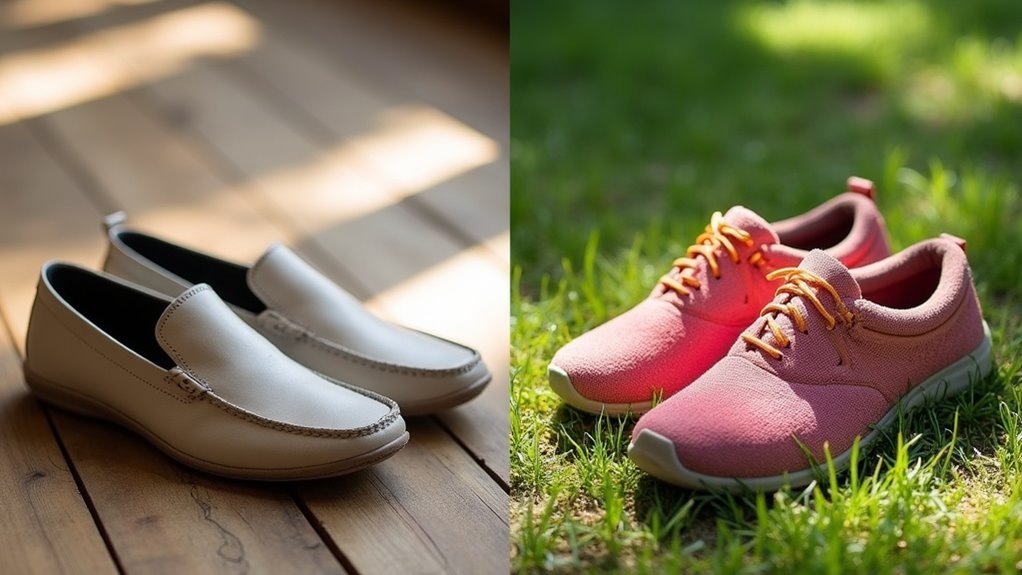
Cushioned shoes provide excellent shock absorption. This feature makes them ideal for long runs. They help reduce joint stress by up to 20%. This means more comfort while running on city streets.
These shoes can be heavier than regular ones. This extra weight might slow you down. Also, they can limit foot movement. This may not be good for everyone. Additionally, adequate arch support is essential for preventing misalignment and enhancing comfort.
Think carefully about the good and bad points. Find the right shoe for your needs. Comfort and support are key for happy feet. Choose wisely!
Benefits of Cushioned Shoes
Cushioned shoes offer great comfort for walking or running on hard surfaces. They absorb shock well, reducing joint stress by up to 20% in cities.
Here are some key benefits:
- Extra padding makes long distances more comfortable.
- A higher heel-to-toe drop helps with impact reduction.
- Cushioned shoes fit various foot types, meeting your needs.
- They reduce fatigue, so you can stay active longer.
- The cushioning may improve your performance on pavement.
- Additionally, quality insoles can enhance overall foot health, providing additional support for those experiencing heel pain.
While cushioned shoes can be heavier than flat ones, the comfort and support are worth it.
Enjoy your time outdoors with cushioned shoes.
Drawbacks of Cushioned Shoes
Cushioned shoes may feel nice, but they’ve some downsides. They often weigh more than flat shoes. This extra weight can make your feet tired during long use.
The heel-to-toe drop is higher, which can change how you run. This change might lead to injuries if you aren’t used to it.
Many cushioned shoes also limit your ability to feel the ground. This makes it harder to place your feet properly and use your muscles.
The cushioning wears out after about 480 kilometers. This means you need to buy new shoes more often than with flat sneakers.
Incorporating compression socks can enhance overall well-being, especially for those who experience discomfort during long periods in cushioned shoes.
Keep these points in mind when picking your shoes.
Comfort and Support Comparison
Flat-soled sneakers and cushioned shoes each have their benefits.
Flat-soled sneakers are lightweight. They help your feet move naturally. This can feel more comfortable for walking or running.
Cushioned shoes offer great shock absorption. This means they protect your feet from hard surfaces. They also give better arch support. This helps reduce foot pain during long activities.
Think about what you need. For casual wear, flat-soled may be best. For running or sports, cushioned shoes can be a better choice. Proper arch support is crucial for weight distribution and overall comfort.
Choosing the right sneaker can make a big difference in how your feet feel.
Find what works for you. Stay active and comfortable!
Weight and Movement Ease
Flat-soled sneakers and cushioned shoes each have their own advantages. Weight and ease of movement are key to comfort. Here’s a quick look at their differences:
Flat sneakers are lighter than cushioned shoes. This makes moving around easier. They’ve less cushioning, which helps you feel your body better. You can walk more naturally in them.
Cushioned shoes can feel heavier. Their thick soles are made to absorb shock, but this can slow you down. Some people say flat sneakers are more comfortable for all-day wear, especially during activities like weightlifting. Additionally, running sneakers provide specialized cushioning that enhances performance during long-distance running.
Cushioned shoes give better arch support, but their weight may affect agility.
Think about your activity level and what feels best for you. Choose what fits your lifestyle!
Shock Absorption Levels
Shock absorption is key for comfort in footwear. Cushioned shoes provide great shock absorption. They can cut joint stress by 20% in city settings. This makes them perfect for longer walks and high-impact sports. They help protect your feet from hard impacts.
On the other hand, flat-soled shoes have little shock absorption. This might cause discomfort on hard surfaces. Yet, they help you feel the ground better. You might feel less tired while moving in them. But, if you’re not used to less cushioning, wearing them for a long time can hurt.
For those who walk or run often on hard ground, cushioned shoes are the best choice. They offer comfort and support, making every step easier. Additionally, proper foot alignment is critical for enhancing overall posture and reducing fatigue during activities.
Arch Support Differences
Flat-soled sneakers can feel nice, but they often lack arch support. Many people need this support to avoid foot pain. Those with high arches may feel discomfort without it.
On the other hand, cushioned shoes provide better support. They’ve more shock absorption, which boosts comfort.
Here are some important points to remember:
- Flat-soled sneakers offer little arch support.
- Cushioned shoes have a higher heel-to-toe drop.
- Cushioned shoes help reduce foot pain by supporting your arches.
- Flat sneakers allow natural foot movement but may not provide enough support.
- Cushioned shoes feel like walking on a soft mattress.
- Understanding foot type is essential for proper support when choosing footwear.
Think about your activity level and foot needs. Comfort should always come first. Choose wisely for happier feet!
Choosing the Right Type for Your Running Style
Choosing the right running shoe is essential for your style. Start by thinking about where you run. Flat-soled shoes work best on firm surfaces. They help your feet move naturally and build strength. Cushioned shoes shine on uneven terrains. They absorb shock well, making them perfect for long distances.
Comfort is key in finding the right shoe. Shoes should feel good on your feet. Uncomfortable shoes can lead to injuries. Try both flat and cushioned shoes on short runs. This way, you can see what feels better for you.
If switching to flat shoes, increase your distance slowly. This helps prevent soreness. Additionally, understanding foot dimensions can help you find the best fit for your unique needs.
Also, think about your running goals. Do you want speed or comfort? Choose between cushioned and flat shoes wisely. The right shoe can make running more enjoyable and support your style.
Tips for Trying Out New Shoes

Trying on new shoes is key for finding the right fit. Follow these tips to ensure comfort and support:
- Try shoes on in the afternoon or evening. Feet swell a bit during the day.
- Wear your usual running socks. This helps check fit and cushioning.
- Walk around your home. Look for pinching or slipping.
- Start with short runs. Gradually increase distance as you break in new shoes.
- Pay attention to your body. Stop if you feel pain or discomfort. Consider a different shoe type.
These steps will help you choose the best shoes for your needs. Happy running!
Frequently Asked Questions
Can Flat-Soled Sneakers Improve My Lifting Technique?
Flat-soled sneakers can greatly improve your lifting technique. They provide a stable base. This stability helps you maintain control during lifts. You will feel your feet engage better with the ground. This connection boosts your performance. It also lowers the chance of injury when lifting heavy weights. Choose flat-soled sneakers for a safer and more effective workout.
Are Cushioned Shoes Suitable for Everyday Wear?
Cushioned shoes work well for everyday wear. They provide comfort and support. These shoes help reduce stress on your feet. This makes them great for long days on hard surfaces. Whether you’re running errands or just hanging out, they keep your feet happy.
Cushioned shoes are also good for casual outings. They fit many styles and can match different outfits. Many people find them easy to wear. If you like a soft feeling underfoot, these shoes are for you.
Just remember, it may take time to get used to the extra cushioning. Overall, cushioned shoes are a smart choice for daily activities. Enjoy your day with comfort!
How Long Do Flat-Soled Sneakers Typically Last?
Flat-soled sneakers usually last between 6 to 12 months. Proper care makes a big difference. Clean your sneakers regularly. Store them in a cool, dry place. This helps keep their quality for a longer time. Frequent use can wear them out faster. Take care of them, and they will last longer. Enjoy your sneakers for many months!
Do Flat-Soled Sneakers Come in Different Styles?
Flat-soled sneakers come in many styles. You can find classic canvas sneakers that never go out of fashion. Trendy designs often catch the eye with fun colors and patterns. Minimalist leather options offer a sleek and simple look. Each style suits different tastes and occasions. Whether you want comfort or fashion, there is a flat-soled sneaker for you. Enjoy exploring the variety!
Can I Use Cushioned Shoes for Weightlifting?
Cushioned shoes are not good for weightlifting. They can make it hard to balance when lifting heavy weights. You need strong support for your feet. This support helps you stay stable and safe.
Weightlifting requires a solid grip on the ground. Cushioned shoes can feel like standing on a soft surface. This can make you wobbly. You don’t want that when lifting heavy.
Flat shoes or weightlifting shoes are better options. They provide stability and keep your feet flat on the floor. This helps you lift more effectively. Remember, safety is key in weightlifting. Choose the right shoes and lift smart!
Conclusion
Flat-soled sneakers and cushioned shoes each have their own benefits. Flat shoes give you stability and a natural feel. They keep your feet close to the ground. This can help with balance and control. Cushioned shoes, on the other hand, offer extra support and comfort. They help absorb shock when you run or walk.
Think about your running style. Do you prefer a firm surface or soft support? Your choice will depend on what feels best for you. Try both types of shoes. Walk or run in them to see which fits better.
With the right shoes, you can enjoy your activities. Feel confident and comfortable with every step you take.