
Insoles for Heel Pain Relief
This post contains affiliate links. As an Amazon Associate, we earn from qualifying purchases.
Using the right insoles can significantly alleviate heel pain. Look for options that feature deep heel cups and solid arch support, as these elements help improve foot alignment. Materials like premium EVA foam are excellent for shock absorption, providing cushioning that can ease discomfort from issues such as plantar fasciitis. Additionally, taking proper care of your insoles will extend their lifespan, ensuring you receive ongoing support. For those interested, further details and options will be discussed later in the article to help you find the best fit.
Essential Facts in 30 Seconds
- Choose insoles with deep heel cups and arch support for heel pain relief from conditions like plantar fasciitis.
- Look for insoles with shock absorption technology to cushion the heel and reduce impact.
- Custom orthotics provide tailored arch support for enhanced comfort and alignment.
- Use high-quality materials like EVA foam for effective shock absorption and durability.
- Regularly handwash and air dry insoles to maintain effectiveness and prevent odors.
Understanding Heel Pain and Its Causes
Heel pain can be very annoying. It often makes daily activities hard to enjoy. One main reason for heel pain is plantar fasciitis. This condition causes swelling in the plantar fascia. This is the tissue that supports your foot’s arch. Flat feet or high arches can also lead to heel pain. They cause your foot to align improperly.
Overuse is another common cause. Activities like running or standing for long times can stress the heel. You might feel more pain when you move or after sitting for a while.
Sometimes, heel spurs develop from ongoing heel pain. These are bony growths that can form on your heel. They often come with swelling in nearby tissues.
Understanding these causes is key to managing heel pain. It helps you choose the right shoes and treatments. Simple changes can make a big difference in your comfort. Additionally, considering the specific insoles for your foot type can greatly enhance your overall foot health.
Benefits of Using Insoles for Heel Pain
Insoles for heel pain provide great comfort. They offer better arch support. This support helps keep your feet aligned. A good alignment reduces discomfort.
Shock absorption technology is another key feature. It protects your heels from impact during daily activities. With this protection, every step feels easier.
Many people find relief with the right insoles. They can help you walk, run, and stand more comfortably. Investing in quality insoles is a smart choice. Your feet will thank you! Additionally, custom orthotics offer specific arch support tailored to individual foot structure needs.
Enhanced Arch Support
Tired or sore feet? Enhanced arch support from insoles can help. Insoles designed for heel pain relieve pressure on the plantar fascia. This support is great for conditions like plantar fasciitis and Achilles tendonitis.
Specialized insoles come with medium to high arch heights. They ensure proper foot alignment. This reduces stress on your feet and legs during daily activities.
Deep heel cups keep your feet in the right position. They protect your heel and stabilize your foot to prevent discomfort.
Clinical studies show that arch support insoles can reduce fatigue. They also improve overall foot health. Choosing the right foot type assessment is crucial for finding effective insoles.
With many options available, you can find the perfect fit. Maximize comfort and find relief from heel pain.
Shock Absorption Technology
Insoles with shock absorption technology greatly increase comfort. They cushion your heel and lessen impact forces. This provides quick relief from heel pain.
Materials like EVA enhance shock absorption. This helps reduce foot fatigue, especially for those with plantar fasciitis. A deep heel cup and arch support keep your foot stable. They also optimize shock absorption.
This combination lowers stress on your heel and joints. It cuts down the risk of injury while walking or running. Regular use boosts foot health. Many users see a big drop in heel pain and enjoy better comfort when standing or walking for long times. Additionally, cushioning insoles are specifically designed to provide extra comfort and support for those suffering from heel pain.
Improved Foot Alignment
Many people feel better with improved foot alignment from special insoles. These insoles give strong arch support. They help to align your feet and legs. Good support stabilizes your foot during impact. This reduces strain on the plantar fascia and eases foot pain.
Deep heel cups keep everything in the right place. This helps lower the risk of heel spurs. Using these insoles regularly spreads pressure evenly across your foot. This improves stability and stops overuse injuries.
With the right insoles, your gait becomes more natural and comfortable. You’ll notice this as you walk through your day. Over time, your feet will feel the benefits. Additionally, adequate arch support is crucial for minimizing discomfort and enhancing overall foot health.
Types of Insoles for Different Foot Conditions
Choosing the right insoles for heel pain is essential. Strong arch support is important for those with plantar fasciitis. Cushioned insoles help relieve pressure on your heels. Different types of insoles target various foot needs. They provide the support and comfort your feet deserve. Look for options that fit your specific foot condition. This way, you can walk with less pain and more ease. Additionally, understanding foot types can help you select the most effective insoles for your needs.
Arch Support Options
The right arch support can really help with heel pain and foot issues. Here are some options to consider:
| Insoles | Best For | Features |
|---|---|---|
| PowerStep® Pinnacle Insoles | General heel pain support | Multilayered design, 12 sizes |
| Dr. Scholl’s Orthotics | All-day comfort | Foam cushioning, full-length support |
| KidSole Green Martian | Children’s foot support | Promotes healthy foot growth |
| PowerStep PULSE | Runners | Cushioning and stability |
| Plantar Fasciitis Relief | Flat feet | Deep heel cup for proper support |
Each type of insole offers unique benefits. Choose the one that fits your needs best. Comfort is key. Additionally, selecting insoles with sufficient arch support can enhance comfort and alleviate pain in flat feet.
Cushioning Types Explained
Different types of cushioning in insoles offer various support for your feet.
Orthotic insoles like the PowerStep Pinnacle provide full-foot cushioning. This helps with comfort and support, especially for heel pain relief.
Dr. Scholl’s Plantar Fasciitis Orthotics have foam cushioning. This reduces pressure on the heel and gives arch support.
For kids, the KidSole Orthotics Green Martian helps with healthy foot development. It features special cushioning designed for young feet.
Runners can benefit from the PowerStep PULSE Performance Insoles. They provide better cushioning and stability during runs.
Many insoles include deep heel cups. These help with foot positioning and shock absorption. This is important for managing heel pain effectively. Additionally, the right cushioning features in insoles can significantly enhance overall foot comfort.
Make a smart choice to support your feet better.
How to Choose the Right Insole for You

Finding the right insole for heel pain can make a big difference. Start by knowing the type of heel pain you have, like plantar fasciitis or heel spurs. Different insoles work best for each issue.
Look for insoles with a deep heel cup and good arch support. These features help keep your feet in the right position and reduce pressure on your heel.
The material matters too. Premium EVA foam gives great shock absorption and comfort. This can help you feel less tired after standing or walking for a long time.
Make sure the insoles fit your shoes properly. Trim-to-fit designs let you customize them for the best support.
Use an insole finder tool if you can. This tool matches your foot shape and activity level with the right insoles. This simple step can greatly help with heel pain relief. Additionally, consider whether you prefer memory foam or gel insoles, as each provides different benefits for comfort and support.
Customer Experiences and Recommendations
Many people find relief from heel pain with special insoles. The PowerStep Pinnacle insoles stand out. They offer great arch support and cushioning. Users say these insoles help reduce pain, especially for plantar fasciitis.
Here’s a quick look at customer experiences:
| Brand | Key Features | Customer Feedback |
|---|---|---|
| PowerStep Pinnacle | Deep heel cups for support | Effective for heel pain relief |
| Dr. Scholl’s | Trim-to-fit design | Comfortable and easy to adjust |
| Other Brands | Different arch support options | Mixed reviews on fit |
Many users love the snug fit and comfort. Some mention problems with arch placement, but most still recommend these brands. They provide good relief for heel pain. After trying them, daily activities may become easier! Proper arch support is essential for alleviating discomfort and enhancing overall foot health.
Caring for Your Insoles for Longevity
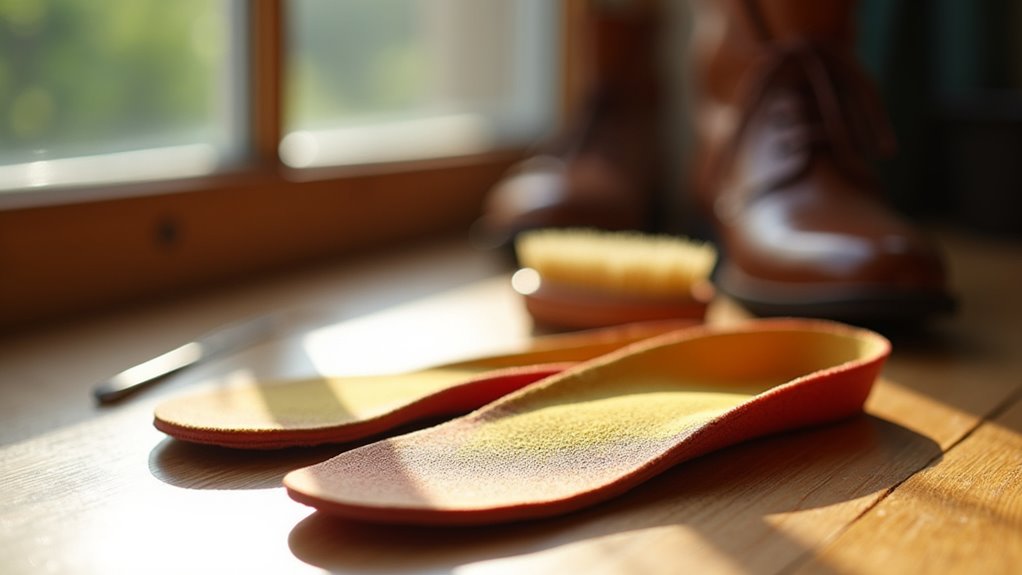
To keep your insoles in good condition, care for them properly. Start by handwashing with mild soap and warm water. Avoid machine washing, as it can ruin the materials. Use a soft-bristle toothbrush to gently clean dirt and debris. After washing, rinse them well. Use a soft towel to remove excess water. Let them air dry completely. Keep them away from heat sources to prevent warping.
Check your insoles regularly for signs of wear. Replace them when necessary. This ensures they provide the right arch support and pain relief.
If you wear your insoles without socks, air them out often. This helps prevent dampness and odors. Simple care steps will make your insoles last longer. With proper attention, they’ll keep giving you the support and comfort you need.
Frequently Asked Questions
How Long Should I Wear Insoles Each Day for Optimal Relief?
Wear insoles for 6 to 8 hours each day. This is important, especially if you walk or stand a lot. Start with 1 to 2 hours. As your feet get used to them, increase the time. This helps reduce pain and discomfort. Listen to your body. If your feet feel good, keep wearing them longer. Regular use can make a big difference in comfort and support.
Can Insoles Permanently Fix Heel Pain Issues?
Insoles cannot permanently fix heel pain. They help manage the pain. For lasting relief, combine insoles with good shoes, physical therapy, and regular stretching. These steps can improve your comfort and mobility. Good footwear supports your feet. Physical therapy helps strengthen muscles. Stretching keeps your muscles flexible. Together, these methods offer better results. Don’t rely on insoles alone. A complete approach works best for heel pain.
Are There Any Side Effects of Using Insoles?
Using insoles can cause some issues. Many people feel discomfort at first. Muscle dependency can develop too. Some might even feel more pain if the insoles don’t fit right.
Finding the correct type and size is very important. A bad fit can lead to more problems. It’s best to talk to a professional if you have specific foot issues. They can help you choose the right insoles for your needs. Always remember, comfort matters.
How Often Should I Replace My Insoles?
Replace your insoles every 6 to 12 months. This depends on how much you wear them. Watch for visible damage. Look for signs of reduced cushioning. When you notice these, it’s time for new insoles. Fresh insoles keep your feet comfortable and supported. They help prevent foot pain and other issues. Regularly changing insoles can improve your overall foot health. Take care of your feet. They deserve it!
Can I Use Insoles in Any Type of Shoe?
You can use insoles in most shoes. First, check if the shoes have removable insoles. Make sure your shoes fit well and have enough space. Comfort is important. Good support helps keep your feet happy. Insoles can improve your walking and standing experience. They can help with pain too. Just remember, not all shoes work with insoles. Always try them out first.
Conclusion
Insoles can greatly help with heel pain. They provide the support and comfort you need to stay active. The right insole can make a big difference. Think about your specific foot needs. Different foot conditions require different insoles. Taking care of your insoles can make them last longer. Try using them to see how much better you feel. Remember, healthy feet lead to a healthier you.