
Sneaker Rotation Benefits
This post contains affiliate links. As an Amazon Associate, we earn from qualifying purchases.
Rotating your sneakers significantly enhances your running experience and reduces injury risk by 39%. By using different shoes, you engage various muscles, which promotes flexibility and prevents overuse injuries. Additionally, switching between pairs aids recovery by allowing midsole foam to regain its bounce. Aim for at least two pairs and alternate them weekly to extend the life of your shoes and improve your performance. For those interested in a deeper understanding, further explanations and strategies for effective shoe rotation will follow.
Essential Facts in 30 Seconds
- Rotating sneakers can reduce injury risk by 39% by utilizing different muscle groups.
- Multiple pairs of shoes increase longevity, allowing midsole foam to recover.
- Different shoes are suited for specific workouts, enhancing performance and comfort.
- A consistent rotation schedule helps prevent overuse injuries and maintains shoe performance.
- Personalized shoe selection boosts comfort, reduces fatigue, and improves running efficiency.
Importance of Shoe Rotation for Runners
Running shoes are crucial for your performance and safety. Rotating your shoes helps reduce the risk of injury. It allows you to use different muscles and spread out stress. Studies show that this can lower injury risk by 39%.
Using several pairs of shoes helps the foam in each pair recover. This means better cushioning and support for your feet. It can also make each shoe last longer. Different types of shoes fit different workouts. For example, use cushioned shoes for long runs and lightweight ones for speed training.
Runners who switch shoes often face fewer injuries. A good shoe rotation plan improves recovery time. It also gives you a chance to try new features. This can make your training more effective. Incorporating arch support sneakers into your rotation can further enhance comfort and reduce foot fatigue.
Add a shoe rotation strategy to your routine. Enjoy better performance and fewer setbacks.
Health Benefits of Rotating Footwear
Rotating your footwear can cut your injury risk by 39%.
Different shoes work different muscles. This helps keep your joints healthy. It also keeps your body flexible.
Letting shoes rest between wears is smart. This keeps their cushioning strong. Good shoes last longer.
Injury Prevention Strategies
Using different running shoes can help prevent injuries. Rotating your shoes can cut your risk of overuse injuries by 39%. Each type of shoe works different muscles and spreads out stress. This keeps your body healthy.
Changing shoes gives the midsole foam time to bounce back. This means better cushioning for your runs. Switching shoes also reduces strain on the same muscles and joints. This promotes better overall health for your joints and muscles.
Different shoes allow for varied running styles. This can lead to better muscle use. Studies show that runners who switch shoes experience fewer injuries than those who always wear the same pair.
Enhanced Performance Metrics
Using different sneakers can boost your running performance. Rotating your shoes helps work various muscles and spreads out stress. This improves how efficiently you run.
Here are some important benefits:
- Lower Injury Risk: Research shows that wearing multiple pairs can reduce injuries.
- Better Recovery: Switching shoes gives midsole foam time to bounce back. This keeps cushioning strong.
- Performance Fit: You can pick shoes based on your workout type. Use lighter shoes for speed training.
Additionally, selecting sneakers with proper fit ensures comfort and prevents blisters, enhancing your overall running experience.
Using a mix of shoes leads to better running experiences. Stay healthy and run strong!
Enhancing Performance Through Shoe Variation
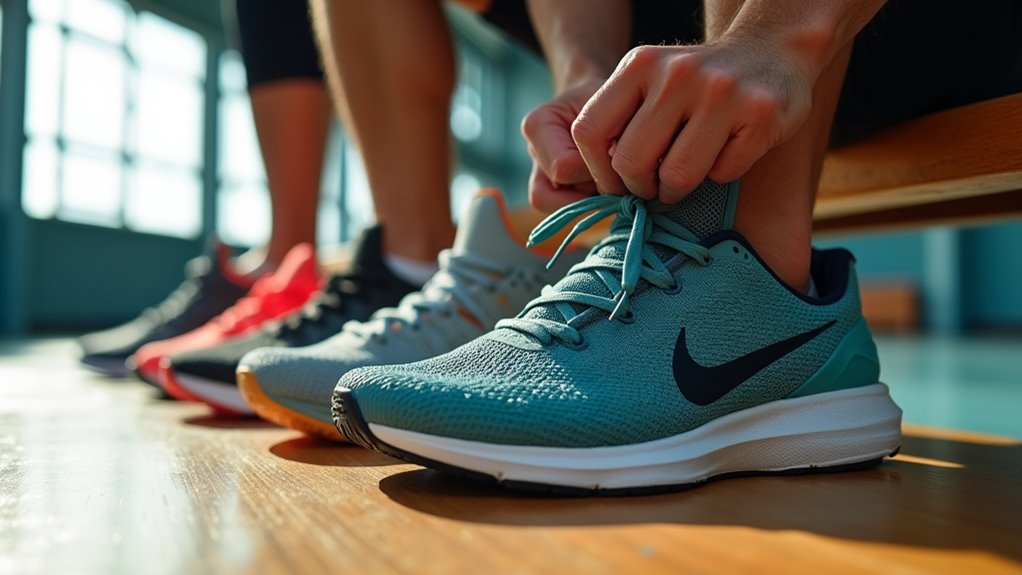
Varying your running shoes can greatly improve your performance. Rotating shoes helps you develop better running mechanics. Different types of shoes, like cushioned or lightweight options, work different muscles. This variation boosts your strength and efficiency. It also lowers the chance of injuries from overuse.
Studies show that runners using multiple pairs adapt their running styles better. This can lead to faster times. A good shoe rotation plan helps you train effectively. It prepares you for both speed work and recovery runs.
For example, trail shoes give you better grip on rough paths. Lightweight shoes help you run faster on the track. Mixing your footwear allows you to tackle any run with confidence. Additionally, the right footwear can enhance performance and prevent injuries associated with running.
Longevity of Shoes and Cost-Effectiveness
Rotating your running shoes boosts performance and makes them last longer. Using different pairs helps each shoe recover. This recovery keeps the cushioning and support strong over time.
Here are some benefits of shoe rotation:
- It cuts down on wear and tear. This means your shoes last longer.
- You can enjoy running more with shoes for various conditions.
- You save money by waiting longer to buy new shoes. This can save you hundreds of dollars.
A good shoe rotation helps balance performance and durability. Mixing new and old pairs keeps your feet comfortable and your shoes lasting longer. Additionally, using cushioned sneakers can provide comfort during long runs and high-impact activities, enhancing your overall experience.
This smart strategy makes your running journey effective and cost-efficient.
Customizing Footwear for Individual Needs
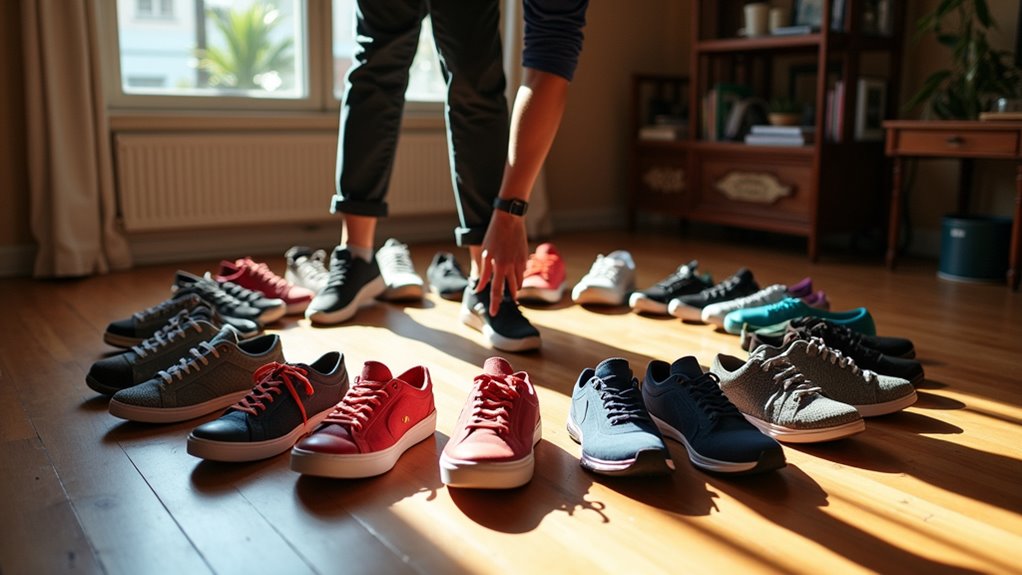
Custom footwear can greatly enhance your running experience. Adding insoles helps with foot alignment and reduces pain. This change eases pressure points, making your runs more enjoyable.
Selecting shoes that match your foot type, like flat feet or high arches, ensures a better fit. A good fit lowers the risk of injury.
Try different shoe features. Look at cushioning levels and heel-to-toe drop. Find what works best for your running style.
Adjust your shoe choices based on your training goals. Whether you focus on speed, endurance, or recovery, the right shoes improve both performance and comfort.
Keep track of your foot health and shoe fit. Regular checks help you make smart choices.
Customizing your footwear not only helps your comfort but also makes your shoes last longer. Protect your joints and muscles from extra strain by selecting the right footwear. Additionally, consider foot type assessment to choose insoles that provide optimal support for your specific needs.
Strategies for Effective Shoe Rotation
To get the most out of your shoes, use at least two pairs.
Pick shoes with different features. For example, one pair can have good cushioning, and the other can be lightweight.
Make a weekly rotation schedule. Avoid wearing the same pair two days in a row. This allows each pair to rest.
Giving your shoes time to recover helps keep them supportive. Regular rotation can extend the life of your shoes. Well-cared-for shoes will keep your feet happy and healthy. Additionally, using insoles with adequate arch support can enhance comfort during extended wear.
Follow these tips for better shoe care and comfort.
Weekly Rotation Schedule
A weekly shoe rotation schedule can improve your running. Using different pairs of shoes helps with recovery and reduces injury risk.
For example, you can use a PUMA Deviate Nitro for easy runs, a PUMA Deviate Elite for speed workouts, and a PUMA Velocity for comfortable cushioning.
Mix shoes for different run types: speed, endurance, and recovery. This allows the midsole foam to rest and last longer. Most shoes last between 300 to 500 miles.
Plan rest days carefully. Introduce new shoes one at a time to avoid problems.
This method supports better running form and keeps your feet healthy. Stay strong and ready for every challenge ahead.
Tailored Shoe Selection
Having different shoes is important for a good running experience. Start with a comfortable pair that fits your style.
Add cushioned shoes for long runs. Lightweight shoes are great for speedwork. This mix helps reduce stress on your muscles. Aim for a similar heel-to-toe drop in all your shoes. This makes switching easier.
Track how many miles you run in each pair. Replace shoes after 300 to 500 miles to keep them in good shape. Choose shoes with different features to work different muscles. This helps your body recover better. Choosing sneakers for wide feet can further enhance your comfort and performance.
Check your comfort and how well you run. Adjust your shoe rotation to fit your needs.
Frequently Asked Questions
How Many Pairs of Shoes Should I Rotate for Optimal Performance?
Rotating between two to three pairs of shoes boosts your performance. This method spreads out wear and tear. It also helps keep your shoes cushioned. Better cushioning means less chance of injury. Different shoes work better for different types of runs. Using more than one pair can help you stay comfortable and safe. Keep your feet happy and healthy by mixing up your shoes!
Can I Mix Different Brands in My Sneaker Rotation?
Mixing different sneaker brands in your rotation is a great idea. It offers variety in style and comfort. Each brand has its unique technology and fit. This helps you find what feels best for your feet.
Different shoes can improve your performance. Some may be better for running, while others are great for casual wear. Using different brands can also lower your risk of injury. It allows you to switch things up, giving your feet a break.
Enjoy the freedom to choose. Try new styles and colors from various brands. Your sneaker collection will be more exciting and fun. Embrace the mix and find what works for you!
How Often Should I Replace My Running Shoes?
Replace your running shoes every 300 to 500 miles. This distance depends on how you run and the wear on your shoes. Watch for signs of wear. Look for less cushioning or any discomfort while running. These signs mean it’s time to buy new shoes. Keeping track of your miles helps too. A good pair of running shoes supports your feet and prevents injuries. Taking care of your shoes also matters. Clean them regularly and store them properly. Your feet will thank you!
Is Sneaker Rotation Beneficial for Casual Runners as Well?
Sneaker rotation benefits casual runners. It boosts comfort and reduces injury risks. Different shoes provide varied support. This helps your feet stay healthy. Wearing the same shoes too often can lead to problems. It can cause blisters or soreness.
Rotating shoes keeps your running fresh and exciting. You can enjoy different styles and colors. This choice can make running more fun. Studies show that changing shoes can reduce stress on your body. This is important for casual runners who want to stay active.
In short, rotating sneakers is smart. It keeps your runs enjoyable and safe. So, consider having a few pairs to mix things up. Your feet will thank you!
What Types of Shoes Should I Include in My Rotation?
Cushioned running shoes are great for long-distance runs. They give your feet comfort and support. Lightweight racing shoes help you run faster during speedwork. These shoes are designed for speed and agility.
Strength training shoes offer stability for lifting weights. A good grip helps you stay balanced. Cross-training shoes are perfect for versatile workouts. They work well for many activities, from gym classes to sports.
Having different types of shoes improves your performance. Each shoe serves a unique purpose, helping you reach your fitness goals. Keep your rotation diverse for the best results.
Conclusion
A shoe rotation offers many benefits. Each pair of shoes has its own purpose. This helps keep your feet healthy. It also improves your performance. By changing your shoes, you can extend their life. This saves you money over time. Using different shoes customizes your running experience. Each step feels better and fresh. So, lace up those shoes and enjoy every run.