
How to Choose Orthotic Insoles
This post contains affiliate links. As an Amazon Associate, we earn from qualifying purchases.
To choose the right orthotic insoles, begin by determining your foot arch type: low, medium, or high. Low arches typically require firm support, while high arches benefit from additional cushioning. It’s also important to consider your activity level; cushioned insoles are ideal for everyday use, whereas rigid insoles are better suited for more active lifestyles. Test different options for comfort and fit by walking in them, ensuring they provide stability. For proper sizing, remove your shoe’s sock liner and compare. More detailed tips for making the best choice will be provided later in the article.
Essential Facts in 30 Seconds
- Identify your foot arch type (low, medium, high) for proper insole selection.
- Choose insoles based on your activity level for comfort or support.
- Test insoles by standing on them for heel support and stability.
- Consider custom insoles for personalized support tailored to your foot shape.
- Replace insoles every 6 to 12 months and maintain them by airing out and cleaning.
Understanding Different Types of Insoles
Finding the right insoles can make a big difference for your feet. Start with orthotic arch supports. They come in rigid and semi-rigid forms. These supports help keep your feet aligned.
Comfort seekers should try cushioned arch supports. They offer good flexibility and absorb shock well. For active people, gel insoles are great. They help reduce foot fatigue during high-impact activities.
Heat-moldable insoles are unique. They shape to your feet for a custom fit. Different insoles match different types of shoes. High-volume insoles work well in hiking boots. Low-volume insoles fit better in cycling shoes.
Each type of insole has a specific purpose. Choose the right one for your needs. This choice ensures comfort and support during daily activities. Understanding these options helps you find the best insoles for your lifestyle. Additionally, knowing your foot type can guide you in selecting the most suitable insoles for optimal support.
Factors to Consider When Selecting Insoles
Select insoles based on your foot arch type: low, medium, or high. This choice ensures proper support for your unique foot shape.
Think about your activity level too. Do you need comfort for daily wear or support for intense activities? This decision matters.
Always choose insoles that fit your lifestyle and needs. Look for materials that offer cushioning and stability. A good fit can help prevent foot pain.
Be sure to try them out before buying. Custom insoles yield better results than generic options, ensuring optimal support for your foot type. Happy feet lead to a happier day!
Foot Arch Type
Understanding your foot arch type helps you pick the right orthotic insoles. There are three main types: flat feet, high arches, and neutral arches.
Flat feet need insoles with firm or semi-firm arch supports. These insoles stabilize your heel and spread pressure evenly.
High arches require insoles with extra padding. This extra cushioning helps ease pressure points.
Neutral arches work well with many options. You can find insoles that balance comfort and support.
A proper fit is very important. Insoles must match your foot’s shape. Too high or too low can cause discomfort.
To find the right support, try standing on the insoles. Check how well they fit your arch type. Good insoles reduce foot fatigue and improve comfort. Additionally, custom orthotics can alleviate foot pain by providing specific arch support tailored to your individual needs.
Activity Level
Your activity level greatly affects the type of insoles you need. Active people who run, walk, or stand a lot should choose insoles with great shock absorption.
Gel or cushioned arch supports often provide the comfort needed for longer activities. Make sure to check how long you’re active, as longer periods mean you might need extra comfort.
Footwear matters too. Insoles should fit well to prevent discomfort.
If you have foot issues like plantar fasciitis or over-pronation, select insoles that address those specific problems. Identifying your foot arch type is also key.
Matching insoles to your arch height ensures the best support and comfort. Additionally, consider proper arch support to alleviate discomfort and enhance performance throughout your day.
Identifying Your Foot Needs
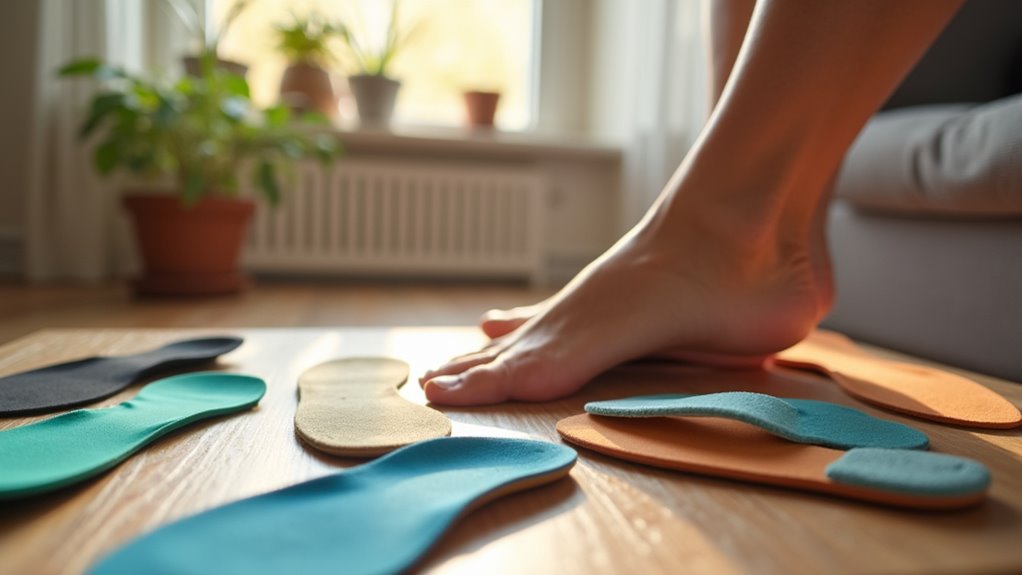
Your feet need comfort and support. Start by checking your foot type and arch height. Is it low, medium, or high? This will help you pick the right insoles.
Think about what you do most. Running, standing, or playing sports? Choose insoles made for those activities. They’ll give you the support you need.
Consider any foot problems too. Conditions like plantar fasciitis or over-pronation need special insoles. Look for extra arch support or cushioning.
Check how your shoes fit. Insoles should fit well without crowding your feet. They should match the volume of your shoes.
Look at the materials of the insoles. Gel helps with shock absorption. Foam offers good cushioning. Heat-moldable insoles give a custom fit. Additionally, ensure the insoles provide adequate arch support as it is crucial for comfort and alleviating heel pain.
Common Foot Complaints and Recommended Insoles
Common foot problems like plantar fasciitis and over-pronation can cause pain. The right insoles can help a lot. For plantar fasciitis, choose semi-rigid or rigid footbeds. These support the arch and ease discomfort.
Metatarsalgia is another issue. For this, insoles with metatarsal pads work well. They relieve pressure on sensitive areas.
Finding the right insoles can improve comfort and support. Investing in quality insoles is wise for your foot health. Memory foam and gel insoles offer unique benefits that cater to different needs and preferences.
Happy feet lead to a happy life!
Plantar Fasciitis Solutions
Dealing with plantar fasciitis can be tough. The right orthotic insoles can help a lot. Choose insoles with semi-rigid arch supports. They keep your foot aligned and lessen heel pain.
Foam orthotic insoles provide good cushioning. They also help spread pressure evenly across your foot.
For tighter shoes, go for low-profile insoles. They fit well and still offer support. Insoles with metatarsal pads take pressure off your forefoot. This adds more comfort for you.
Additionally, proper foot alignment can significantly enhance your comfort and reduce pain over time.
Remember to change your insoles every 6 to 12 months. New insoles work better. With the right insoles, managing plantar fasciitis gets easier. Enjoy your day on your feet!
Over-Pronation Support
Over-pronation happens when your feet roll inward while walking or running. This can lead to pain in your feet, ankles, and knees. Insoles for over-pronation are key to fixing this issue.
Look for insoles with semi-rigid or rigid arch supports. These supports help keep your feet aligned and spread pressure evenly.
Opt for insoles that provide extra cushioning and stability. This helps counteract the inward rolling of your feet. Many insoles also include metatarsal pads. These pads relieve pressure on your forefoot.
A proper fit is very important. Ill-fitting insoles can make over-pronation worse.
The right foot support can boost your comfort and keep your feet healthy. Cushioning insoles can also enhance shock absorption during your daily activities. Stay active and pain-free with the right insoles.
Metatarsalgia Relief Options
Metatarsalgia can cause significant foot pain. Long hours on your feet make it worse. To ease this discomfort, use insoles made for pressure relief. Choose insoles with cushioning and padding in the forefoot area. These features help spread your weight evenly across your foot.
Semi-rigid arch supports are also helpful. They provide stability and reduce foot pain. Good insoles improve shock absorption. This protects your metatarsal bones from too much impact. Additionally, supportive heels can enhance comfort by providing the necessary lift without straining your feet.
Replace your insoles every 6 to 12 months. This ensures you get the best support and comfort. The right insoles can help you manage metatarsalgia effectively. Enjoy daily activities without pain.
Don’t let foot pain stop you. Invest in the support you need.
How to Fit Insoles Properly
To fit insoles properly, first remove the sock liner from your shoe. This helps you see how the new insole will fit.
Stand on the insole outside the shoe. Check for heel support and overall stability. The insole should fit snugly. It shouldn’t bunch up or feel uncomfortable. Trim it if needed, especially for full-length insoles.
Next, ensure the insole’s volume matches your shoe type. Use high-volume insoles for hiking boots. Low-volume insoles work well in cycling shoes.
After placing the insole inside, walk around. Make sure it feels comfortable and supportive. Pay attention to how your foot moves. It should still flex naturally.
Replacing insoles regularly can help prevent bigger foot issues that may arise from worn-out support.
A well-fitted insole improves comfort and support throughout the day.
Maintenance and Care for Your Insoles

Taking care of your insoles is important for comfort and support. Regular maintenance helps them last longer and work better.
Air out your insoles after each use to remove moisture. This prevents bad smells and damage. Hand wash your insoles with mild detergent every few weeks. Make sure they dry completely before using them again.
Check your insoles often for wear, like flattening or tearing. Notice less cushioning or support? It’s time to get new ones.
On average, aftermarket insoles last about 12 months with regular use. Keeping an eye on their condition ensures you get the support you need.
Follow these simple care tips to maintain effective insoles. Enjoy the comfort they provide!
Frequently Asked Questions
Can Orthotic Insoles Be Customized for Individual Foot Shapes?
Orthotic insoles can be specially made for your unique foot shape. They use heat-moldable materials that adjust to your feet. You can also choose from different arch heights. This customization helps you get the best support and comfort. A perfect fit means less pain and better balance. Many people find relief with custom insoles. They are a great solution for foot problems. Make sure to find a professional who can help you create the right insoles for your needs.
How Long Do Orthotic Insoles Typically Last?
Those fancy orthotic insoles won’t last forever. On average, they last between 6 to 12 months with regular use. Pay attention to signs of wear and tear. Look for cracks, thinning, or loss of support. These signs mean it’s time to replace them. Proper care can help extend their life. Keep them clean and dry. Store them away from direct heat. Remember, happy feet lead to a happier you!
Are Orthotic Insoles Suitable for Children?
Orthotic insoles are great for children. They give important support to growing feet. Many kids have flat feet or other foot problems. These insoles can help fix those issues. They help kids walk better and feel more comfortable.
Always talk to a pediatrician before getting insoles. A doctor can ensure they are the right fit for your child. Proper support can make a big difference in your child’s daily life. Happy feet lead to happy kids!
Can I Use Orthotic Insoles in Multiple Pairs of Shoes?
You can use orthotic insoles in many pairs of shoes. Just take out the original insole first. Make sure the orthotic fits well in each shoe. Check the insoles for wear and tear. This helps keep them effective. Using them in different shoes can improve your comfort and support. Remember, the right fit matters for the best results. Enjoy walking with better support!
Do Orthotic Insoles Require a Prescription From a Doctor?
Orthotic insoles do not always need a prescription. Many good options are available over the counter. These can offer decent support for your feet.
For specific foot problems, visiting a doctor is a smart move. A doctor can give personalized advice. They can recommend the best insoles for your needs.
Conclusion
Finding the right orthotic insoles is key for comfort. Think about your foot needs first. Many types of insoles are available. Tired of sore feet after a long day? Proper fitting is crucial. Well-fitting insoles provide support and relief. Take care of your insoles for longer use. Clean them regularly to keep them fresh. Finding the perfect match takes time, but it’s worth it. Happy feet lead to a happier you!