
Shoes for People With Bunions
This post contains affiliate links. As an Amazon Associate, we earn from qualifying purchases.
Choosing the right shoes is crucial for individuals with bunions to ensure comfort and support. Opt for shoes that feature a wide toe box, ample space in front of your toes, and solid arch support, while also favoring low heels and soft materials to minimize rubbing. Brands like Hoka and Vionic provide excellent options tailored for bunion relief. For those seeking more detailed guidance, we will delve deeper into these features and how to find the ideal pair later in the article.
Essential Facts in 30 Seconds
- Choose shoes with a wide toe box for better toe movement and reduced bunion pressure.
- Look for strong arch support to improve foot alignment and alleviate bunion pain.
- Select cushioned shoes made from soft materials for enhanced comfort and to prevent rubbing.
- Prefer low heel heights to promote better foot mechanics and overall comfort.
- Consider brands like Hoka and Vionic for podiatrist-approved designs that support bunion sufferers.
Understanding Bunions and Their Impact on Foot Health
Bunions, also known as hallux valgus, can seriously impact foot health. About 23% of people aged 18-65 have bunions. These painful bumps form at the base of the big toe. They often come from wearing shoes that fit poorly. This can lead to discomfort and pain. Signs of bunions include a noticeable bump on the big toe. Pain increases when wearing tight shoes.
Managing bunions starts with the right footwear. Look for shoes with wide toe boxes. This allows your toes to spread comfortably. Good arch support is also important. It helps keep your feet healthy and can stop bunions from getting worse. Proper arch support distributes weight evenly across the foot, which can alleviate discomfort.
Bunions can be passed down in families. They may also happen because of foot types like flat feet. Knowing your foot health is vital. It helps reduce discomfort and guides you in picking the best shoes.
Key Features to Look for in Bunion-Friendly Shoes
Shop for bunion-friendly shoes that have a wide toe box. This gives your toes space to move. It helps reduce pressure on the big toe joint.
Look for good arch support as well. This keeps your feet aligned and helps ease bunion pain. Choose shoes made from soft materials. They shouldn’t rub against your feet.
Shoes with a low heel are also better. A flat or slightly raised heel can provide comfort. Prioritize arch support to enhance overall comfort.
Remember to try on shoes at the end of the day. Your feet may swell, so you want the best fit.
Prioritize comfort when selecting your footwear. Happy shopping!
Wide Toe Box
Finding the right shoes makes a big difference for bunions. Shoes with a wide toe box offer extra room for your feet. Aim for about a thumb’s width of space between your toes and the front of the shoe. This design eases pressure on bunions and keeps your foot’s natural shape.
Bunion-friendly shoes often use high-quality materials. They’re built on custom shapes to support deep and wide toe placement. Many comfortable shoes for bunions also have cushioning and better arch support. These features improve your overall comfort and help you manage foot conditions effectively. Additionally, proper width allows for natural toe movement, which is crucial for those suffering from bunions.
Arch Support Importance
Good arch support is crucial for shoes made for bunions. It reduces pressure on the MTP joint and eases bunion pain.
Prioritize shoes with strong arch support. This helps prevent foot pronation, which can hurt and cause more problems. A cushioned arch makes daily activities easier and more comfortable.
Shoes that offer stability also promote healthy foot alignment. This is essential for keeping your feet healthy. Look for designs that provide extra arch support. They can greatly enhance your comfort.
Investing in bunion-friendly shoes with proper arch support can significantly improve your foot health and quality of life. Additionally, ensuring you select the right foot type assessment can help you choose the most suitable insoles for your bunion-friendly shoes.
Recommended Shoe Styles for Bunion Relief

Finding relief from bunions requires the right shoes. Good shoes for bunions have wide toe boxes to ease pressure. Look for shoes with extra arch support and cushioning. These features help reduce stress on the MTP joint. Flexible materials like mesh and knit allow your toes to move freely. Understanding foot shape is crucial in selecting the right footwear for bunion relief.
Here’s a quick guide to help you choose:
| Feature | Recommendation |
|---|---|
| Toe Box | Wide toe boxes |
| Heel Height | Limited to 2 inches |
| Adjustable Features | Straps or laces for fit |
Opt for wider shoes with comfort features. These improve your walking experience. Styles with adjustable parts increase overall comfort. Prioritize these key features to find shoes that ease your discomfort and support your feet well.
The Importance of Proper Fit and Sizing
Proper fit and sizing are very important for shoes if you have bunions. Aim for a thumb’s width of space between your toes and the shoe’s front. This extra room helps prevent pain.
Choose shoes with wide toe boxes. They match your foot’s natural shape and reduce pressure on bunions. Custom shoe designs with deep, wide toe boxes support the big toe joint better.
Always check fit notes on product pages. Shoe widths can be different between styles.
Try on shoes in a soft area like carpet. This helps you feel how they fit during the day. Remember, your foot size can change with swelling.
Getting the right fit is key. It ensures comfort and support for your daily activities. Additionally, regular foot measurements are essential as foot size can change over time.
Expert Advice: Podiatrist Recommendations for Bunion Shoes
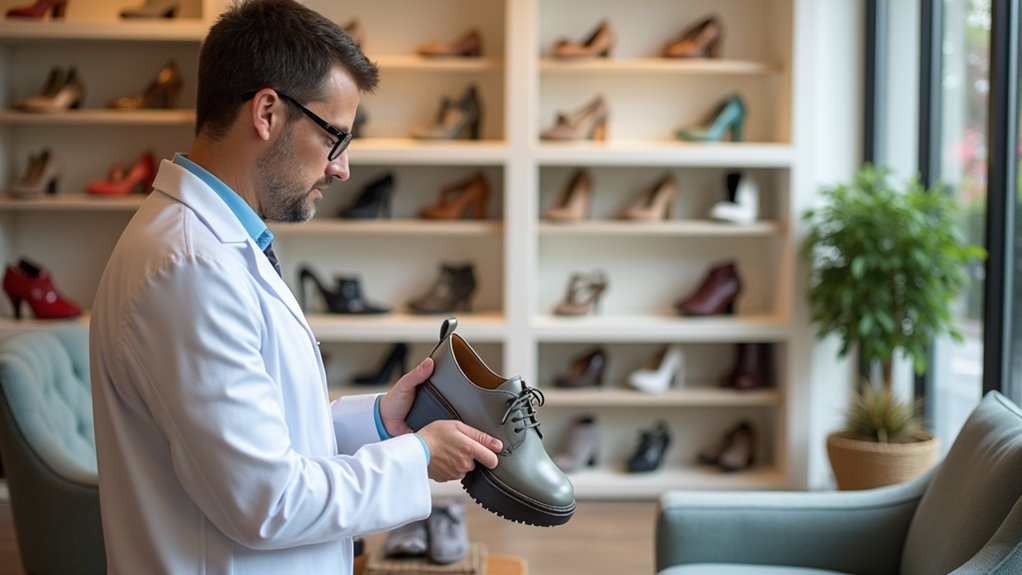
Finding the right shoes for bunions is important for comfort and health.
Choose shoes with a wide toe box. This gives your toes enough space. Good cushioning helps absorb shock when you walk.
Podiatrists suggest shoes with strong arch support. This keeps your feet aligned and reduces pain.
Soft materials feel nice against your skin. They make the shoe fit better. Brands that focus on comfort are a great choice.
Always try shoes on before buying. Walk around to see how they feel. Your feet deserve the best care!
Essential Shoe Features
Finding the right shoes is crucial for comfort, especially with bunions. A wide toe box allows your toes to move freely and reduces irritation.
Good arch support is key. It helps ease pressure on the MTP joint and keeps your foot stable.
Choose flexible materials like mesh or knit. These materials let your toes move without pain.
Steer clear of high heels and pointed shoes. They can make bunion pain worse by forcing your foot into odd shapes.
Always check your foot size, as bunions can change it over time. This ensures you find a comfortable fit every time you shop for new shoes.
Recommended Shoe Brands
Finding the right shoe brand helps ease bunion pain. Hoka and Vionic make great options. These brands offer wide shoes with excellent support. Their designs use soft leather or breathable mesh. This ensures comfort for your big toe.
For women’s shoes, focus on flexible materials. These allow your foot to move naturally. Look for adjustable straps for a secure fit. Supportive insoles add extra cushioning.
Leave a thumb’s width of space in front of your toes. This prevents added pressure. Choose the right brand to reduce bunion pain and boost your foot health.
Ethical Production and Quality in Bunion Footwear
Ethical production and quality are key factors in selecting the right footwear for bunions. Shoes should support your feet and be made responsibly. Here are some important points to consider:
Bunion-friendly footwear often comes from skilled factories. These factories ensure high quality. Ethical production means fair wages for workers. This practice supports social responsibility.
Many brands choose soft leathers and durable materials. These choices improve both comfort and style. Look for podiatrist-approved designs. They support foot health and provide comfort.
These shoes often have special construction for bunion sufferers. You can find stylish designs that don’t sacrifice looks for comfort.
Investing in ethically produced shoes means you get durable footwear. These shoes respect your feet and the artisans who make them. Make a smart choice and enjoy the comfort of quality shoes designed just for you!
Frequently Asked Questions
Can Bunion-Friendly Shoes Help Prevent Bunion Progression?
Bunion-friendly shoes can help stop bunion progression. These shoes offer extra space for your toes. They provide support and reduce pressure on your feet. Wearing well-fitting shoes keeps your foot’s natural shape. This can help you feel less pain. Proper footwear is important for foot health. It can prevent future problems too. Choose shoes with a wide toe box. Look for soft materials that don’t rub against your skin. Good shoes make a big difference in comfort and health. Protect your feet with the right choice.
How Often Should I Replace My Bunion Shoes?
Replace your bunion shoes every 6 to 12 months. Worn-out shoes can cause discomfort. Studies show that 80% of people feel pain when their shoes wear down. Check your shoes regularly for signs of wear. Good shoes help keep your feet healthy and pain-free. Don’t wait too long to replace them!
Are There Specific Brands Known for Bunion-Friendly Designs?
Hoka, Vionic, Calla Shoes, Wolky, and ECCO make shoes that help with bunions. These brands focus on comfort and support. They offer designs that relieve pain and fit your foot well. Choose from styles that give your feet the care they need. Each brand has its own unique features to help you walk better. Find the right pair to keep your feet happy!
Can I Wear Orthotics With Bunion-Friendly Shoes?
Wearing orthotics with bunion-friendly shoes is a great idea. This combination can give you extra comfort and support. Make sure the shoes have enough room inside. A good fit prevents crowding and discomfort.
Bunion-friendly shoes often have wide toe boxes. This design helps your toes spread out comfortably. Orthotics can provide better arch support. Together, they work well to ease foot pain.
Many people report less discomfort when using both. Check the shoe size and shape carefully. Look for shoes that support your foot’s needs. Your feet will thank you for it!
What Materials Are Best for Bunion-Friendly Footwear?
For bunion-friendly footwear, choose soft and flexible materials. Mesh and knit are great options. High-quality leather also works well. Look for ultra-soft insoles for extra comfort. Breathable fabrics keep your feet cool. These features help with toe movement. Comfort is key for better foot health. Good footwear can make a big difference. Prioritize materials that accommodate your feet. Taking care of your feet is important. Make smart choices for your footwear.
Conclusion
Finding shoes for bunions is important for comfort. Focus on a few key features. Look for wider shoes to avoid squeezing your feet. Good arch support helps reduce pain. Cushioning makes walking much easier. Always check for a proper fit. If needed, ask a podiatrist for advice. With the right shoes, you can walk without discomfort. Your feet deserve comfort and support. Take your time to find the best pair for you. Enjoy each step!