
Foot Pain Relief Tips for Heel Wearers
This post contains affiliate links. As an Amazon Associate, we earn from qualifying purchases.
To alleviate foot pain from wearing high heels, opt for shoes with a heel height of 2 inches or lower, and prioritize good arch support, cushioning, and a wide toe box. Regularly stretching your calves and Achilles tendon can also help relieve tension. Additionally, using ice packs for 15-20 minutes can reduce swelling, and over-the-counter pain relievers may assist with discomfort. For enhanced comfort, consider incorporating orthotics or gel heel pads. Further details and strategies will be provided in the following sections for those seeking a deeper understanding.
Essential Facts in 30 Seconds
- Opt for heels 2 inches or lower to minimize foot pressure.
- Add cushioning and arch support for improved comfort and pain relief.
- Take 5-10 minute breaks every hour to ease foot strain and enhance circulation.
- Stretch calf muscles and the Achilles tendon to boost flexibility and reduce foot tension.
- Apply ice packs for 15-20 minutes after activity to decrease swelling and inflammation.
Understanding Foot Pain From High Heels
High heels can make any outfit look stylish, but they often lead to pain. These trendy shoes can cause problems like plantar fasciitis and Achilles tendonitis. Both conditions can bring significant pain in your heels.
High heels usually don’t have enough arch support. This lack of support puts extra pressure on the ball of your foot. This pressure can lead to heel pain and inflammation.
The angle of high heels can also create muscle imbalances. This can tighten your calf muscles and strain your Achilles tendon. Over time, this strain can make foot pain worse.
To ease the discomfort, add cushioning to your high heels. Make sure your shoes fit well. A good fit helps reduce pain and prevents long-term foot problems. Insoles can be an effective solution to alleviate heel pain and improve comfort while wearing high heels.
Take breaks from wearing high heels. Switch to comfortable shoes whenever you can. Paying attention to these tips can help keep your feet healthy and pain-free.
Choosing the Right Shoes for Comfort
Choosing the right shoes is important for comfort. This is especially true if you stand for long periods. Look for shoes with a heel height of 2 inches or lower. A low heel reduces pressure on your feet and helps you feel stable.
Select shoes with a wide toe box. A wide toe box prevents your toes from being squished. This allows your feet to move freely and breathe. Good arch support and cushioning are key features. They help reduce heel pain and make walking easier.
Innovative features like gel inserts or shock-absorbing materials improve comfort. They lessen the impact on your feet. Investing in arch support sneakers can be a beneficial solution for foot issues.
Always try shoes on in the afternoon. Your feet swell throughout the day. This helps you find a better fit.
Pay attention to these details. They’ll greatly improve your comfort when wearing shoes.
Stretching Techniques to Alleviate Tension
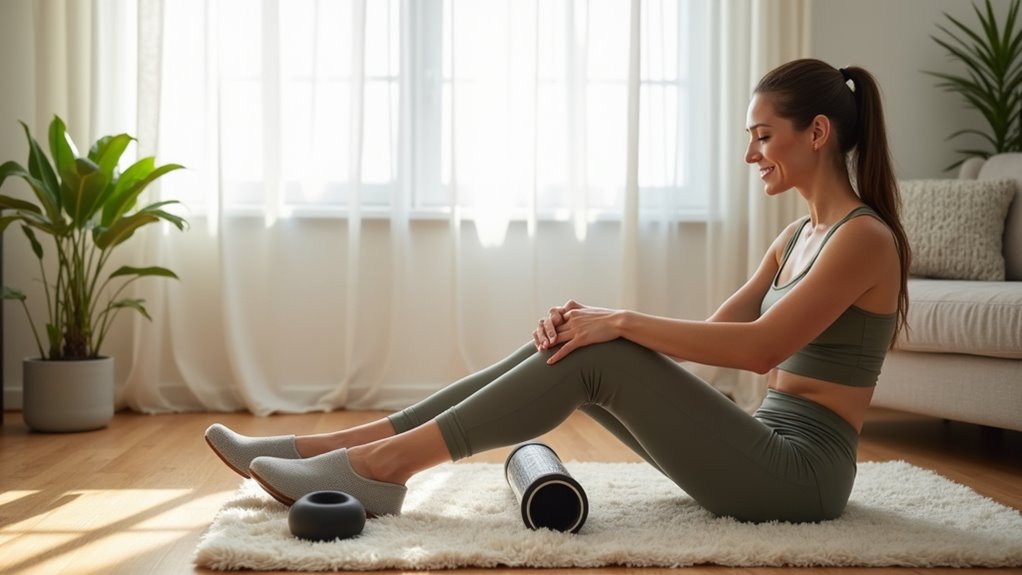
To relieve foot tension, stretch your calf muscles and Achilles tendon. Hold each stretch for 15-30 seconds. This helps improve flexibility and reduces pain. Include plantar fascia stretches too. These stretches ease tightness and discomfort in your heels. Regular stretching keeps your feet healthy and pain-free. Easy stretches can make a big difference in how your feet feel. Additionally, incorporating toe pull stretches can specifically target the arch and alleviate discomfort.
Calf and Achilles Stretches
Stretching your calves and Achilles tendon helps relieve foot pain. This is especially important for those who often wear high heels.
Start with a calf stretch. Stand with one foot behind the other. Lean forward until you feel the stretch in your calf muscles and Achilles.
Next, stretch your Achilles tendon. Place your heel on the ground. Bend your front knee to feel the stretch.
Toe stretches also help. Sit down and pull back on your toes. This relieves stress on the ball of your foot.
Wall stretches are effective too. Press your hands against a wall. Step back with one foot to stretch your calves.
Practice these stretches daily. They improve foot and ankle health. Regular stretching reduces heel pain. Additionally, wearing supportive heels can help alleviate tension and improve comfort while walking.
Keep your feet happy and healthy!
Plantar Fascia Stretching Techniques
Plantar fascia stretches are important for easing foot pain and tension.
Sit with one leg crossed over the other. Gently pull your toes back toward your shin. Hold this stretch for 15 to 30 seconds.
Try the towel stretch next. Sit down and loop a towel around the ball of your foot. Pull the towel towards you while keeping your knee straight.
Standing calf stretches also help. Place your hands on a wall. Step one foot back and press your heel into the ground.
Another great method is using a tennis ball or a frozen water bottle. Roll it under the arch of your foot to relieve tension.
Regular practice of these stretches can greatly reduce pain, especially for those who wear heels. Additionally, incorporating insoles with extra cushioning can further enhance comfort and support for individuals with specific foot conditions.
The Benefits of Ice and Pain Relievers
Heel pain can be tough to handle. Ice and over-the-counter pain relievers can make a big difference. Ice packs help reduce inflammation and swelling in your heel. Apply them for 15-20 minutes to feel relief.
Over-the-counter medicines like ibuprofen or naproxen also help. They lower inflammation and ease pain when taken as directed.
Topical treatments with menthol or capsaicin can numb the area and reduce discomfort. Use ice after activities that make your heel hurt. This helps minimize swelling and speeds up recovery.
Combining ice with pain relievers can improve how you manage pain. This approach boosts your mobility too. By following these tips, you can better handle heel pain and return to your daily activities with less discomfort.
The Role of Orthotics and Heel Pads
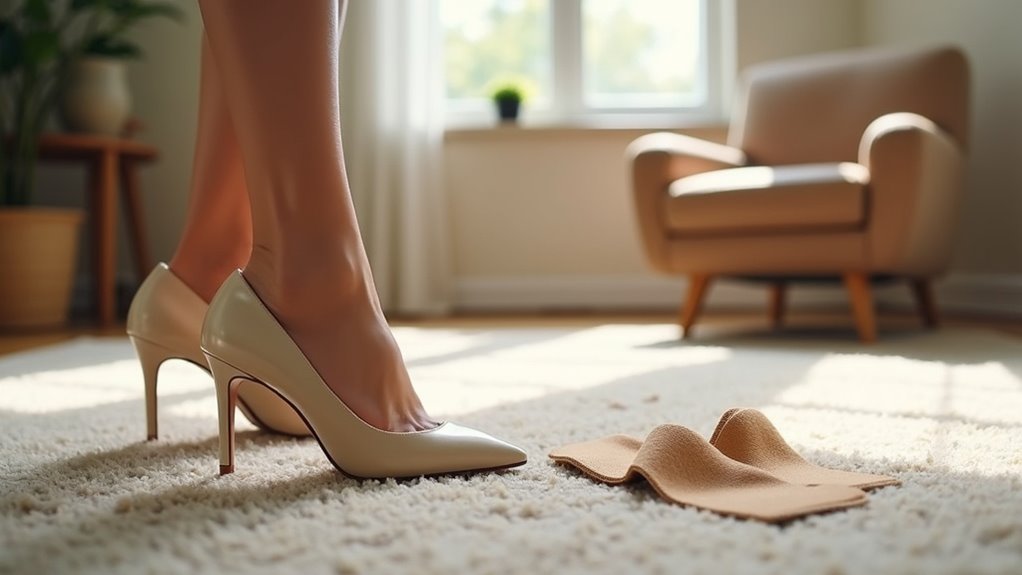
Orthotics and heel pads can greatly improve foot comfort. Custom orthotics fit your feet perfectly. They help align your feet and lower heel pain.
Gel heel pads offer immediate cushioning. They’re perfect for high heels or long days on your feet.
Many people experience foot pain. This pain can come from standing for long periods or wearing the wrong shoes. Custom orthotics can change that. Studies show they reduce pain and improve comfort. Proper foot type assessment is essential to selecting the right orthotics for your needs.
Gel heel pads are easy to use. Just slip them into your shoes. They offer soft support, making hard surfaces feel better. These pads help you stay on your feet longer without discomfort.
Investing in orthotics or heel pads is smart for foot health. They can help you enjoy your activities more. Comfort is key to staying active and happy.
Benefits of Orthotics
Orthotic inserts offer important cushioning and arch support. They help your feet stay aligned. This makes pressure spread out evenly, which is key for reducing heel pain. Orthotics absorb shock, taking stress off your plantar fascia and Achilles tendon. This is especially helpful for those with plantar fasciitis or Achilles tendinitis. Custom orthotics can enhance overall well-being by not only providing comfort but also improving your daily activities. Heel pads, like gel cushions, provide extra comfort at heel pressure points. They make walking or standing feel better.
Using these products regularly can improve stability and lessen foot fatigue. Consult a healthcare professional for the right fit and to understand your specific needs.
Effectiveness of Heel Pads
Heel pads make wearing high heels much more comfortable. These inserts cushion your feet and ease heel pain. They help keep your feet aligned and offer support for your arches. This means your weight spreads out evenly on your feet. Using heel pads can stop problems like metatarsalgia and plantar fasciitis from happening.
Heel pads also make your shoes more stable. This stability lowers the chance of ankle sprains. Regular use of heel pads helps you enjoy your shoes more. You’ll feel less discomfort while wearing them. Additionally, incorporating orthopedic slippers into your routine can further enhance your foot health.
| Feature | Benefits | Effect on Comfort |
|---|---|---|
| Cushioning | Alleviates pressure | Reduces heel discomfort |
| Arch Support | Improves foot alignment | Boosts overall comfort |
| Stability | Prevents excessive movement | Lowers risk of injury |
| Shock Absorption | Distributes weight evenly | Decreases heel pain |
| Regular Use | Promotes enjoyable experiences | Minimizes discomfort |
Using heel pads is a smart choice for anyone who loves high heels. They keep your feet happy and healthy.
Tips for Taking Breaks and Resting Your Feet
Taking breaks is very important for your feet, especially when wearing heels. Sit down for 5-10 minutes every hour. This helps reduce pressure and fatigue.
During breaks, elevate your feet to improve blood flow and reduce swelling. This can ease discomfort from long hours in heels.
Switching between sitting and standing helps spread your weight evenly. This reduces strain on your feet and legs.
Plan regular rest breaks when wearing heels for a long time. This gives your feet time to recover and helps avoid serious problems later.
Pay attention to your body. If you feel pain, take a break right away. Ignoring pain can lead to bigger issues. Engaging your core provides support during breaks can help maintain proper posture.
Follow these simple tips to take care of your feet. Enjoy wearing heels more comfortably!
Frequently Asked Questions
How Can I Prevent Foot Pain While Wearing Heels?
Wearing heels doesn’t have to mean pain. Start by picking shoes with good cushioning. Look for lower heels and a wide toe box. These features help your feet feel better.
Take breaks often. Sitting down or walking barefoot can ease discomfort. Gel cushions provide extra support. They fit inside your heels and make them more comfy.
Gradually wear your heels longer. This helps your feet get used to them. Start with short periods and slowly increase the time.
Taking these steps can help you enjoy your heels without the pain.
Are There Specific Heel Heights That Are Less Painful?
Heels that are 1-2 inches high usually cause less pain. They offer better stability and help distribute weight evenly. A heel height of 1 inch or less is best. This height promotes natural body alignment. It also reduces discomfort while walking. A lower heel helps your feet feel better. Comfortable shoes keep you happy and active. Choose wisely for healthier feet!
What Materials Should I Look for in Comfortable Heels?
Cinderella had her glass slipper, but you need soft leather or suede. These materials feel good on your feet. Cushioned insoles add comfort. Flexible outsoles help you move easily. Supportive designs keep your feet happy. With these features, you can dance all night without pain. Choose comfort and style together. Enjoy every step!
How Often Should I Replace My Heels for Foot Health?
Replace your heels every 6 to 12 months. This depends on how much you wear them. Check for signs of damage, like cracks or worn-out soles. Loss of cushioning can lead to discomfort. A good rule is to pay attention to how your feet feel. If you notice pain or tiredness, it might be time for a new pair. Keeping your heels in good condition helps your foot health. Comfort is key. Invest in your feet; they carry you every day.
Can Foot Pain From Heels Lead to Long-Term Issues?
Wearing high heels feels stylish but can cause serious problems. Foot pain from heels can lead to chronic issues. This pain may affect how you walk. It can also make you less active over time.
Studies show that high heels change how your feet work. They can lead to conditions like bunions or plantar fasciitis. These issues may not go away if you don’t treat them early.
Ignoring foot pain can make things worse. It can lead to complications in your knees and back. Taking care of your feet is important. Choose comfortable shoes and give your feet a break. Protect your feet for a healthier future.
Conclusion
Taking care of your feet is very important, especially for heel lovers. Pick shoes that fit well and offer support. Stretch your feet regularly to keep them flexible. Use ice to reduce swelling and pain. Over-the-counter pain relievers can help too. Think of your feet as the base of a house. Strong, healthy feet help you feel good and walk better. Rest your feet whenever you can. Consider using orthotics for extra support. Follow these tips to enjoy your heels without foot pain.